
MUMBAI – India’s energy import bill has widened faster than any quarter since the 2022 commodity shock, and the Asian Development Bank has given that pressure its first formal GDP number: a 30-basis-point cut to India’s fiscal 2027 growth forecast, now at 6.6 percent, down from 6.9 percent projected in April.
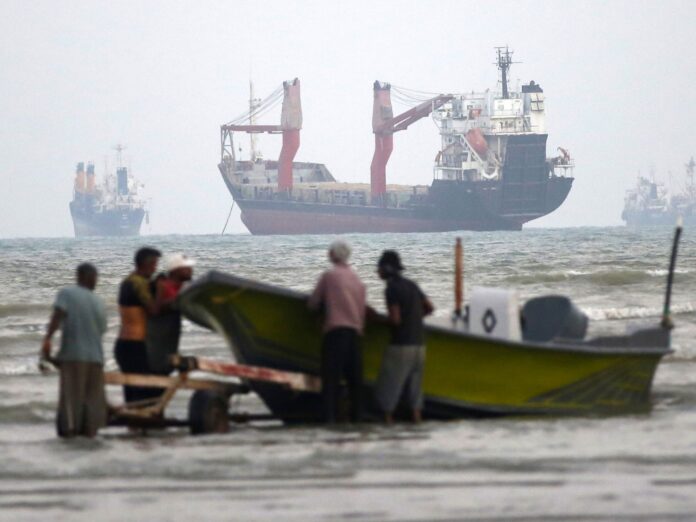
The revision, contained in an updated supplement to the ADB’s Asian Development Outlook, is the steepest single-step downgrade the bank has made to India’s annual forecast in three years. It places the ADB’s estimate below the Reserve Bank of India’s own projection of 6.7 percent and aligns with a parallel trim by the International Monetary Fund, which revised its India outlook on matching energy-cost grounds in the same assessment cycle. Both institutions have identified the same transmission channel: the Iran-United States military confrontation has compressed tanker passage through the Strait of Hormuz, lifted Brent crude above $110 per barrel, and fed that price increase directly into an economy that imports approximately 87 percent of its crude oil requirements.
The ADB’s supplementary note models the energy shock’s GDP impact through three simultaneous channels. Higher fuel input costs raise production expenses for manufacturers and logistics operators and compress operating margins across industry. A widened crude import bill pushes the current account deficit toward levels that require either rupee depreciation or foreign exchange drawdown to finance, both of which carry their own growth consequences. And headline inflation, lifted by fuel and transport prices, constrains the Reserve Bank of India’s room to reduce interest rates – the accommodation that credit-sensitive sectors from housing to small business had been anticipating for the second half of 2026.
The bank has modeled the current oil price elevation as persisting at least through the first quarter of calendar 2027, conditioning its entire revised forecast on that assumption. A faster resolution of the Iran-US standoff would narrow the downside. A further escalation – particularly one involving infrastructure strikes on Gulf energy production or export facilities – would require the bank to revise again.
India has sought to mitigate the energy premium through sustained purchases of discounted Russian crude. Since the Iran-US confrontation began, New Delhi has maintained those procurement volumes at levels that satisfy roughly 40 percent of its import needs at a price below the Brent benchmark. But the spread between Russian Urals and spot Brent has narrowed as global energy supply tightens across multiple dimensions: Hormuz disruption reduces available Gulf barrels, the Russian diesel export ban triggered by Ukrainian drone strikes on the Omsk refinery constrains one component of the energy complex, and European demand for non-Russian alternatives tightens the overall pool. The discount has not disappeared, but it has compressed.
Aviation has provided the most visible secondary illustration. The Indian government confirmed this week that 357 flights had been cancelled from Middle East-transiting routes, disrupting air cargo, business travel, and the movement of workers between India and the Gulf Cooperation Council states that employ approximately nine million Indian nationals. Those workers remit roughly $40 billion annually – the single largest source of India’s inbound remittances – and any sustained disruption to their labor mobility adds a demand drag beyond the energy price effect alone.

The Indian rupee absorbed the initial pressure from the conflict’s outbreak and has since partially recovered as Hormuz passage normalized. The RBI’s foreign exchange reserves – at approximately $685 billion heading into the confrontation – provided sufficient buffer to contain volatility without triggering emergency intervention. But the currency has remained softer than pre-conflict levels, reflecting sustained import bill widening rather than any acute liquidity crisis.
The monetary policy implications are the most consequential near-term consequence of the growth downgrade. The Reserve Bank of India’s rate-setting committee had been expected to reduce the benchmark repo rate at its August 2026 meeting, having held rates steady through the first half of the year as inflation approached the four percent midpoint target. An energy-driven inflation rebound now threatens to delay that cut into October at the earliest, extending the high-rate environment for an additional quarter and slowing the credit disbursement that drives consumption and capital expenditure at the margin.
The ADB forecast also arrives at a moment when India’s fiscal position provides relatively little buffer for demand-side response. The government delivered a 5.1 percent fiscal deficit in FY26 and is targeting 4.5 percent for FY27. Widening transfers to offset energy costs for consumers – a policy tool India used during the 2022 oil price surge via fuel duty cuts and LPG subsidies – would push the deficit back toward levels that complicate the medium-term fiscal consolidation trajectory the government has committed to internationally.
What the ADB’s 6.6 percent forecast settles is not India’s growth ceiling but its revised floor, subject to how the Middle East situation evolves. The bank has left its FY28 projection unchanged at 6.8 percent, indicating that it treats the current disruption as a temporary shock rather than a structural break. Whether that assumption holds – whether the energy price premium subsides before it erodes household income and corporate investment at scale – is the question the August RBI meeting and the September advance GDP estimate will begin to answer.