
JINJIANG, China – When smoke began filling the lower floors of the Huiteng Shoes factory Thursday morning, some workers climbed to the roof. Others called their families. At least 28 of those inside did not make it out.
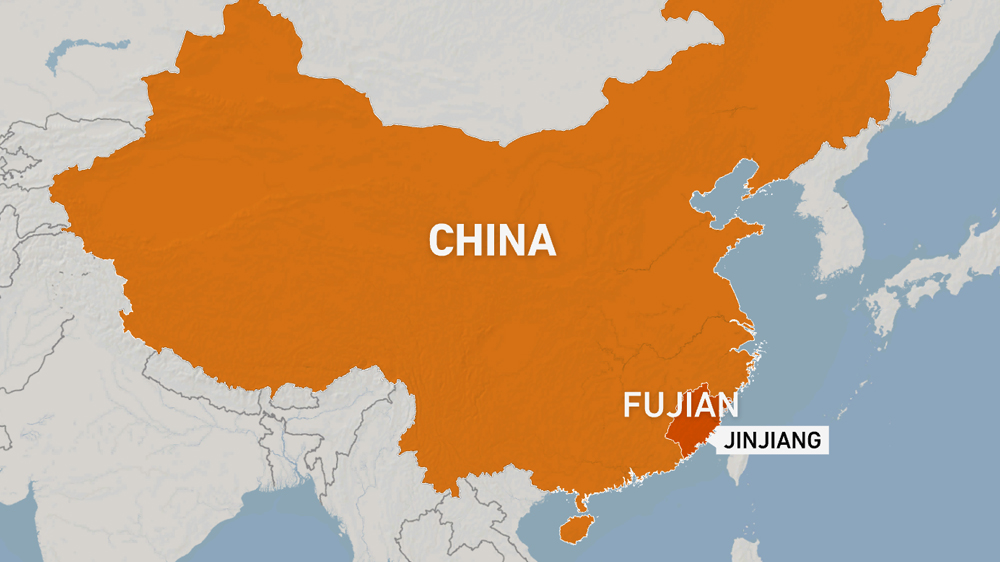
The fire broke out at approximately noon local time at the factory in Jinjiang, a coastal city in Fujian province that accounts for a substantial share of China’s global footwear exports. Emergency services deployed more than 180 firefighters and 35 rescue vehicles. By early afternoon, officials said they had lost communication with workers still believed to be inside. President Xi Jinping confirmed “significant casualties” through state media as the government dispatched a fire safety team from the Ministry of Emergency Management to the site.
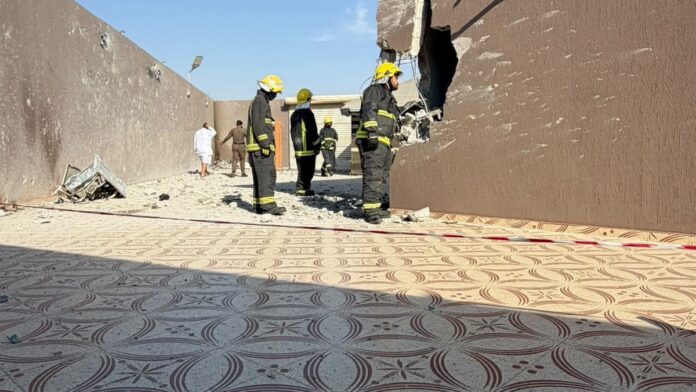
Shoe manufacturing requires materials that burn quickly – synthetic rubbers, adhesives, foam soles, and plastic compounds that generate dense, toxic smoke. Investigators said the blaze began on the ground floor and accelerated through the upper levels faster than crews could contain it. Footage distributed by Chinese state media showed thick black columns rising from a multistory structure; people were visible on the rooftop as emergency workers monitored from below.
By early evening, most open flames had been extinguished. The Ministry of Emergency Management demanded “all-out” efforts on firefighting, survivor rescue, and medical treatment. Xi, at his direction, ordered that the cause of the accident be identified “as soon as possible” and that “those responsible must be strictly held accountable.”
Jinjiang is not a peripheral manufacturing site. The city sits at the center of a regional cluster in Fujian province that produces footwear for domestic brands and for export chains across Southeast Asia, Europe, and North America. Its industrial footprint has expanded rapidly over the past three decades. Factory buildings in its outer districts commonly combine production floors with dormitory-style accommodation, a layout that compresses exit options during emergencies and that safety inspectors have repeatedly flagged as a risk factor in the region’s fire vulnerability assessments.
China launched a nationwide fire safety campaign in November following a deadly residential fire in Hong Kong that killed more than a dozen residents. State media reported that the campaign would inspect roughly 2 million businesses across China. The Jinjiang factory fire is the deadliest industrial accident in the country in the months since that campaign began. Whether the Huiteng Shoes facility received an inspection – and whether that inspection evaluated its fire suppression systems and exit infrastructure – had not been established by Thursday evening.
Industrial fires in Chinese manufacturing zones are not exceptional events. A garment factory fire in Xinjiang province in September 2024 killed 31 people in an accident that also involved flammable materials stored on lower floors of a multistory structure. That investigation found blocked emergency exits and inadequate sprinkler systems contributed to the toll. No individual faced criminal prosecution. Safety researchers described the post-fire inspections that followed as thorough; the recurrence of comparable disasters since suggests that inspections, however detailed, have not produced durable infrastructure change.
Al Jazeera reported that Beijing demanded an “all-out” response as rescue teams remained at the scene into the evening. Xi’s intervention within hours reflected the political weight a high-casualty factory fire carries in China, where industrial disasters are read as signals about the gap between the government’s stated safety priorities and its enforcement capacity. Prior accountability reviews ordered by Xi have produced arrests and factory shutdowns but have not addressed the inspection shortfalls at the root of recurring disasters.
The Jinjiang fire comes at a moment of escalating pressure on China’s emergency systems. This month, China’s PLA Navy fired a ballistic missile into the South Pacific nuclear-free zone, drawing protests from Australia, New Zealand, and Japan. The parallel between China’s assertive military posture abroad and its recurring domestic safety failures is one that labor rights advocates have pointed to in pushing for independent industrial accident investigations – investigations Beijing has consistently declined to authorize.
Whether Thursday’s fire will produce a different regulatory outcome is uncertain. The nationwide inspection campaign that followed the Hong Kong blaze cleared millions of facilities in eight months. What it found at Huiteng Shoes – if it reached Huiteng Shoes at all – has not been disclosed. The Ministry of Emergency Management did not respond to questions about the inspection record at the Jinjiang site.