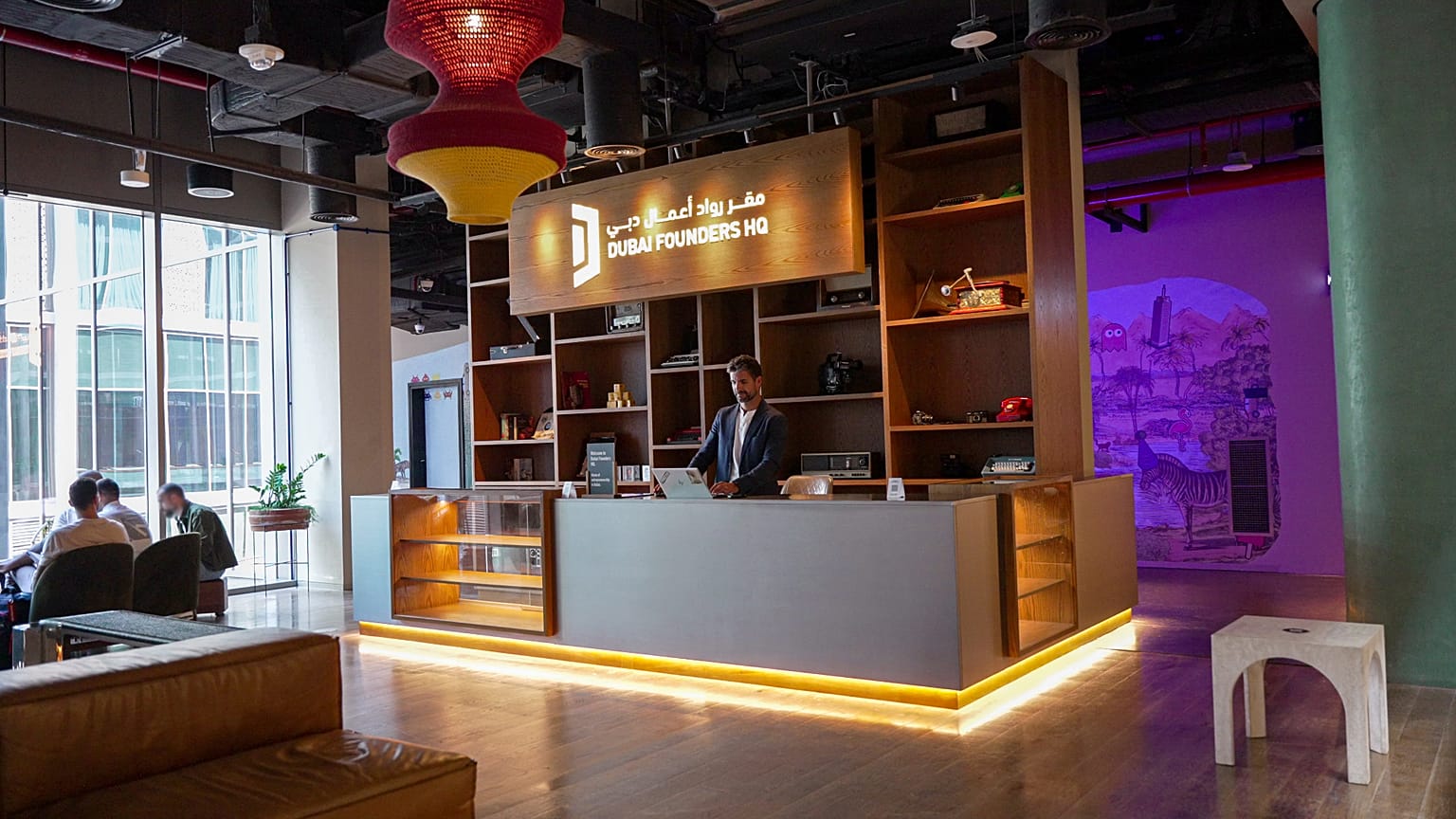

DUBAI – The first cohort of startups to use Founders HQ arrived with ideas and left with signed contracts. Twenty-three companies participated in Plug and Play’s initial programme at the campus. Thirty-six proof-of-concept engagements with corporate partners were generated. Four of those converted into signed commercial agreements. Those are early numbers from a campus that has not yet run a full cycle, but they are the numbers Dubai is leading with as it opens what it describes as a physical front door for founders building companies at scale.
The campus sits at One Central in the Dubai World Trade Centre district and was launched by Crown Prince Sheikh Hamdan bin Mohammed Al Maktoum last week. It operates under the Dubai Department of Economy and Tourism and the Dubai Chamber of Digital Economy, with 25 launch partners spanning early-stage investment, growth capital, and enterprise access. Antler covers seed-stage funding. Endeavor covers growth-stage scaling and international expansion. Plug and Play provides the corporate network, which counts over 60,000 enterprise members globally.
The model is structured to address a problem that founders in the Gulf region have consistently raised: an introduction to a large corporate partner does not automatically become a commercial agreement, and the gap between the two can stretch for years when the startup and the corporate are operating in different markets with different procurement timelines. Founders HQ is built on the theory that physical co-location with programme structure and a dense partner network compresses that gap. The Plug and Play figures from the first cohort are the evidence it is pointing to.
Saeed Al Gergawi, vice president of the Dubai Chamber of Digital Economy, said the campus was designed to cover the full lifecycle of a company from founding to scale, rather than concentrating resources at one growth stage. That distinguishes Founders HQ from most single-function accelerators, which tend to focus either on very early stage companies or on growth-stage companies that already have revenue. The campus wants to be present at both ends, through different partners in the same building.
According to Euronews, the initiative sits within Dubai’s D33 agenda, the ten-year economic plan that targets 30 homegrown technology unicorns by 2033. The UAE has produced a handful of unicorns to date relative to its stated ambitions, making the 30-by-2033 goal a significant stretch from the current baseline. Founders HQ is intended as one of the structural mechanisms to close that gap. It is a campus, not a government grant. The theory is that deals, not subsidies, produce companies that can scale.

The campus operates through what its organisers describe as a phygital model: a physical workspace where founders can be based, combined with a digital platform that extends partner access to founders who are not in Dubai full time. The logic is similar to the hybrid models that technology companies expanding internationally have adopted to maintain local presence in markets where proximity to clients and regulators matters, while running operations remotely from lower-cost locations.
What the campus cannot yet answer is whether the Dubai market is deep enough to sustain companies at scale once they have outgrown the accelerator stage. The UAE’s domestic consumer market is smaller than Southeast Asia or Europe. Founders who use Dubai as a launchpad often discover that their regional growth ceiling arrives earlier than expected, at which point the question becomes whether the international network assembled through programmes like Founders HQ is strong enough to support geographic expansion into markets where Founders HQ has no physical presence.
The D33 agenda sets ambition in numbers. Founders HQ sets it in square footage and partner agreements. Whether concentrating capital, founders, and corporate buyers in a single building at One Central actually bends the unicorn curve by 2033 depends on execution at every stage that follows the launch announcement, and those stages have not happened yet. The four signed deals from the first cohort are a beginning. They are not a trend.