
CARACAS – On a crowdsourcing website set up to track Venezuela’s missing, more than 40,000 names have been entered since the June 24 earthquakes. Experts working with the database say many entries are duplicates – the same person submitted by different family members, or someone located days ago whose record was never removed. But not all of them are duplicates. The task of separating the verified dead from the missing from the accounted-for has fallen to volunteers, because the state has not done it.
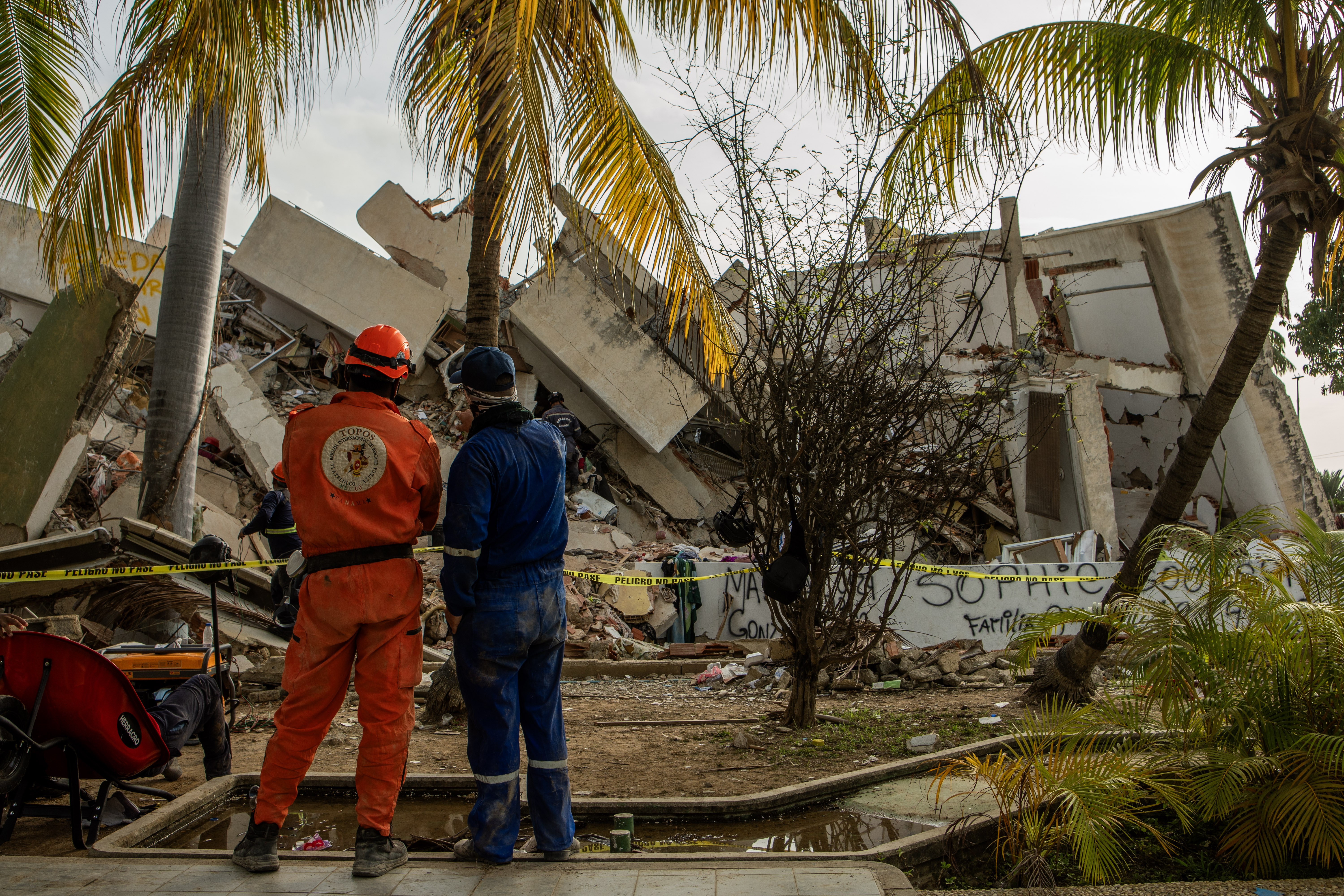
Venezuela’s confirmed earthquake death toll has reached 3,811, officials announced this week. Sixteen days have passed since twin magnitude 7.2 and 7.5 quakes struck within 39 seconds of each other on June 24, leveling neighborhoods in La Guaira and parts of Caracas. The toll’s trajectory – 589 dead at the end of June, more than six times that figure now – reflects not only the true scale of the disaster but the pace at which Venezuela’s search-and-rescue capacity could reach it. Entire sections of the coast road between Caracas and La Guaira remained inaccessible for days. Some still do.
By the time the count reached 3,811, the international rescue teams that had arrived in the days following the quakes had largely departed. The 72-hour survival window, after which the chance of finding a living person in the rubble narrows sharply, has long passed. Organizations like the Salvation Army continue volunteer work. What remains of the search operation is increasingly about recovery rather than rescue – slower, more methodical, and less likely to appear on state television.
Six thousand four hundred sixty-two people have been confirmed rescued since the earthquake. The United Nations Development Programme estimates the quakes generated 1.2 million tonnes of debris in La Guaira alone. That figure gives some sense of the remaining task: before the missing-persons database can be reconciled, before the final toll can be known with any confidence, someone has to move 1.2 million tonnes of concrete, rebar, and crushed building material out of a coastal city.
The Venezuelan government’s response to that task has been the subject of persistent criticism. Carolina Jimenez, president of the Washington Office on Latin America, said what many humanitarian organizations have said more carefully: “In a government in any other country, the first responder should be the state. In the case of Venezuela, the state has been the last responder.”
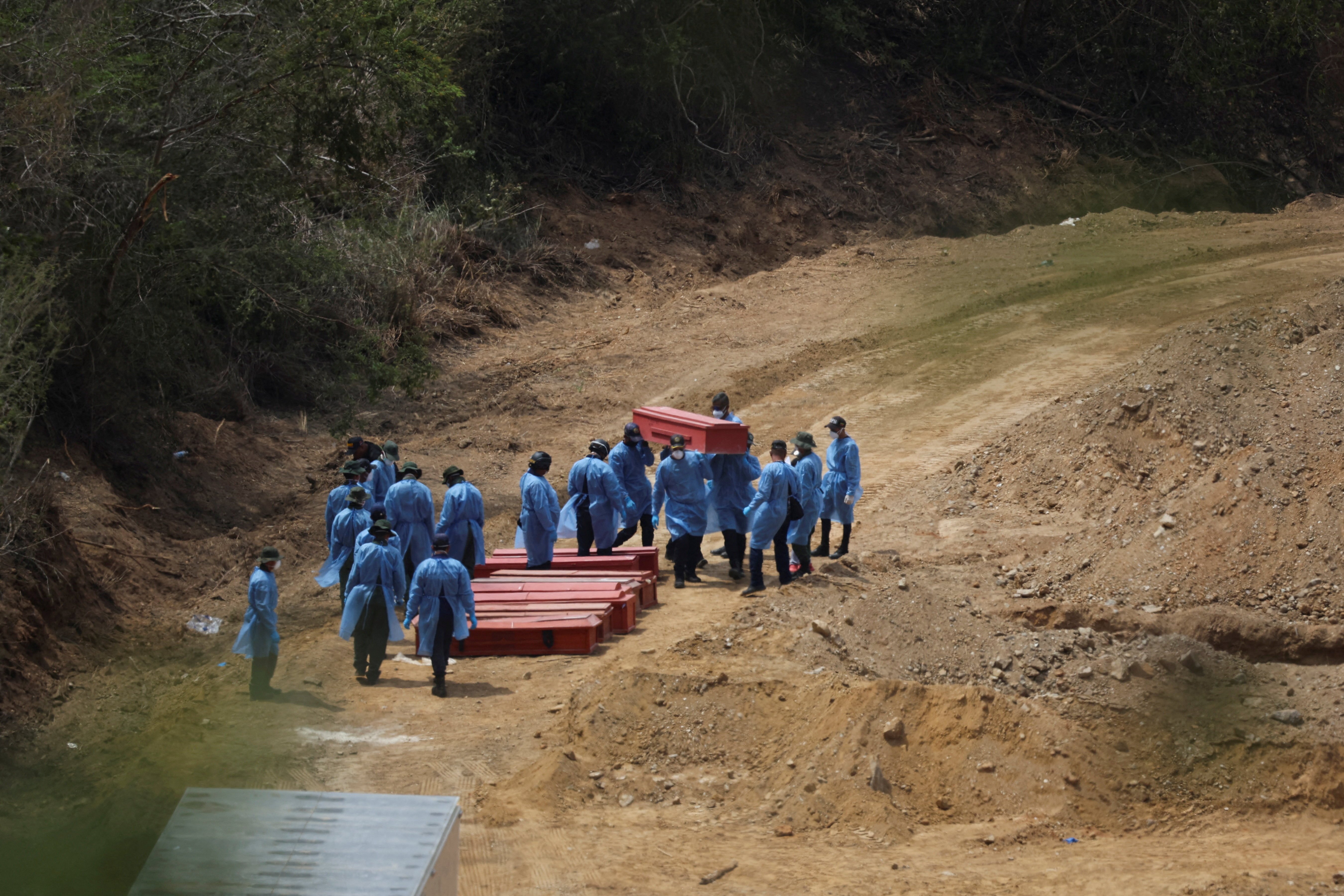
That assessment is visible in specific failures. Donated cranes have arrived in some neighborhoods and then gone unused for days because fuel to run them is unavailable. Heavy machinery has not reached some collapse sites at all. Bodies are being buried in mass graves in neighborhoods where decomposition has made identification impossible and where morgues – overwhelmed at admission – cannot process the inflow. In Catia la Mar, one of the hardest-hit coastal towns, official response remained minimal as of this week.
Noel Marquez, a resident of the affected area, put it plainly: “They say they are doing things, but the reality is what you see here.” What residents see, in the footage and reports emerging from coastal Venezuela, is citizens and civil society organizations digging, distributing food, and operating search equipment while government officials give briefings.
The United States, despite a temporary sanctions waiver issued in the earthquake’s immediate aftermath, has not materially changed the structural conditions limiting Venezuela’s access to international capital for reconstruction. The waiver allowed humanitarian aid to flow without triggering secondary sanctions, but remained distinct from unfreezing the sovereign assets that would fund rebuilding. Venezuela’s government has indicated it is seeking access to frozen funds; the terms under which that access might be granted remain unresolved.
The displacement numbers reinforce what reconstruction means. Seventeen thousand eight hundred fifty-four people remain unhoused. Twelve thousand eight hundred have been placed in 80 shelters across the affected region. Those shelters, by multiple accounts, lack consistent access to clean water. Diarrhea outbreaks have been reported. Infectious disease is a standard consequence of mass displacement in close-quarters conditions, and Venezuelan health authorities – their system already under pressure before June 24 – are now managing it at volume.
Al Jazeera reported that civil society organizations have drawn domestic attention to the gap between official statements and field conditions. The pattern is consistent with what Eastern Herald covered in the first days after the earthquake. The 40,000 names in the missing-persons database may never be fully reconciled – some will be confirmed dead when debris is cleared, some alive when families make contact, and some will remain ambiguous because there is no functioning civil registry to cross-reference them against. The answer to how many people Venezuela lost on June 24 will take longer than the earthquake itself took to destroy La Guaira. What is no longer in doubt is the order of magnitude: the earthquakes killed more than 3,800 people in a country with no capacity to absorb that loss.