
WOLFSBURG – Germany’s largest private employer went into a supervisory board meeting Thursday with a plan to halve its model lineup and eliminate up to 100,000 jobs globally. It came out having lost the vote 12-7, with its own workers and the state of Lower Saxony blocking the most aggressive restructuring in the company’s history.
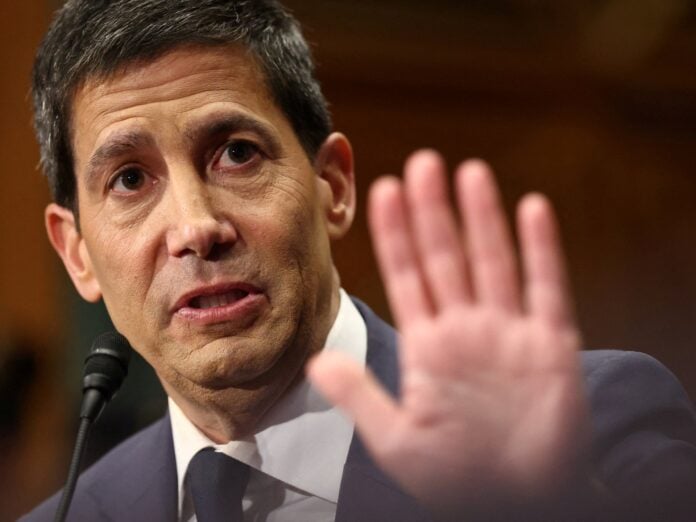
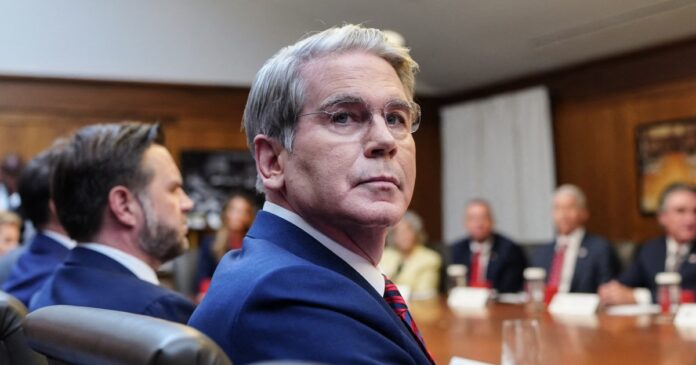
The rejection does not end the process. Volkswagen Group CEO Oliver Blume, who appeared before the board with CFO Arno Antlitz to present a four-year strategic plan, said the board would reconvene with a revised proposal. But Thursday’s outcome confirms that the standoff between management and VW’s powerful labor wing has not resolved.
The management plan called for a reduction in annual production capacity from approximately 10 million vehicles to 9 million, down from the 12 million target set before the pandemic. Model offerings would be cut by half and variant complexity reduced by up to 75 percent. The Everllence business unit has already been divested, generating approximately 7.4 billion euros. Blume framed the remaining cuts as necessary to survive what he described as a deteriorating global environment.
“The global situation has deteriorated over the past 12 months,” Blume said before the board. Antlitz added that cost reductions already made were “not sufficient in the current economic and geopolitical environment,” according to the company’s official press release.
The financial data presented alongside those statements reinforces the urgency. Global vehicle deliveries in the second quarter fell 8.6 percent year-on-year. Net profit dropped 28 percent to 1.56 billion euros in the quarter ending March 2026. Revenue fell 2.5 percent year-on-year to 75.7 billion euros. The steepest pressure is coming from China, historically Volkswagen’s most important single market, where local brands have systematically displaced European manufacturers at the volume end of the market.
That displacement is no longer confined to China. BYD’s takeover of Germany’s plug-in hybrid segment, where one in seven plug-in hybrids registered in May was a Chinese-built vehicle, has become a symbolic indicator of the reversal. Chinese manufacturers have captured territory inside Volkswagen’s home market that the company was assumed to be defending by virtue of its scale. The surge in Chinese EV sales records at Leapmotor and Zeekr in June underscored the pace at which domestic rivals are pulling ahead.
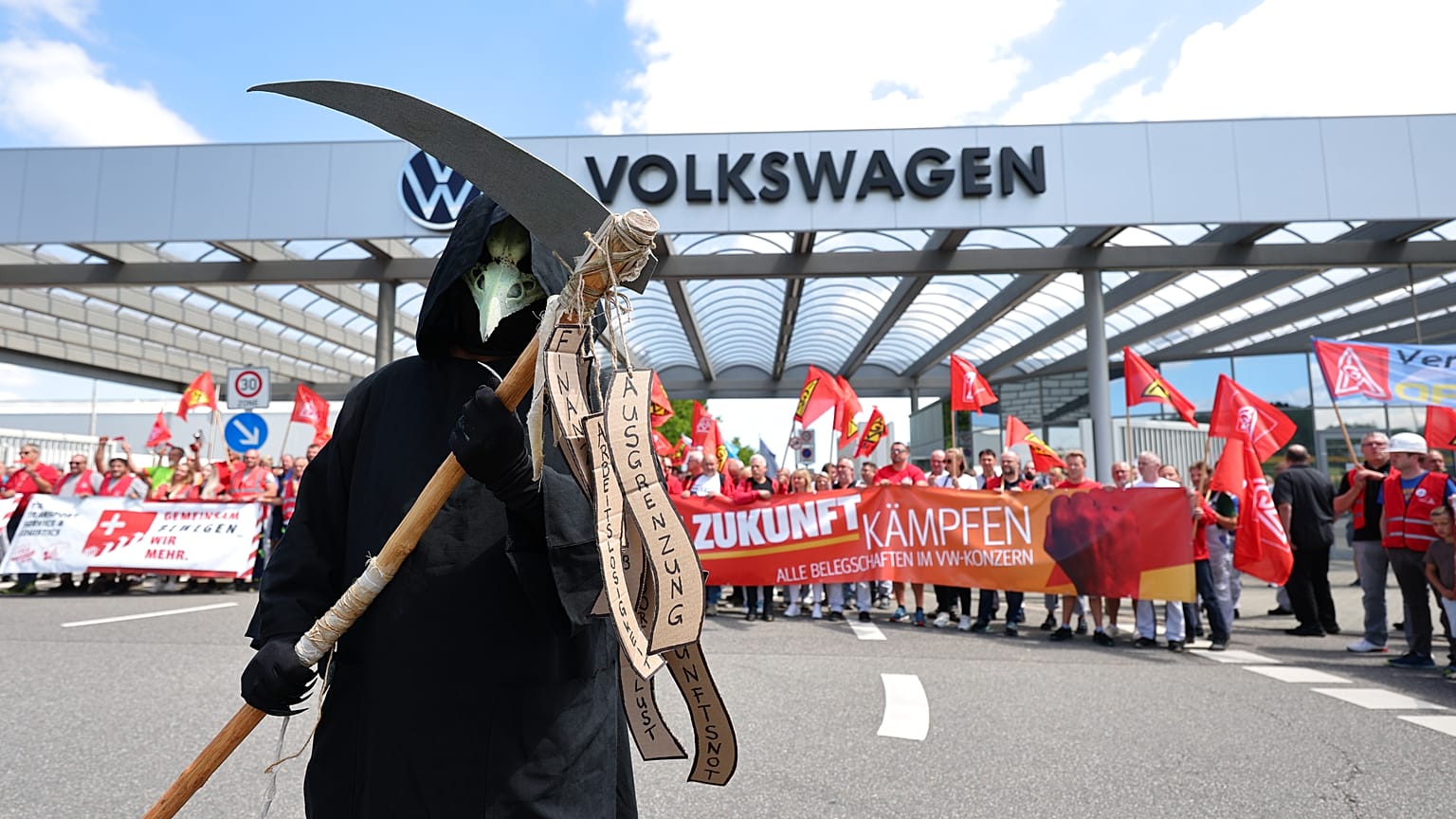
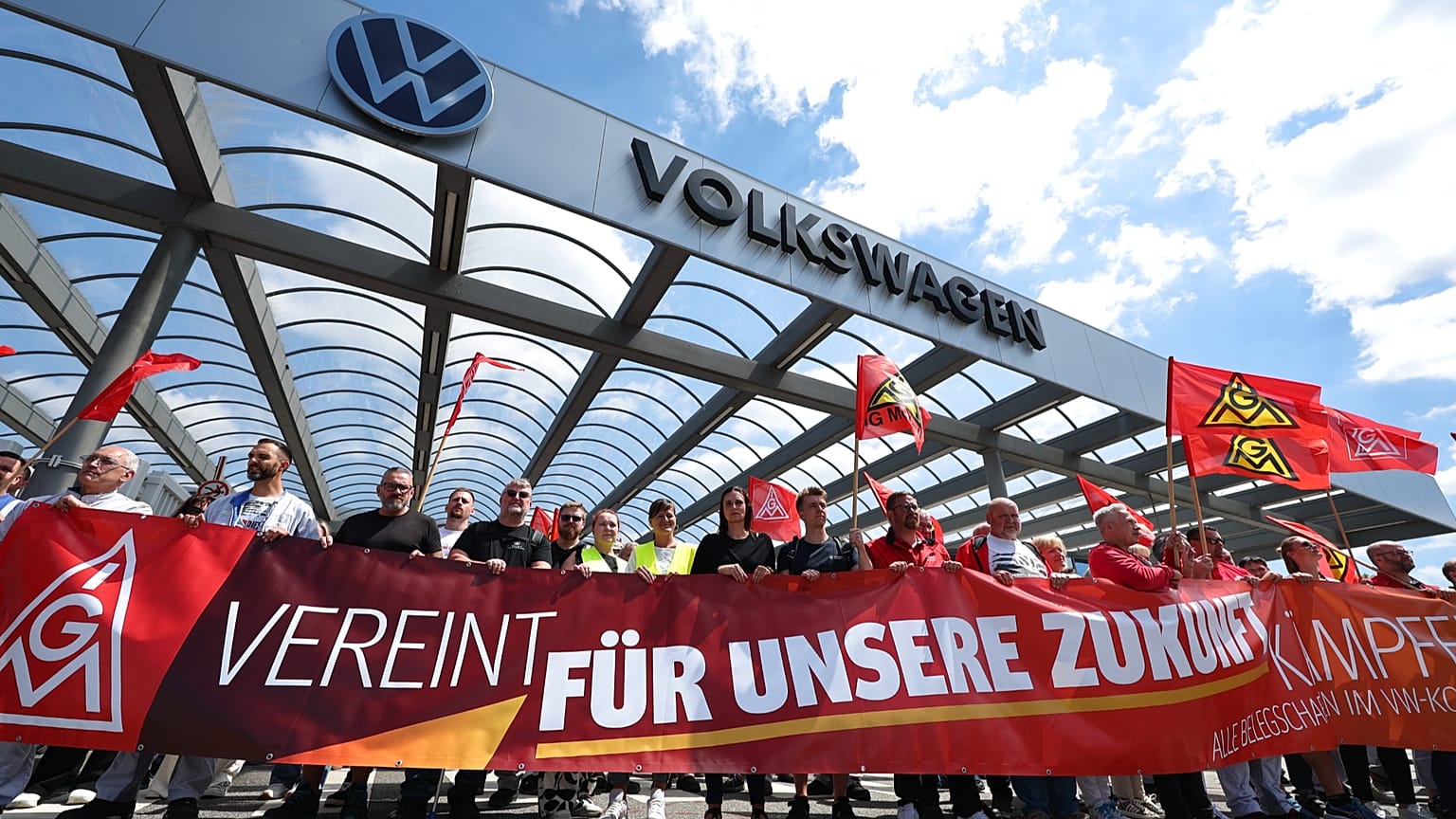
That number – more than 15 percent of VW’s global workforce of approximately 657,000 – is not a figure labor representatives in Germany absorb quietly. IG Metall, the union with representation on the supervisory board, organized protests outside the Zwickau plant on the eve of Thursday’s meeting. Workers in Hanover, Emden, and Neckarsulm – all named in the restructuring proposal as candidates for closure or severe reduction – joined the demonstrations.
The supervisory board’s structure gives workers and state governments unusual leverage inside a major German corporation. Volkswagen’s board has 20 members; half represent labor and the other half represent shareholders, with Lower Saxony holding a blocking stake because the state owns a 20 percent equity position in the group. That configuration produced the 12-7 vote against management Thursday. The votes aligned predictably: labor and Lower Saxony against, major institutional shareholders for.
Management must now revise the plan to find a path that satisfies investor pressure for structural improvement while not triggering another labor rejection. The revisions have a short window. The company’s operating margin was below 3 percent in the most recent reporting period, well below the 6-8 percent range the company has historically targeted, and the deterioration in China shows no signs of stabilizing.
Which brands face the deepest cuts remains unclear. Volkswagen Group owns twelve brands spanning the full price spectrum: Volkswagen, Audi, SEAT and Cupra, SKODA, Porsche, Lamborghini, Bentley, Bugatti, Ducati, MAN, Scania, and Traton. The restructuring announcement covered by Euronews described a reduction in the equity and investment portfolio and an alignment of brand strategy toward strategic contribution and returns, but stopped short of identifying specific brands for disposal.
The structural question underneath all of it is whether Volkswagen’s problem is primarily a cost problem or a product problem. The executive board’s answer – cut models, reduce complexity, lower capacity – is a cost answer. The counterargument made by union representatives Thursday is that reducing the lineup without developing competitive products in the Chinese market will only accelerate the sales decline rather than reverse it. The revised plan will need to contain a credible answer to that question before the board reconvenes.