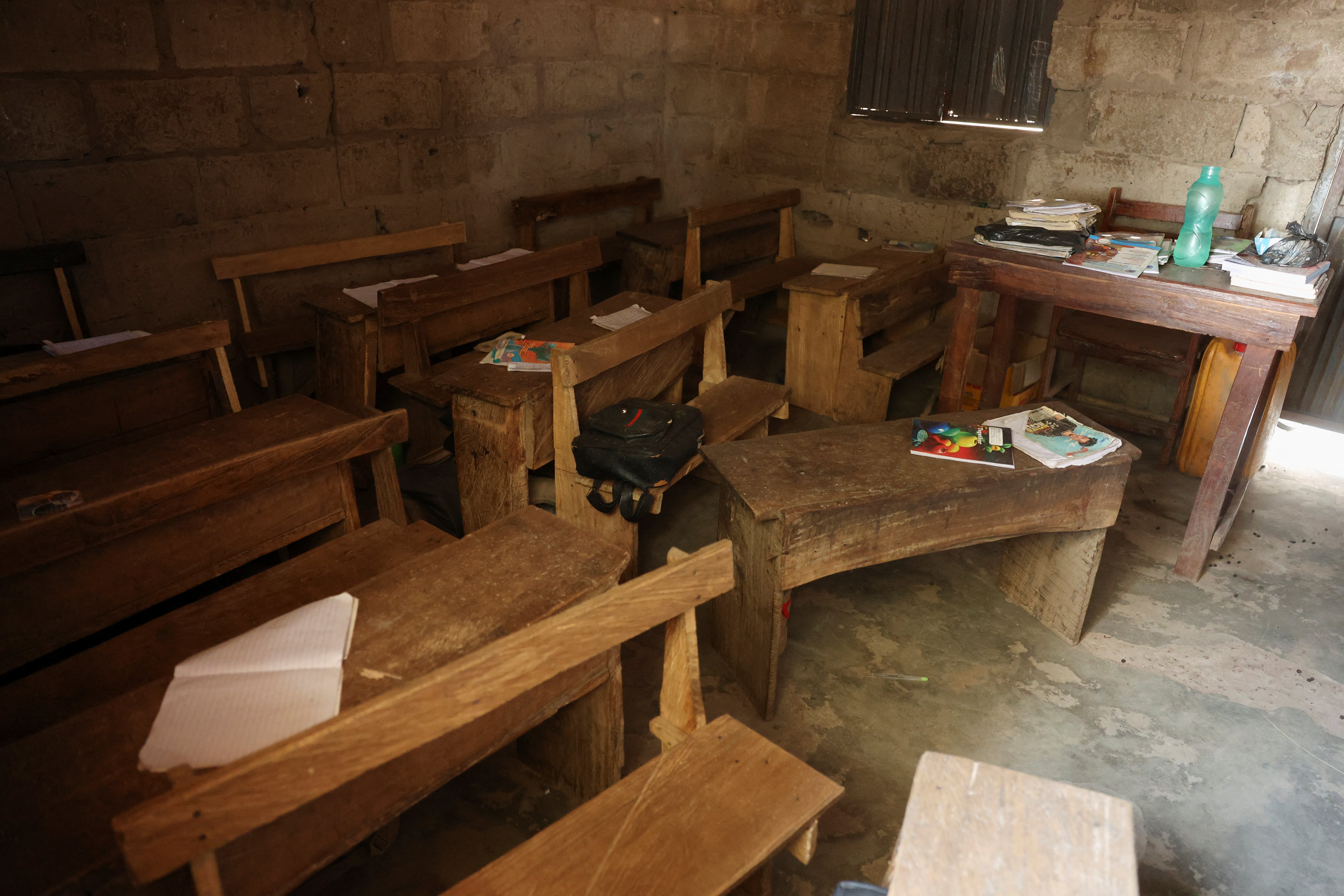

ABUJA – Fifty-six days after gunmen seized 46 students and teachers from three schools in Nigeria’s Oyo state, President Bola Tinubu announced on Friday that all of them had come home. No ransom changed hands. Eight attackers were in custody. An unspecified number of assailants had been killed during the military-led rescue. For the families who had spent nearly two months without contact, the news arrived as relief long deferred and as confirmation that Nigeria’s school kidnapping crisis has found new ground in parts of the country where such attacks once seemed distant.
The abductions took place on May 15, 2026, when armed men descended on two primary schools and one secondary school in Oyo state, in southwestern Nigeria. Among those taken were children as young as two years old. One teacher was killed in the immediate aftermath of the kidnapping, the government later confirmed. The assailants maintained custody of the remaining hostages for the full 56 days before security forces mounted the rescue operation.
Oyo state sits in southwestern Nigeria, far from the northern belt where school kidnappings became a defining feature of the country’s security crisis. Boko Haram and its successor factions, operating primarily in the northeast and northwest, made the abduction of schoolchildren their most internationally visible tactic starting with the 2014 Chibok kidnapping, in which 276 girls were taken from a secondary school in Borno state. Many were never recovered. That crisis transformed how Nigeria’s security environment was understood abroad and accelerated recruitment for groups that read the global attention as validation of the method.
By 2024, school kidnappings had become a near-routine occurrence in northern Nigeria, each incident falling out of the international news cycle within days. What changed in May 2026 was geography. Oyo’s incident marked the expansion of this crisis into the south, into a state that had previously been largely insulated from the worst of the north’s violence. Security analysts and government officials acknowledged the significance of that shift.
Defence Minister Christopher Musa provided the motive that the government had withheld during the 56-day crisis: the kidnappers planned to use the hostages as leverage to pressure the government into releasing imprisoned commanders. No such release occurred. The rescue was conducted without meeting the armed group’s demands.
“On behalf of the country, I express my gratitude to the officers and men of our armed forces, the intelligence agencies and the police for the safe rescue of the children and their teachers,” Tinubu said in a formal statement. Presidential spokesperson Bayo Onanuga confirmed that “there was no quid pro quo in the rescue.”
The explicit denial carries weight. Nigeria’s kidnapping economy has been financially rewarding for the armed groups that operate it. A 2024 analysis by SBM Intelligence found that gunmen collected more than 1.6 million dollars in ransom payments in that year alone, through direct payments from families, community collections, and intermediaries. The government’s formal position has generally been non-payment, while the practical reality has sometimes been more complicated. The Oyo case, with an explicit denial on record from the presidential spokesperson, is the cleaner version of that commitment.
Eight assailants were arrested during the rescue operation. The specifics of how security forces located the hostages over 56 days, and whether the timeline reflected deliberate operational caution or the difficulty of operating against armed groups in unfamiliar terrain, were not detailed in Friday’s announcement. What the government confirmed was the result: 46 alive, returned, eight perpetrators detained.
Nigeria’s government attributed the Oyo kidnappings to Boko Haram, though the group had not formally claimed responsibility as of Friday. Boko Haram has been fractured into multiple successor organizations and splinter factions over the past decade, with varying territorial reach and capability. The attribution, offered without detailed evidence, points to the broader network of groups that has driven the kidnapping economy across a growing area of Nigeria.
The 2014 Chibok kidnapping generated a global campaign and sustained diplomatic pressure. It also provided a model. By demonstrating that taking schoolchildren produced attention and leverage that attacking military installations did not, armed groups across Nigeria’s north learned that schools were high-value targets. The expansion to Oyo in 2026 suggests the model has outlasted the geographic constraints that once contained it.
The one teacher killed in the initial hours of the May 15 abduction leaves a family without the reunion that 45 other staff members and students received this week. That death, and what it represents about the violence of the original kidnapping, remains part of a full accounting that no rescue announcement can complete.
For Nigeria’s security institutions, the Oyo rescue provides one kind of evidence: that intelligence-led military operations can succeed against kidnapping incidents in the south, as they sometimes succeed in the north. Whether this outcome becomes a repeatable model depends on resources, inter-agency coordination, and whether the government can sustain southern security operations at the same level it has been forced to sustain northern ones.
The rescued students and teachers will return to Oyo state’s classrooms in the coming days. Authorities have promised increased security around schools in Oyo and neighboring states, though the specific measures and how they will be funded have not been detailed. The history of Nigeria’s response to school kidnappings suggests that announcements frequently exceed implementation. Parents across Oyo who waited 56 days for their children to return will be watching whether this time the commitment holds.
Related Posts