
MANILA – On the morning of July 12, 2016, fishermen from Masinloc, Zambales awoke expecting the world to change. The Permanent Court of Arbitration in The Hague had issued its ruling the day before, overwhelmingly, in the Philippines’ favor on the South China Sea dispute, invalidating China’s sweeping nine-dash-line claim over most of the waters. Ten years on, the fishermen are still waiting.
The Scarborough Shoal, known in the Philippines as Bajo de Masinloc or Panatag Shoal, lies roughly 220 kilometres west of the Zambales coastline. It has been a traditional fishing ground for generations of fishermen from that province, prized for its abundant reef fish. Since 2012, when Chinese vessels physically blockaded the shoal following a Philippine naval standoff, the fishermen have been largely unable to work those waters.
China rejected the arbitration tribunal’s ruling immediately and has never altered its behavior in response to it. Beijing calls the 2016 decision null and void, and its coast guard vessels maintain what amounts to a near-continuous presence in and around Scarborough Shoal. Filipino boats that approach have encountered water cannons, physical obstruction, and in some cases injury to crew members, according to Al Jazeera.
The anniversary falls during a period when the Philippines and China are not speaking calmly. Under President Ferdinand Marcos Jr., Manila has adopted a markedly firmer posture than under his predecessor Rodrigo Duterte, who had soft-pedaled the territorial dispute in hopes of attracting Chinese investment. Marcos has revived joint patrols with the United States, allowed American forces expanded base access, and repeatedly documented Chinese aggression in public rather than managing it through back channels.
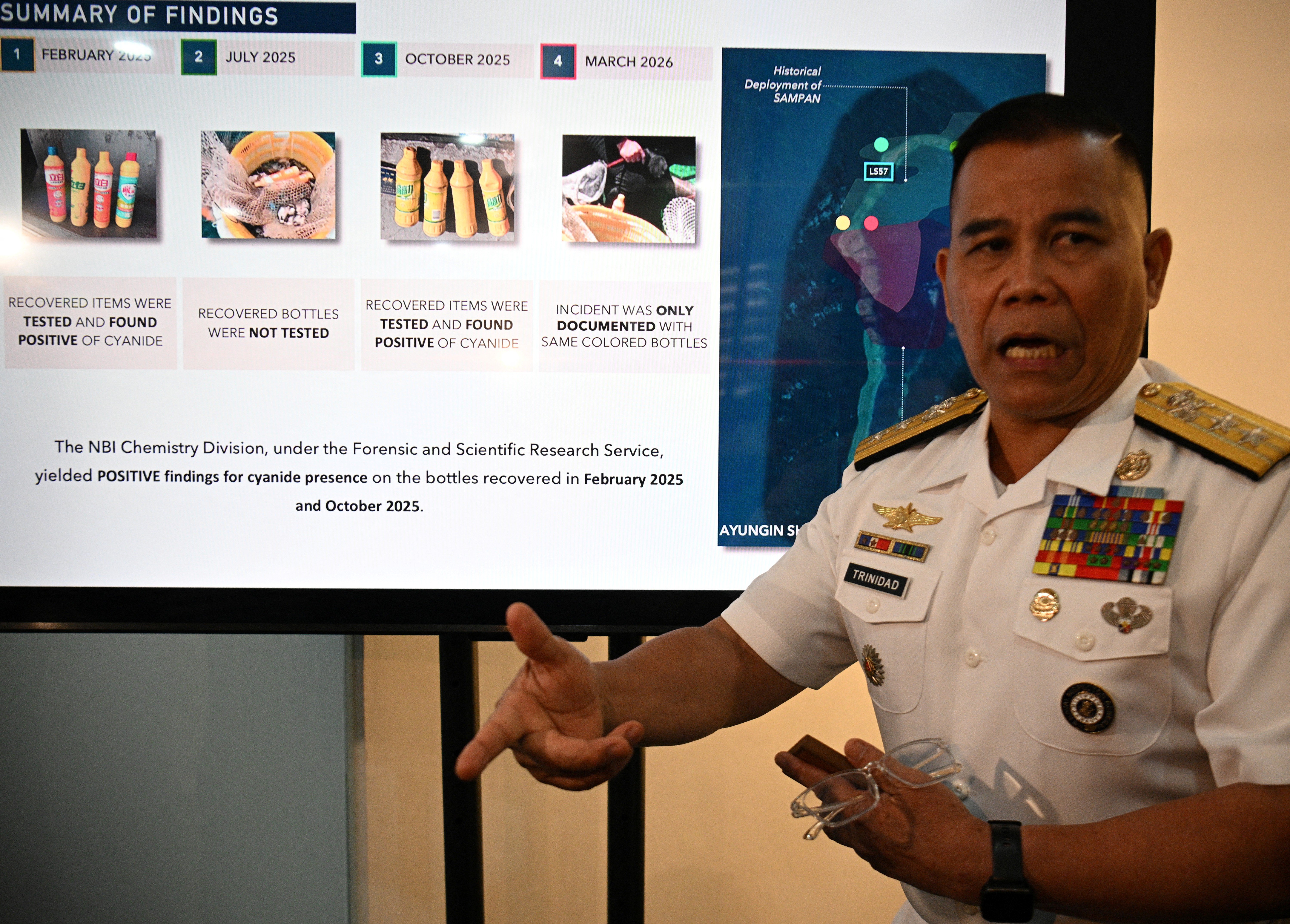
That assertiveness has not reopened Scarborough Shoal to the Masinloc fishermen. What it has done is shift the public framing: where Duterte largely accepted a status quo in which China controlled the shoal while the Philippines received investment pledges, Marcos has insisted on naming Chinese behavior for what it is. His government has described China’s coast guard actions, the water cannons, the laser dazzling, the seizure of Philippine supply boats, as coercive and incompatible with international law.
China’s position remains unchanged. Beijing argues that the arbitration tribunal lacked jurisdiction over the dispute from the start, and that the nine-dash line, which dates to the Republic of China government in the 1940s, remains valid. International law scholars broadly regard this argument as without merit; the PCA ruling was clear on the jurisdictional question. But legal clarity has not translated into changed behavior in the South China Sea, where enforcement mechanisms are essentially absent.
The United States has become a more visible participant in that gap. American naval vessels conduct freedom-of-navigation operations through the South China Sea, and joint exercises with the Philippine military have expanded significantly under the Marcos administration. Washington has confirmed that its mutual defense treaty with the Philippines covers government ships and aircraft in the South China Sea, a formulation that includes coast guard vessels as well as military assets.
For the fishermen of Masinloc, those developments belong to a political world somewhat removed from the practical matter of where they can and cannot fish. Scarborough Shoal, at its peak, yielded catches that local fishermen describe as impossible to replicate elsewhere. The reef system’s biodiversity made it a reliable source of income for an economy that has few substitutes. Displacement from those waters has pushed fishing communities further from the shoal and into grounds that are already under pressure.
China has occasionally allowed Philippine fishermen limited access to the shoal, typically during periods when it sought to signal goodwill in diplomatic negotiations. The access was never guaranteed, never codified, and always revocable, a reminder that what China controls, China decides. When relations cooled, the fishermen were pushed out again.
The pattern has prompted researchers to describe Scarborough Shoal not as disputed territory, but as territory under effective Chinese occupation with periodic humanitarian concessions. Whether that framing eventually shapes international diplomatic approaches to the dispute, beyond the arbitration ruling that China already refused to accept, is among the longer-term questions that the tenth anniversary raises without resolving.
China’s expanding coast guard presence east of Taiwan suggests that Beijing’s posture in the South China Sea is part of a broader pattern of maritime assertion, not an isolated response to the Philippines dispute. The South China Sea has long been identified as a potential flashpoint for a wider conflict by analysts watching Beijing’s incremental expansion across the region’s contested waters.
What neither the arbitration ruling, nor the firmer posture under Marcos, nor the growing American military presence has delivered is the one thing the fishermen of Masinloc actually need: a way back to their shoal. The ruling said they had the right. China has decided that the ruling does not matter. Ten years later, that is still how the situation stands.