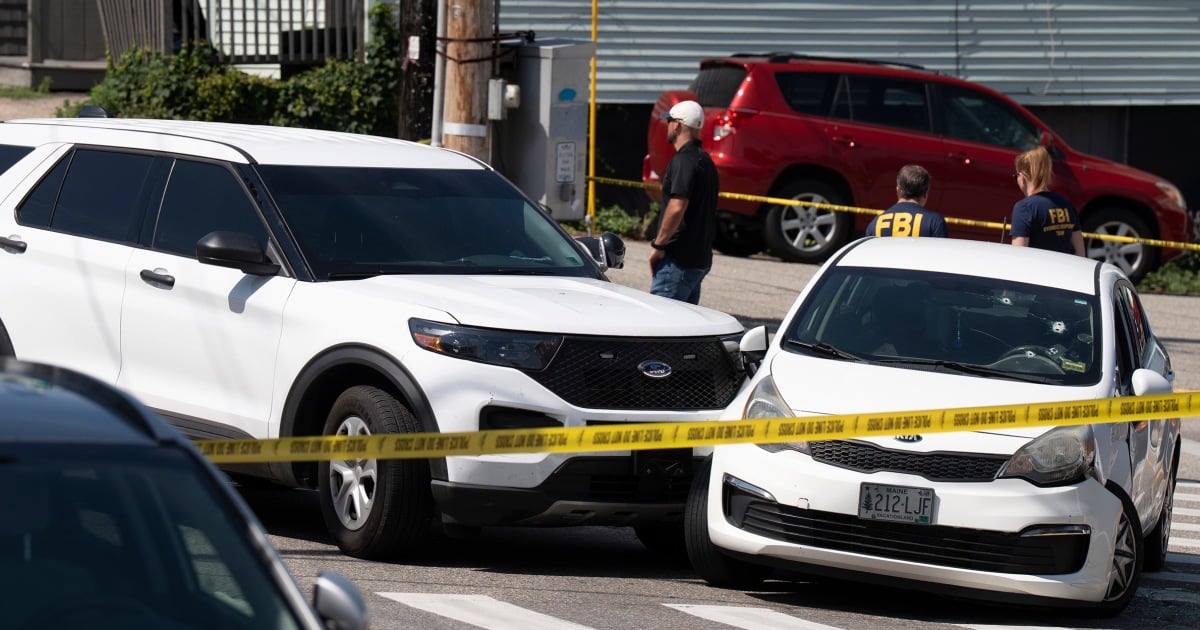

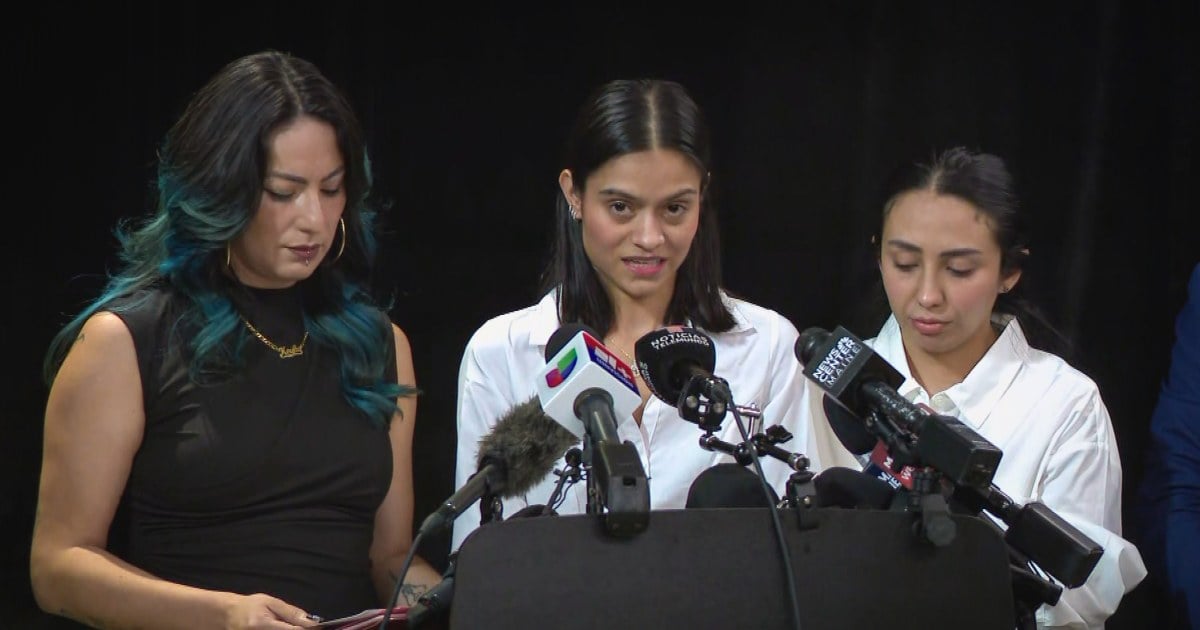
BIDDEFORD, Maine – Three days after an ICE officer shot and killed her husband on a residential street, Karolina Rojas sat before cameras and searched for words. “My soul is broken,” she said. “He was everything to me.”
Her husband, Johan Sebastián Durán Guerrero, 25, had immigrated from Bucaramanga, Colombia, in 2023. He held a work permit. He carried a Social Security number issued under the Trump administration’s own immigration apparatus. He was not the intended target of the July 14 enforcement operation in Biddeford. He died anyway.
On Thursday, NBC News reported that the officer who fired the fatal shot, David Brouillette, 37, an Army veteran, carried into his role a documented history of violent behavior recorded across years in family court proceedings.
According to documents reviewed by NBC News, Brouillette left a voicemail for a former partner threatening that all of her family members should have their throats cut. A separate incident described in the same filings alleged he threw boiling water at the woman while she was holding their young child. In another episode, he was accused of tackling and dragging a teenage daughter. Multiple protection orders were entered against him over several years.
Medical records cited in the court filings indicate Brouillette was diagnosed with bipolar disorder during childhood and attempted suicide twice before the age of 12, with hospitalizations following each episode. The records surfaced as part of a custody proceeding; individual allegations were disputed by Brouillette at the time.
Brouillette’s history has become the central accountability question in a killing that has drawn national attention. How much of that record did ICE know before deploying him? Did the agency’s screening process capture civil family court filings, which exist outside the criminal conviction databases most federal hiring checks rely on? ICE has not answered those questions.
In a statement after NBC News published its report, the agency said it would “never confirm or deny attempts to dox our law enforcement officers,” adding that Brouillette brought “nearly a decade of federal law enforcement experience with required training.” The statement did not address the domestic violence allegations or the protection orders.
The gap in the agency’s answer touches a structural problem. Federal background checks for law enforcement officers typically pull from criminal records systems and FBI databases. Civil protection orders and family court filings live in a different legal universe and are not uniformly captured by standard federal hiring screens. Whether ICE’s vetting would have surfaced Brouillette’s civil record is not publicly known.
Johan Durán Guerrero had, by the government’s own rules, done what was required of him. He arrived legally. He obtained work authorization. He paid taxes. He and Karolina built a life in Biddeford with their daughter Dulce, who is three years old. He was 25 when he was shot on a street where he had no reason to be afraid.
According to an NBC News report published the day before, Karolina Rojas described what their marriage had been and what she now faces. “He always said we’d be together until we were old,” she told reporters. Asked what she had told Dulce about where her father had gone, she paused. “I don’t have the strength to tell her that dad isn’t coming,” she said.
ICE has not released a timeline of the July 14 encounter or an explanation of how a man with valid legal status was fatally shot during an enforcement operation targeting someone else. Maine Attorney General Aaron Frey opened an independent state investigation shortly after the shooting. The Justice Department has not announced any parallel federal review.
The Biddeford killing is part of a broader pattern. Nine deaths have been linked to Trump’s mass deportation campaign since the administration’s enforcement surge began this year, a toll that includes individuals who fled or resisted as well as, in a smaller number of cases, people who were not enforcement targets at all. Civil rights organizations and Democratic lawmakers have called for mandatory independent review of ICE-involved fatalities. No legislation to that effect has advanced.
Following shootings in Maine and Texas, ICE suspended vehicle stops nationwide before resuming them under what officials described as modified safety protocols. The details of those protocols have not been made public.
The independent investigation by the Maine attorney general is expected to take months. ICE has not committed to releasing its own internal review. For Karolina Rojas, the timelines belong to agencies she cannot reach. She is in Biddeford. Her daughter is three. And she has not yet found the words.