
TOKYO – A Tokyo law professor had a simple question last month when Japan’s parliament began debating criminal penalties for desecrating the Hinomaru: why, in the 21st century, would a democracy choose to protect its flag with prison sentences while its neighbors still carry the memory of what armies marched under that flag?
That question was answered by legislation on Friday. Japan’s parliament passed a law criminalizing the burning, stomping or public soiling of the rising sun flag, making it punishable by up to two years in prison or a fine of roughly 1,250 dollars. Prime Minister Sanae Takaichi, who championed the measure, called it a correction of what she described as a “wrong double standard”: Japan had long penalized those who desecrated foreign flags, but left the Hinomaru without equivalent protection.
The new offense also extends to livestreaming flag desecration, a provision aimed squarely at online political expression. Exemptions were written in for creative works, including paintings, anime, manga, video games and even the miniature paper flags sometimes tucked into children’s meal boxes. It is precisely this ambiguity, critics argue, between political protest and artistic expression, that invites selective enforcement.
Takaichi, who leads one of Japan’s most overtly nationalist governments in decades, framed the bill as a matter of equity. Foreign flags had been protected under Japanese law since 1907; the Hinomaru was not. The same parliament on Friday also voted to amend the Imperial House Law for the first time since 1949, extending the male succession line through the adoption of distant relatives. It was a session in which Japan’s parliament revised the ground rules governing two of the nation’s most charged national symbols in a single day.
The Democratic Lawyers Association of Japan condemned the flag law as soon as it cleared the chamber. What counts as “throwing mud” or public degradation, the association warned, would be left to police and prosecutors to define. The threshold for criminal liability, the group said, amounted to an “arbitrary judgment” that could be deployed selectively against political dissidents. Separately, around 150 Japanese academics filed a petition urging the parliament to reject the bill before the vote, arguing it would chill speech directed at the government.
Takaaki Matsumiya, a professor at Ritsumeikan University, put it bluntly in testimony before the vote. The Hinomaru, he argued, “doesn’t symbolise” the democratic values Japan claims to defend. His case rested on a fact that has never been comfortable for Tokyo’s nationalist right: the rising sun flag was carried by Japanese forces across Asia from the 1930s through 1945, in a campaign of military conquest that left tens of millions dead and memories that have not faded in Seoul, Beijing or Manila.
Japan’s relationship with that history sits beneath the surface of the flag debate. No Asian government had formally responded by Friday evening, but the legislation arrives at a delicate moment. Tokyo has been increasing its defence budget toward two percent of GDP, reinterpreting its pacifist constitution to allow collective self-defense, and operating under a prime minister who has consistently pushed legislation that critics describe as nationalist. The flag law adds a new instrument to that picture.
The Hinomaru was not always protected by any Japanese law. The Flag and Anthem Law of 1999 formally designated it as the national flag and “Kimigayo” as the national anthem, but imposed no criminal sanction for desecration. Critics of Friday’s legislation argue that the intervening decades produced no crisis requiring a criminal statute, and that the real purpose of the bill is deterrence of domestic political protest rather than the protection of a symbol from foreign abuse, as Al Jazeera reported.
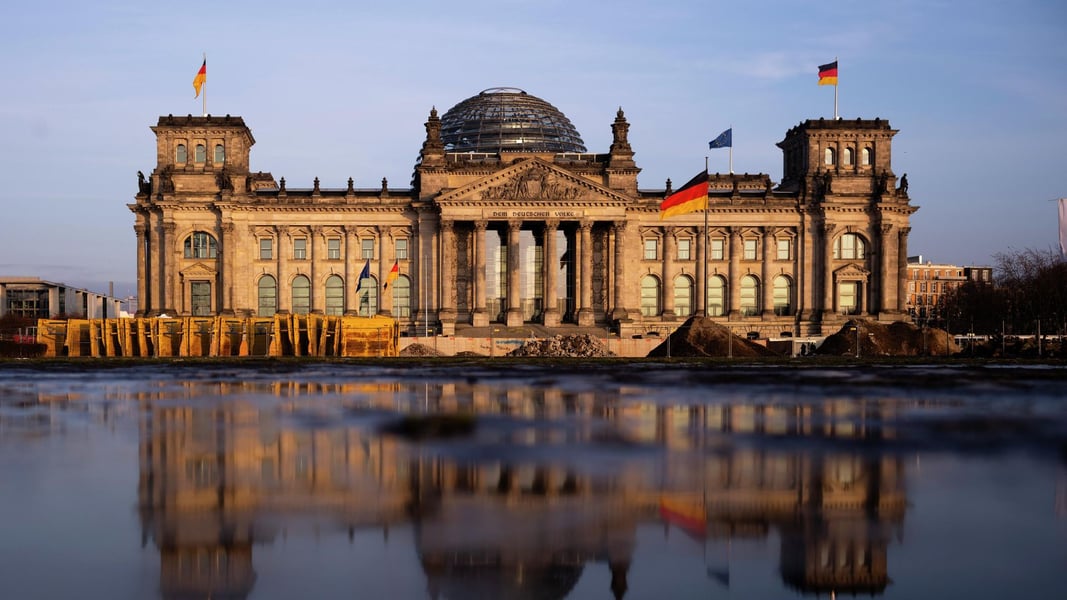
There is precedent for such laws in comparable democracies. South Korea criminalizes the desecration of its Taegukgi flag; Germany protects both the federal flag and the flags of EU member states. But legal scholars in Tokyo note that those countries carry different constitutional histories. Japan’s postwar constitution, under Article 21, guarantees freedom of expression in language deliberately broad after the suppression of dissent in the imperial era. Whether Friday’s law survives a constitutional challenge has not been tested.
The exemptions written into the bill may become the sharpest source of legal dispute. A protester who stomps on the Hinomaru in a public square faces two years in prison. An animator who digitally burns one in a streaming drama faces nothing. A content creator who livestreams a protest burning faces prosecution; the same person in a scripted video does not. The line between political expression and artistic work is rarely clean, and it will now be drawn by prosecutors under a law that offers no metric for where protest ends and art begins.
One question the law leaves open is what happens when the act occurs outside public view or outside the reach of recording. The livestreaming provision suggests legislators had a particular mode of expression in mind. What is left undefined may prove as significant as what was written in.
Takaichi’s office did not respond to a request for comment on Friday. The prime minister had made no secret of her intent before the vote, saying publicly that it was “natural” for a country to protect its own flag with the same legal tools it uses to protect foreign ones. Her critics say the argument is technically accurate but misses the point entirely: foreign flags in Japan are not the subject of domestic political protest. The Hinomaru is.
Related Posts