

NEW YORK – Netflix (NFLX) fell roughly 9 percent in after-hours trading Thursday, hitting a 52-week low, after the streaming company missed its second-quarter revenue target by $20 million and said it planned to reduce how often it publishes data on how long subscribers spend watching.
The revenue miss was technical rather than catastrophic. Netflix reported $12.56 billion in second-quarter revenue against analyst expectations of $12.58 billion, a gap of less than two-tenths of a percentage point, the Hollywood Reporter reported. Earnings per share of $0.80 beat the consensus estimate of $0.79, and net income reached $3.4 billion. The numbers, taken in isolation, were unremarkable in either direction.
What sent investors into after-hours selling was Q3 guidance and the engagement announcement. Netflix projected third-quarter revenue of $12.86 billion, which implies annual growth of 11.7 percent, a lower trajectory than recent quarters and below the pace analysts had built into forward models. Full-year guidance was narrowed to $51.0 to $51.4 billion, consistent with a 13-to-14-percent annual range but offering little cushion at the top end.
The engagement announcement carried its own weight. Netflix stopped disclosing quarterly subscriber counts in the first quarter of 2025, replacing that metric with semiannual reports on total viewing hours as the most direct signal of engagement intensity. The decision to reduce even that disclosure removes the clearest substitute for the subscriber data investors used to receive. Netflix did not specify what a reduced update schedule would look like, which meant the announcement created more uncertainty than it resolved.
That ambiguity has a structural cost. Subscriber count and engagement data exist in part to give analysts the inputs they need to model churn, price sensitivity, and long-run revenue. When those inputs disappear, models depend more heavily on management guidance, which is precisely the number Netflix just guided below expectations for Q3. The combination sent the stock to levels last seen in September 2024, before the company’s advertising tier expansion began materially lifting its market multiple.
There is an apparent counterweight in the buyback activity. Netflix repurchased $4.7 billion of its own shares in the second quarter, the largest single-quarter buyback in the company’s history and a signal that management viewed the stock as undervalued at the levels where those purchases were made. The remaining authorization sits at roughly $27 billion. Buybacks of that size typically anchor a floor under the share price, but they also consume capital that could otherwise fund content, a tension Netflix has not publicly resolved.
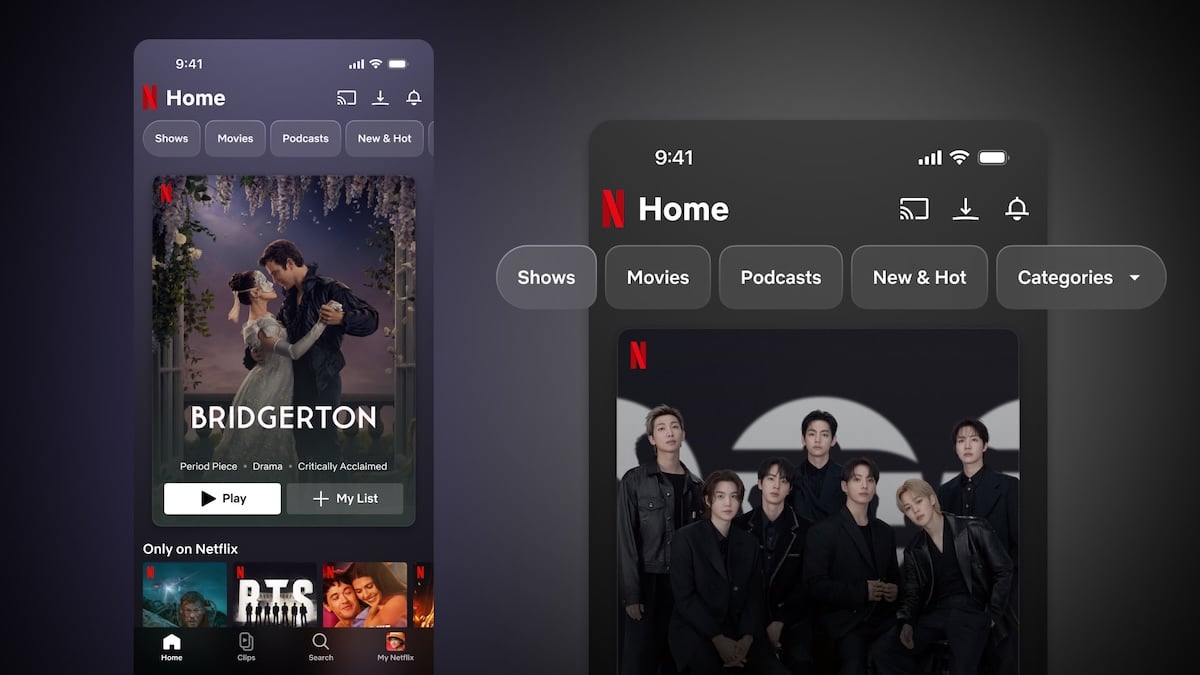
On the content side, the quarter’s standouts were established franchises rather than new intellectual property. The second season of the limited drama Beef returned strong viewing numbers. A Michael Jackson documentary, Michael Jackson: The Verdict, performed well in its genre. Neither title carried a specific hours disclosure, consistent with the direction Netflix signaled it plans to extend across future quarters.
The company’s market characterization remained consistent with prior quarters: Netflix says it has reached less than 45 percent of roughly 800 million addressable global households and captures approximately 7 percent of a $670 billion revenue pool that spans traditional television, streaming, and gaming. That framing positions Netflix as still early-stage relative to its opportunity, a competitive argument Disney also advanced when reporting a surprise comeback quarter in May. The difference is that Disney was beating expectations when it made that claim.
Netflix’s live programming ambitions are not yet financially material; live content is projected at roughly 5 percent of the content budget this year, and the direction matters. The company is potentially exploring always-on linear channels, a model that would bring it closer to traditional broadcasting and farther from the on-demand model that originally distinguished it from cable. That transition, if it materializes, introduces a different cost structure and a different competitive set than the one investors priced at its current multiple.
Viewing hours did grow. Netflix said total hours watched increased 2 percent in the first half of 2026 compared to the same period last year, a slight acceleration from the 1.5 percent growth the company reported for full-year 2025. The company framed that as evidence of healthy retention and market share gains. Whether a 2 percent growth rate in viewing hours is consistent with the revenue trajectory investors expect from a company trading at Netflix’s historical multiples is the question the Q3 report will need to answer more clearly than Q2 did.
What the Q2 report does not resolve is whether the Q3 revenue guidance of $12.86 billion is conservative management sandbagging before a stronger second half, or whether it reflects a genuine deceleration in the pace at which Netflix converts its addressable market into paid subscribers and advertising revenue. The company’s decision to reduce engagement updates makes that distinction harder to track in real time between quarterly reports. Investors are now pricing in whichever interpretation they find more plausible, and the after-hours move suggests the balance of opinion is not favorable.