
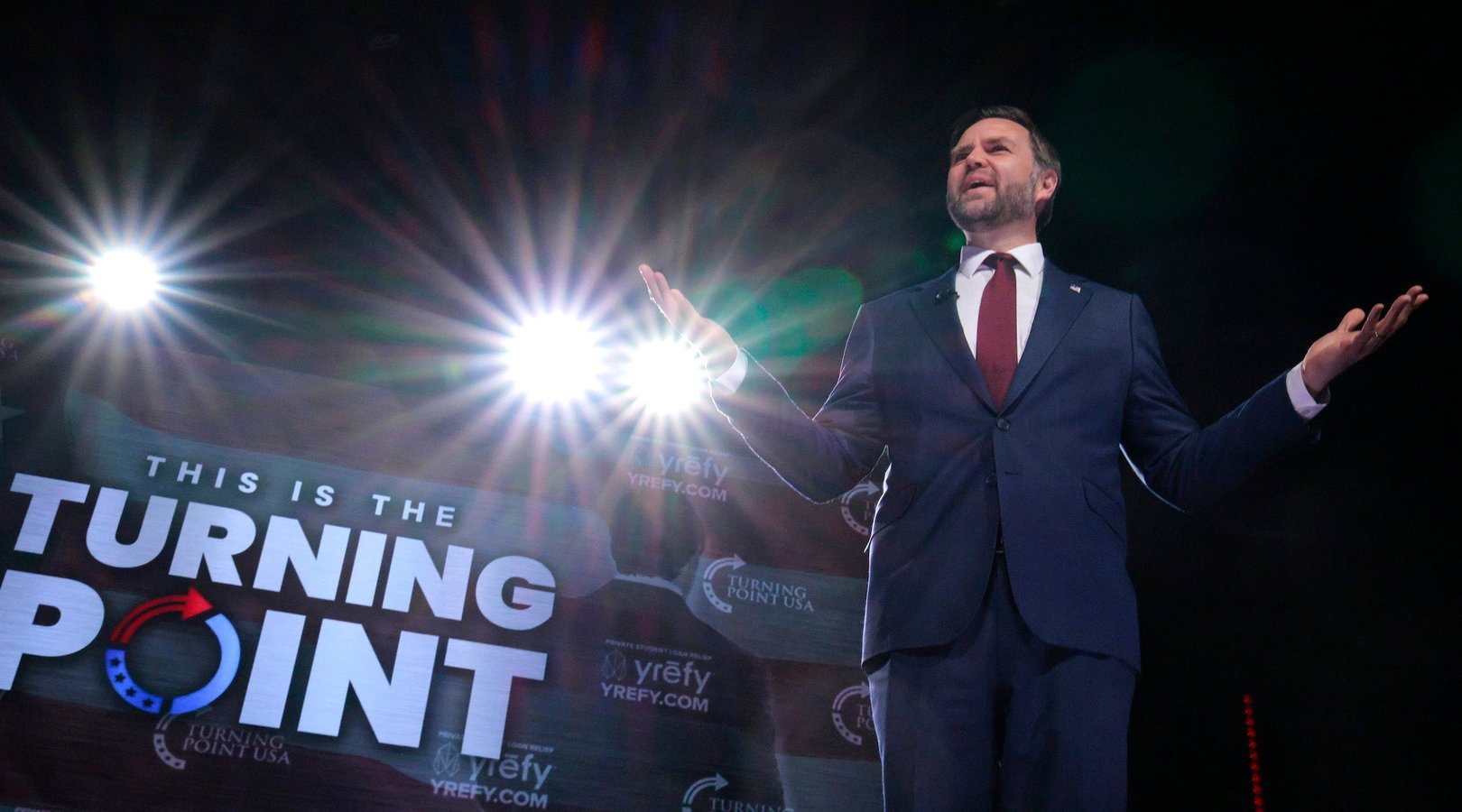
WASHINGTON — JD Vance said last Wednesday that Jeffrey Epstein “seemed to be connected” to elements of the Israeli “deep state.” He said it on the Joe Rogan Experience, hedged it with “seemed,” and acknowledged his own administration had “absolutely screwed up the comms” of the Epstein files. But it was the most senior serving American official to frame the question publicly, and it sent reporters back through 3.5 million documents the Justice Department released in January. Those documents keep returning to one name.
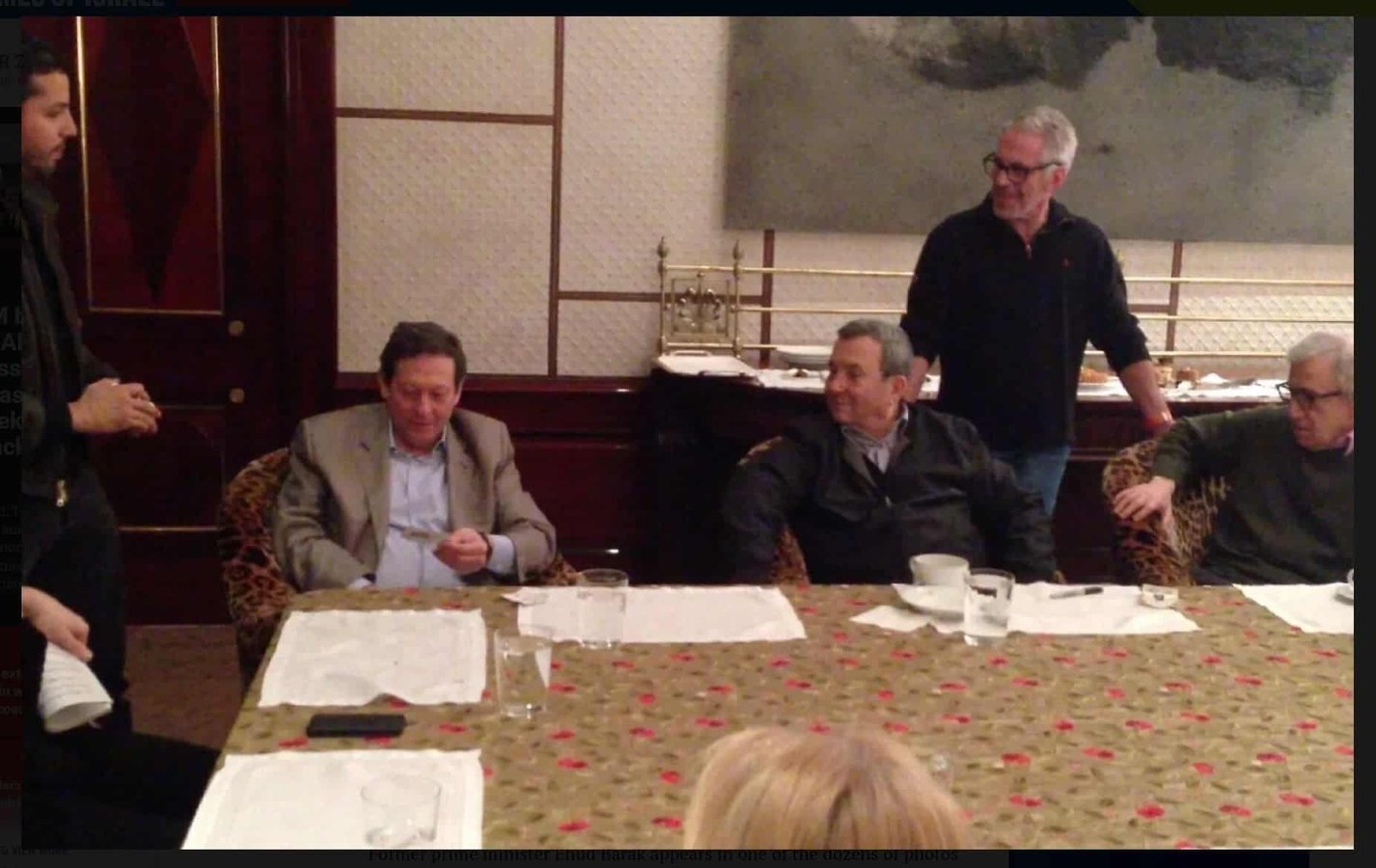
Ehud Barak was Israel’s prime minister from 1999 to 2001 and its defense minister from 2007 to 2013. He is also, by the weight of documented evidence, the Israeli official most thoroughly entangled with Epstein’s network. Not because he has been accused of participation in the abuse of women and girls, which has not happened. Because the files show Epstein was woven into Barak’s effort to return to power in Israel: approving money for his political nonprofit, coordinating his meetings at the United Nations General Assembly, and maintaining what hacked emails describe as “intimate, oftentimes daily correspondence” from 2013 to 2016.
The relationship was not secret at the start. In 2015, Barak-linked entities and Epstein’s Southern Trust co-invested in Reporty Homeland Security, an Israeli emergency communications startup later rebranded as Carbyne. Barak described it publicly as a public-safety technology venture. Carbyne was sold to the American technology firm Axon in early 2026 for $625 million. What the Carbyne filings did not show: the depth of the financial relationship that preceded it, and what Epstein was getting from it.
In 2020, Israel’s Likud Party petitioned for a criminal probe into $2.3 million Barak received from the Wexner Foundation between 2004 and 2006, the same foundation through which Epstein had built much of his philanthropic network before his 2008 guilty plea. The court rejected the petition. The foundation’s attorney asserted Epstein had no involvement in approving the payments. Correspondence released since then contradicts that directly: it shows Epstein personally approved the transfer.
Barak had asked Epstein for the funding in 2017, describing it as necessary for “saving the Jewish state” through a nonprofit he called Achrayut Leumit, or National Responsibility. The framing was political. Barak was attempting to build a comeback vehicle against Benjamin Netanyahu. The money was personal. That intersection is what the files keep surfacing: Epstein as financial infrastructure for someone seeking political power, with no public accounting of what Epstein received in return.
The intelligence dimension runs through a different figure. Yoni Koren, a Mossad veteran who served as Barak’s military intelligence aide, made regular stays at Epstein’s New York townhouse. In 2012, documents reviewed by Al Jazeera show, Epstein paid for Koren’s cancer treatment. The alternative explanations for that arrangement are not each equally plausible.
The FBI’s Los Angeles field office produced a memo in October 2020 reporting that one of its sources claimed Epstein “was a co-opted Mossad agent” and had been “trained as a spy” for Israel’s intelligence service. The document is a source’s report, not a bureau finding. The informant behind the claim was subsequently identified and his credibility heavily contested: he was jailed and ordered to pay $71 million for impersonating a government intelligence asset, which limits what the document can establish on its own. Israeli intelligence officials cited by Fox News rejected the Mossad allegation outright. Netanyahu, in a February social media post, wrote that Epstein’s close relationship with Barak proved the opposite of the Mossad allegation, without explaining the reasoning that would make that conclusion follow from the evidence.
Vance’s comment on Wednesday was the latest beat in a story that has been managed badly on the American side since the files were released. Former Attorney General Pam Bondi, who had publicly suggested a purported Epstein “client list” was sitting on her desk, was fired in April after it emerged the claim was false. Epstein survivors who met with acting Attorney General Todd Blanche last week described the meeting as abrasive and without result, according to survivor Annie Farmer. The session had been a condition Sen. Thom Tillis set before casting his confirmation vote.
Barak, speaking to Israel’s Channel 12 in an interview covered by NBC News, said he regretted having ever known Epstein. “I am responsible for all my actions and decisions,” he said, “and there is definitely room to ask if there wasn’t room for more in-depth judgment on my part.” He has consistently denied attending any of Epstein’s gatherings involving women and girls, and has not been accused of wrongdoing in the abuse cases.
What Barak has not addressed in any interview is the sequence the documents establish: that Epstein approved money for his political fund, flew him on his private plane, stayed in contact with him nearly every day for three years after Epstein’s 2008 guilty plea, and that the Mossad veteran in Barak’s immediate circle was staying in Epstein’s townhouse and receiving Epstein’s money for medical treatment. Each of those facts is documented. Together, they describe a relationship with operational depth that Barak’s public statements have never accounted for.
The financial giving to Israeli institutions extended further. Epstein donated $25,000 to the Friends of the Israeli Defense Forces and $15,000 to the Jewish National Fund in 2006, both through his COUQ Foundation. The donations are smaller than the Barak transactions and less revealing on their own. They indicate pattern: a man systematically building relationships with Israeli institutions and senior Israeli officials at the same time.
Vance did not name Barak on Wednesday. He said “deep state” and left the particulars to implication. Netanyahu said Barak proves Epstein was not Israeli intelligence, and left the reasoning unexplained. Barak said he regrets the friendship, and left the operational details unaddressed. The files are public. They say what they say. What any American or Israeli institution intends to do about what they say remains, as of Saturday, the question that none of the principals has chosen to answer.