
WASHINGTON – Boeing’s defense unit chief said he expects additional cost growth on the company’s contract to build two new presidential aircraft, while committing to a mid-2028 delivery for the first VC-25B. The announcement signals that Boeing (BA) has not yet contained the financial damage from a fixed-price program that has already cost the company approximately $2.8 billion in charges.
Steve Parker, president of Boeing Defense, Space and Security, told reporters that work remaining in final assembly, wiring, structural finishing, and aircraft certification will generate further losses that the company cannot recover under the contract’s fixed-price structure. He declined to specify what the additional overruns will amount to, framing the cost growth as a byproduct of protecting the schedule rather than a failure to control it.
“I do expect to see some cost growth there as we come through final assembly,” Parker said. “That cost growth will be focused on making sure that we hit the 2028 time frame.” The formulation reveals Boeing’s current calculus: holding the delivery date matters more than limiting what the company spends to hold it.
The VC-25B program was established by a contract signed with the Air Force in 2018, setting a fixed price of $3.9 billion for two heavily modified 747-8 airframes. The aircraft require advanced communications systems capable of supporting a flying White House, air-to-air refueling, extensive defensive electronics, and specialized crew accommodations. Fixed-price contracting was chosen to protect the government from the kind of cost overruns that had plagued earlier defense acquisitions. That protection transferred the cost risk entirely onto Boeing.
Since signing, Boeing has absorbed roughly $2.8 billion in charges against the program, none of which can be billed to the Air Force under the original terms. A recent government-requested modification added $15.5 million to the contract, bringing total cumulative contract value to approximately $4.3 billion, already past the original ceiling. The additions reflect scope the Air Force requested, not Boeing’s own overruns. Those remain on Boeing’s books alone.
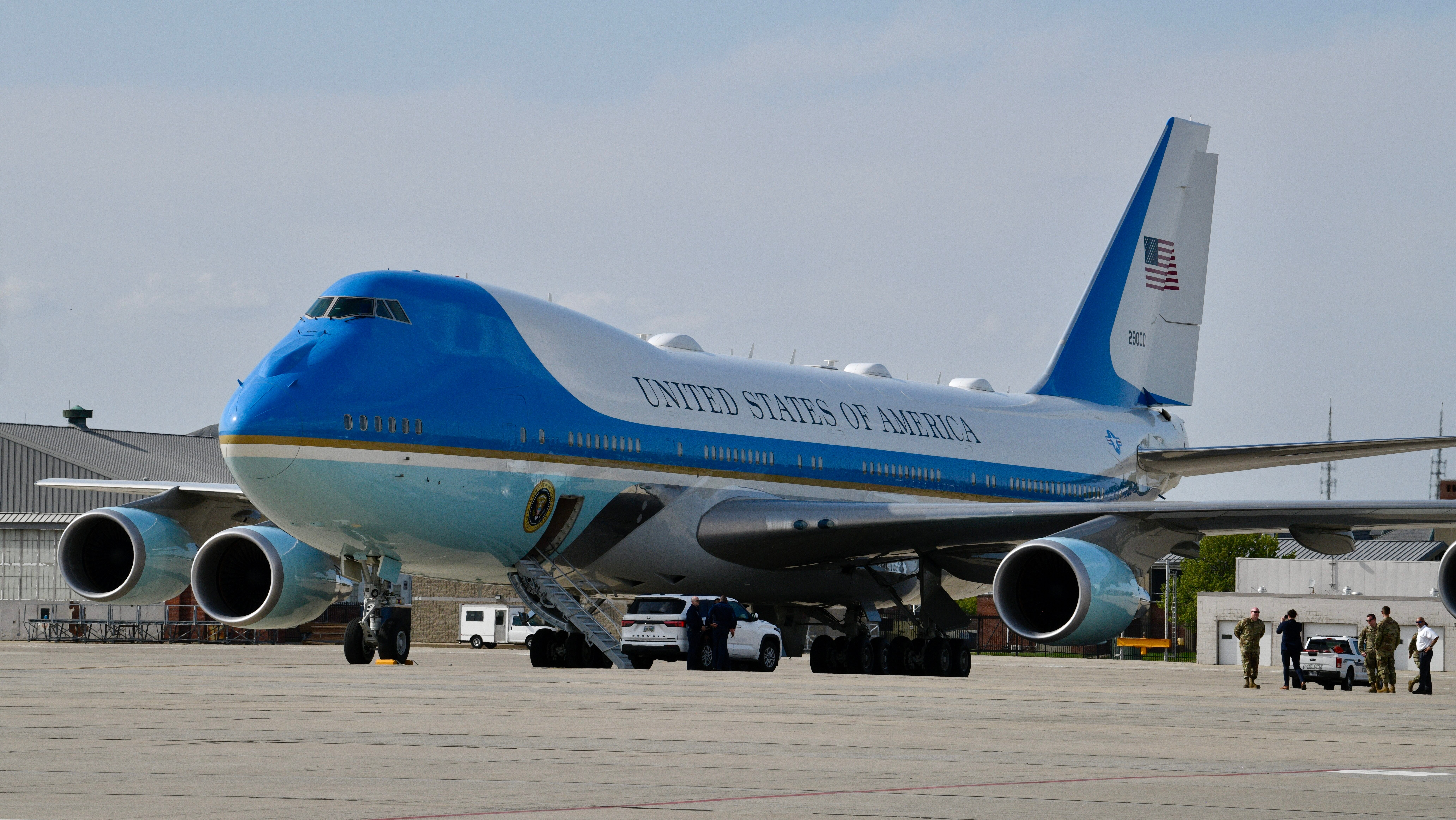
Parker said engineering work is complete. Both aircraft are in final assembly, with flight testing expected to begin in 2027 and the first handover to the Air Force scheduled for mid-2028. The timing for the second aircraft was not specified. The Air Force currently operates two VC-25A jets, 747-200B-based aircraft that have served as Air Force One since 1990 and are becoming progressively more expensive to maintain as the airframes age.
The VC-25B is the latest in a series of Boeing fixed-price defense programs to produce systematic losses. The KC-46 Pegasus tanker, another fixed-price government contract, generated approximately $2 billion in charges before Boeing negotiated revised terms with the Air Force. Across its defense division, Boeing has recorded write-downs on multiple major programs over the past several years, raising persistent questions about whether its pricing strategy for government work was viable at the prices it originally agreed to.
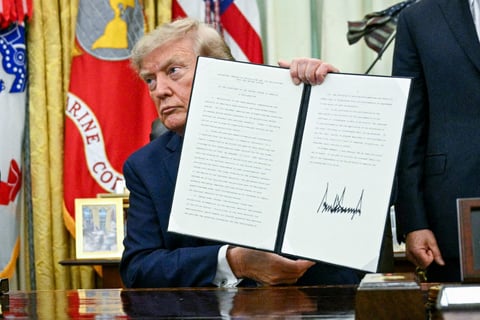
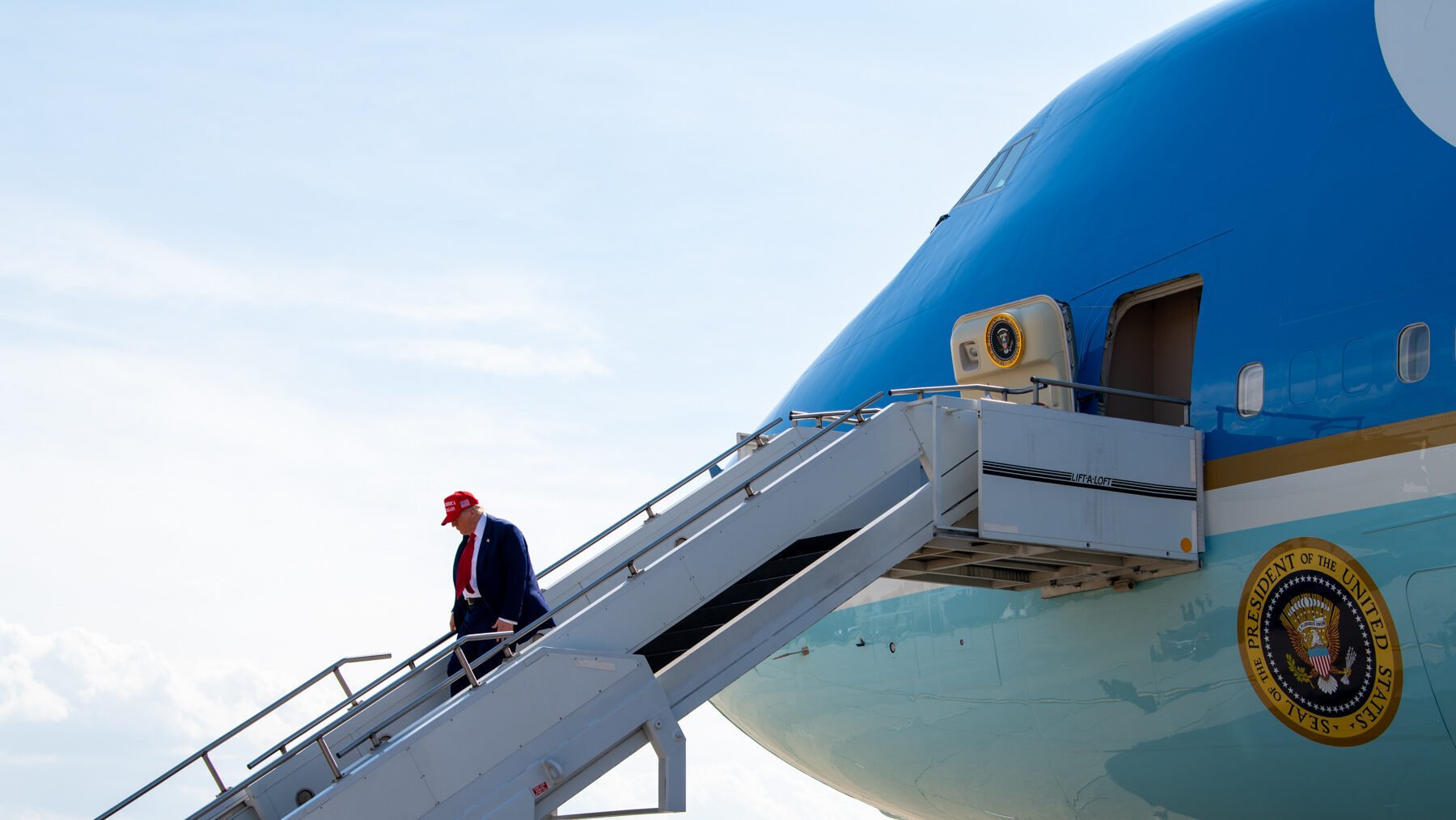
The program has proceeded against a noisier political argument about the presidential fleet. Qatar gave Trump a 747-8 fitted as a VIP transport, later modified by L3Harris and delivered to Joint Base Andrews in June for commissioning flights, and the president made his inaugural flight aboard the Qatar-gifted aircraft in early July, as senators raised unresolved questions about foreign-gift prohibitions. The gifted jet does not alter the VC-25B program schedule, but it has complicated the public accounting of how the presidential fleet is being managed and funded.
The administration has simultaneously worked to limit coverage of the fleet’s political dimension. In July, Justice Department agents served grand jury subpoenas on four New York Times reporters over stories on the Qatar aircraft, an action press freedom advocates described as unprecedented. The VC-25B program, proceeding in Boeing’s facilities without comparable public attention, has not attracted equivalent scrutiny.
Boeing’s defense division is finishing the VC-25B alongside other strained programs while managing fallout from the commercial side. A company-wide IT failure knocked factories offline on the final day of the second quarter, halting inspections and deliveries across Boeing’s commercial aircraft lines. Whether such disruptions have carried into the presidential aircraft program was not addressed by Parker.
What Parker did not quantify, and what the program’s history argues will matter most, is how much Boeing intends to absorb through certification. The 2028 delivery date is the commitment the company is choosing to defend. How expensive that defense turns out to be, and whether a testing program beginning in 2027 surfaces the kind of complications that have extended other programs, remains the unanswered part of Parker’s otherwise confident outlook.
Related Posts