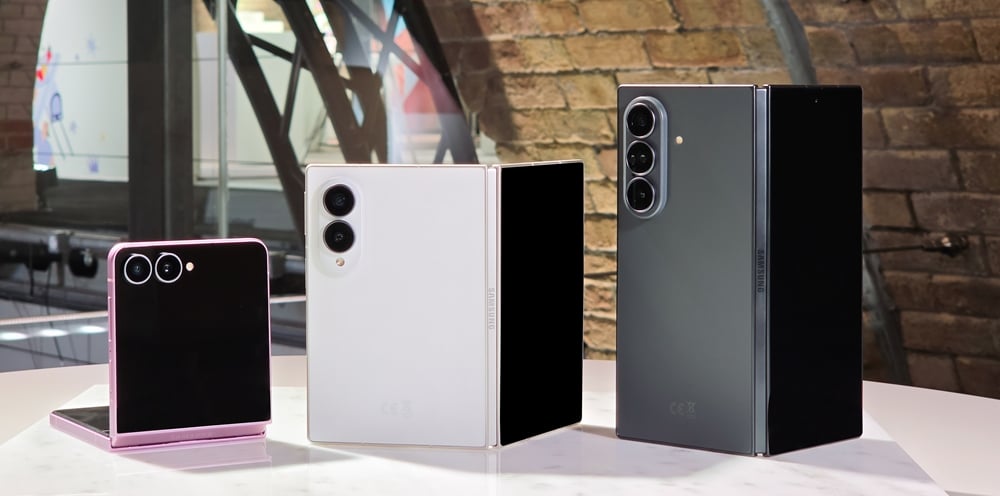

LONDON — The Samsung Galaxy Z Fold8 Ultra arrived at Galaxy Unpacked in London on Wednesday priced at $2,099, and within an hour of its unveiling the most consistent observation from critics who handled the device was that the $1,899 Galaxy Z Fold8 sitting next to it felt like the more interesting product. Samsung launched three foldables at once, and the one reviewers kept reaching for was not the flagship.
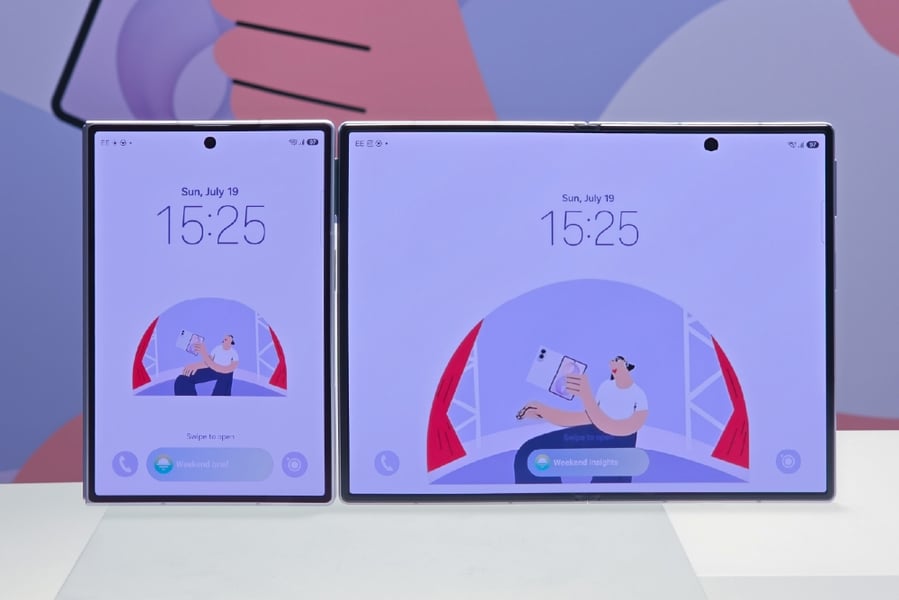
The two phones represent a deliberate split in Samsung’s foldable strategy. The Ultra carries a 200-megapixel main camera, an 8-inch main display, and measures just 4.1 millimeters thick when unfolded, making it the thinnest Galaxy Z Fold yet at 215 grams. The standard Z Fold8, at 201 grams, is the lightest Z Fold Samsung has shipped. Its main display adopts a squarer 4:3 aspect ratio at 7.6 inches, a format reviewers said felt more natural for side-by-side multitasking and horizontal video.
Both phones run Qualcomm’s Snapdragon 8 Elite Gen 5 for Galaxy and are the first Samsung foldables to use silicon-carbon battery chemistry. The shift matters because silicon-carbon cells store more charge without growing thicker, enabling the Ultra’s 5,000 milliamp-hour battery and the standard model’s 4,800mAh pack without adding bulk. Both support 45-watt wired charging and 20-watt wireless, and both carry IP48 water resistance.
The camera difference between the two models is significant. The Ultra’s 200-megapixel main shooter captures HDR data at full resolution, a first for Galaxy foldables, and pairs with a 50-megapixel ultra-wide and a 10-megapixel 3X optical telephoto. For the first time on a foldable, Samsung built 8K video recording using the APV codec, which preserves more shadow and highlight detail than H.265 for in-device editing. The standard Z Fold8 uses dual 50-megapixel cameras, no telephoto lens, and gains a My FanCam mode that tracks a moving subject automatically across the wider screen.
Samsung built Google’s Gemini AI models into both phones across more than 40 applications. A feature called Now Brief aggregates schedule data, health alerts, and security notifications into a single interface; Now Nudge converts those insights into suggested actions with a side-by-side conversation mode. Both phones include a six-month free trial of Google AI Pro, which packages five terabytes of cloud storage valued at roughly $20 monthly.
“By setting a new standard for foldables, we are once again advancing the premium mobile experience and opening the next era of intelligence to more people,” TM Roh, president and CEO of Samsung’s Device eXperience Division, said at the London event. The harder question the launch left open was which of the two phones Samsung expects to lead in volume, given that the one with more ambitious specs is also the one reviewers found harder to prefer.
The $100 price increase on the Ultra versus Samsung’s previous top foldable was not accidental. Bloomberg and CNBC both reported before the event that Samsung has been repositioning its foldable lineup in anticipation of Apple’s expected category debut. A foldable iPhone has been anticipated for late 2026 or early 2027, and Samsung’s pricing strategy attempts to set a new ceiling before that arrival. The week’s other major AI hardware development, AMD’s $5 billion investment in Anthropic announced Tuesday, reflects how quickly the tech industry is moving to lock in premium positioning ahead of expected technology shifts.
Samsung’s decision to offer two distinct form factors under one product family is also a strategy hedge against Apple’s unknown design. The Ultra retains the tall, narrow folding format familiar from previous Z Fold generations. The standard Z Fold8 is a different kind of phone: wider cover display at 5.5 inches, squarer main screen at 7.6 inches, shorter profile. If Apple’s foldable arrives in a format that resembles either design, Samsung can point to prior art. If Apple does something different, Samsung covers both sides.
The Ultra’s 200-megapixel sensor draws from engineering Samsung deployed in the Galaxy S26 Ultra smartphone earlier this year, crossing the S-series camera system into the foldable line for the first time at this resolution. The APV 8K pipeline is the specification photographers will scrutinize most carefully, but whether the telephoto gap between the two Fold8 models justifies a $200 price difference depends on how buyers weigh camera range against the base model’s wider, lighter body.
Samsung also debuted its first Galaxy smart glasses at Unpacked, entering a market Meta has held since 2023 with its Ray-Ban collaboration. Samsung’s version emphasizes a privacy-conscious design with fewer exposed cameras and integrates with the Galaxy Watch Ultra 2 and Watch 9, also announced Wednesday. A price was not confirmed at the event.
The Galaxy Z Flip8 arrived alongside the foldables at 180 grams and 6.1 millimeters when unfolded, Samsung’s lightest and slimmest clamshell yet. It runs Samsung’s Exynos 2600 chip rather than Snapdragon, carries a 4,300mAh battery with 25-watt wired charging, and features an expanded FlexWindow cover display with additional applications and hands-free shooting modes.
Pre-orders opened Wednesday for both Fold models in select markets. Carrier deals from T-Mobile, Verizon, and AT&T included trade-in promotions, and Amazon was offering a $350 gift card with pre-orders. The Z Fold8 Ultra starts at $2,099 for 12GB RAM and 256GB storage, rising to 16GB and 1TB at the top tier. The Z Fold8 begins at $1,899. Samsung Newsroom confirmed pre-orders are live in select markets with availability rolling out by region.
What the event left unresolved is whether the Ultra’s $2,099 price holds when Apple’s first foldable enters the market. Early reviewers found the standard Z Fold8 the more comfortable device to hold and use, which is not the reception Samsung planned to headline. The Ultra carries the better camera and more ambitious hardware, but the $1,899 model with a wider screen is making a case at launch day that may prove difficult to reverse.