
AUSTIN – TSLA fell roughly 4 percent in after-hours trading Tuesday even as Tesla reported second-quarter revenue of $28.2 billion, a record. Investors were not trading on the top line. They were trading on a 1.4 percent operating margin and free cash flow that turned negative by more than $3 billion.
Net income for the quarter came in at $1.1 billion, down 5 percent year-over-year. The company beat revenue expectations of $25.7 billion by a wide margin and posted 25.5 percent year-over-year growth. On most measures, it was a strong quarter for any company selling physical goods at scale. For Tesla, none of it answered the question that matters: what does a dollar of revenue actually produce now that the company is simultaneously funding three capital-intensive bets on its future shape.
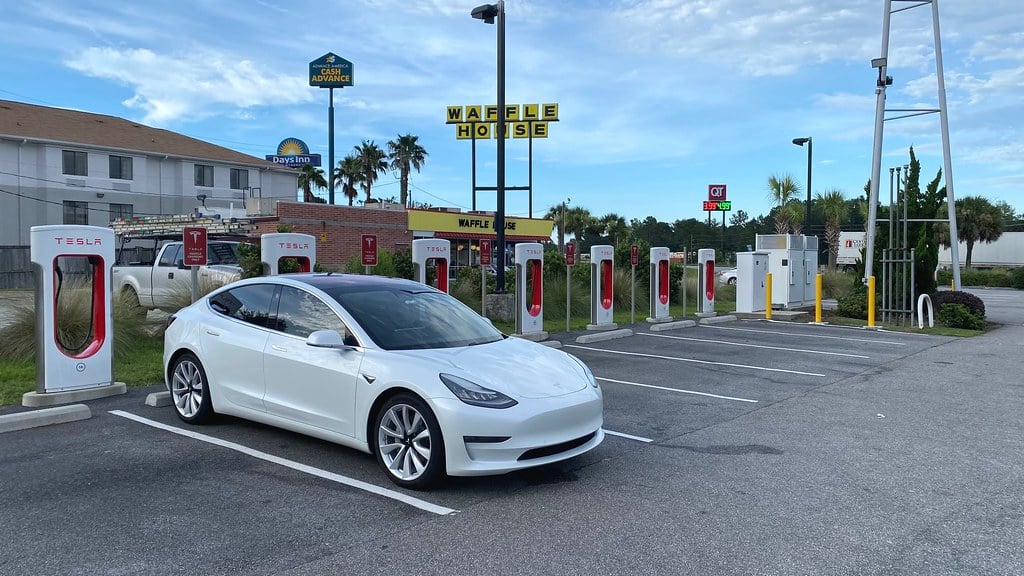
The full-year capital expenditure guidance stands at $25 billion, up roughly 142 percent from 2025 levels. Free cash flow turned negative by $3.3 billion, a gap that reflects what Tesla is spending to build out Optimus robot production, expand Supercharger infrastructure, develop its robotaxi program, and construct the AI computing clusters that underpin all of it. Each of those programs is absorbing capital faster than the automotive business currently generates it.
The 1.4 percent operating margin is the number analysts will carry into every forecast they rebuild over the next three months. Tesla operated at margins above 17 percent at the peak of its pricing power in 2022. The compression since then has been steep and largely self-inflicted: Tesla cut vehicle prices repeatedly to defend volume during a demand plateau, then found itself rebuilding market share from a lower profitability base. The Q2 result suggests the bottom may not yet have been reached.
Deliveries for the quarter reached 480,000 vehicles, a record. The company had already disclosed that figure, posting its production and delivery report earlier in the month with a note that earnings data would follow July 22. What investors did not know until Tuesday was what those record 480,000 vehicle deliveries actually cost in margin terms. The answer, at 1.4 percent, was substantially worse than the 2 to 3 percent most analysts had modeled.
The full self-driving attachment rate reached 55 percent in Q2, meaning more than half of Tesla buyers are now opting into FSD capability at delivery. That is the commercial case Musk has been building toward: a software layer that accumulates on top of car sales and carries margins the vehicle business cannot match. According to Tesla’s investor filings, FSD contributed meaningfully to the quarter, though the company did not break out software revenue as a standalone segment. The National Highway Traffic Safety Administration has an open investigation into FSD-related safety incidents, a regulatory overhang that limits how aggressively Tesla can market autonomous features in the United States.
Chief Executive Elon Musk described the company’s current investment trajectory as “the fastest industrial expansion since World War II.” He was not mischaracterizing the scale. The robotaxi program is targeting commercial deployment across multiple cities within twelve months, with revenue projected before end-2026. The Optimus humanoid robot line is entering a production ramp Musk characterized as accelerating. AI infrastructure spending is expanding. What none of that represents, yet, is revenue in the quarter just reported.
On the competitive front, BYD’s narrowing competitive gap in global electric vehicle sales continues to define Tesla’s market context. BYD delivered 557,090 battery-electric vehicles in Q2, ahead of Tesla by roughly 77,000 units. A year earlier that margin stood at approximately 220,000 vehicles. The compression of BYD’s lead reflects Tesla’s volume recovery, but BYD operates from a cost structure built around vertically integrated battery production that Tesla cannot replicate at its current scale. Tesla chose not to cut prices in Q2 2026, holding its pricing structure flat. That decision preserved whatever margin remained, but it also meant defending volume through means other than price.
The NHTSA inquiry into FSD sits in the background of every statement Musk makes about autonomous capability. The agency confirmed in late June that it is reviewing incidents involving the full self-driving software, and while no recall has been issued, an active federal investigation limits Tesla’s room to make certain marketing claims. The earnings call did not address the investigation in detail.
Revenue grew 25.5 percent year-over-year and came in $2.5 billion ahead of analyst consensus. On a standalone basis, those are the numbers of a company executing its core business well. But Tesla’s current valuation, which has persisted well above what its automotive earnings alone would justify, is predicated on the AI and robotics businesses delivering commercial scale on a timeline Musk describes with precision and analysts discount with proportional skepticism.
Optimus has not generated commercial revenue. The robotaxi product is not yet deployed at scale. FSD subscriptions at current pricing do not offset the capital expenditure being incurred across the AI stack. The $25 billion full-year capital expenditure target assumes the programs it is funding will produce returns before the company’s cash position requires it to slow. What the quarter does not answer is whether that assumption is correct. That is the calculation traders ran on Tuesday evening, and it landed TSLA at a 4 percent discount before Wednesday’s open.