
TEHRAN – Amir Hossein Safari had been held in Dastgerd Prison for six months before Iranian authorities executed him publicly in Esfahan on July 28. His co-defendant, Abolfazl Sepahi, was hanged alongside him in the same ceremony, making them the 25th and 26th people put to death in connection with Iran’s January 2026 uprising, according to Amnesty International.
Both men were convicted under Iran’s most expansive capital provisions: moharebeh, or “enmity against God,” and efsad-e fel-arz, meaning “corruption on earth.” Both charges carry mandatory death sentences and are applied to cases prosecutors frame as armed insurrection against the state. Authorities alleged both participated in the killing of four police agents, along with property destruction, arson, and weapons possession during the Esfahan protests on January 8, 2026.
“The Iranian authorities are unleashing a horrifying wave of executions and death sentences to punish and suppress dissent,” said Heba Morayef, Amnesty International’s Regional Director for Middle East and North Africa, in a statement released Monday. Her organization, which has been documenting the crackdown since its earliest weeks, warned that at least 60 more people remain at risk of execution, including three who were arrested as children.
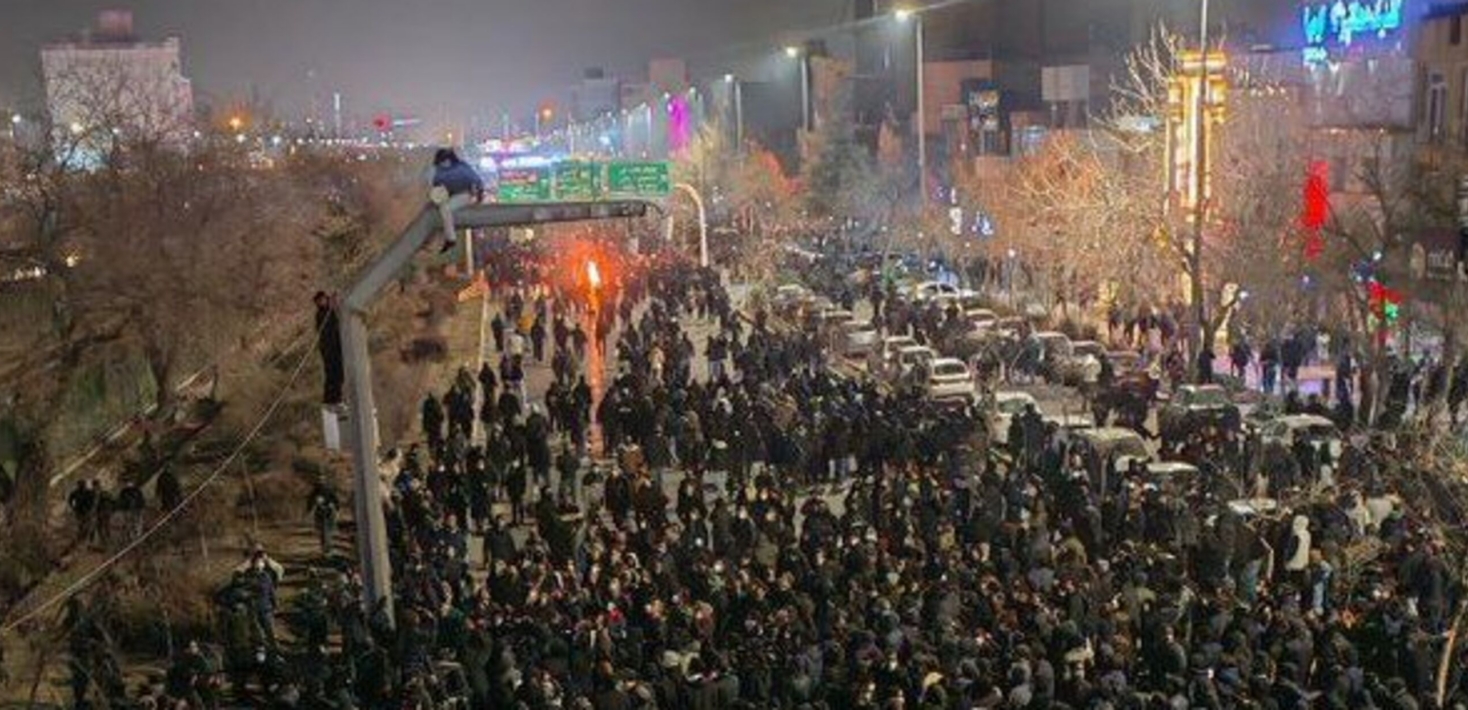
The January 2026 unrest began December 28, 2025, when demonstrations erupted across Iranian cities and escalated within days. The most violent period came on January 8 and 9, 2026, when security forces moved against protesters with force. Amnesty International has documented thousands killed and tens of thousands arrested, characterizing it as one of Iran’s most severe domestic crackdowns in recent years, drawing comparisons to the 2019 fuel protests and the Mahsa Amini demonstrations of 2022.
Iranian authorities have consistently maintained that judicial proceedings have followed lawful process, and officials have rejected international calls for clemency as interference in domestic affairs. Iran’s judiciary issued no public statement on the executions of Safari and Sepahi.
Eight others from the same Esfahan case now face what Amnesty calls imminent execution: Ali Dashti, Alireza Raisi, Abolfazl Ebrahimi, Alireza Sepahi, Amirhossein Ebrahimi, Amirhossein Maleki, Ghaem Hosseini, and Shervin Bagherian. Bagherian’s case has drawn particular attention: Amnesty documented that he was subjected to 21 days of enforced disappearance and physical abuse before being formally charged, an allegation the judiciary has not acknowledged.
The moharebeh charge carries a contested history in Iranian jurisprudence. Applying it requires establishing that defendants took up arms against state authority, a threshold that Amnesty International and several Iranian human rights attorneys argue was not demonstrably met in documented cases from the January unrest, where many convictions rest on confessions that families say were obtained under duress.
Many of those convicted in connection with the January protests have been held at Evin Prison in Tehran, which itself became a site of resistance this summer. Hunger strikes among political detainees in Ward 8 drew international attention in recent weeks, and EH documented an outbreak of tuberculosis among Evin’s political prisoner population as capital appeals continued through the system.
Iran does not publish comprehensive execution statistics. Amnesty International’s count of at least 26 relies on its own documentation, which the organization acknowledges may be incomplete given information restrictions inside the country. Iran Human Rights, a Norway-based monitoring group, has published parallel counts that align broadly with Amnesty’s figures.
The United Nations Special Rapporteur on human rights in Iran and the UN High Commissioner for Human Rights have both called for an immediate halt to executions tied to the January protests. Multiple European governments summoned Iranian ambassadors over the past six months. The Council of Europe passed a resolution in May demanding commuted sentences. Tehran declined to act on any of those requests.
Amnesty International’s statement on Monday explicitly called on UN member states to support a special envoy mandate for Iran at the Human Rights Council, a designation Tehran has successfully blocked in previous votes, and to refer the situation to the International Criminal Court. An ICC referral would require Security Council action and faces substantial political obstacles, but Amnesty’s public push reflects a calculation that conventional diplomatic channels have been exhausted.
What Amnesty International cannot answer in its documentation is what happens as the eight men in the Esfahan case reach their own final appeals. Shervin Bagherian, who spent three weeks in enforced disappearance before being charged, is among them. The system that has executed 26 people in six months does not appear to be slowing, and whether any government moves fast enough to matter is the question that Monday’s statement left without an answer.