DHAKA — Six contractors from six different districts submitted bids for power line rehabilitation work in Jamalpur, Bangladesh, and each quoted the exact same amount: BDT 665,000, down to the last decimal point. Procurement specialists say that is not a coincidence.
Official government documents reviewed by The Finance Today reveal that on August 7, 2024, the then General Manager of Jamalpur Palli Bidyut Samity (PBS), Khondokar Shamim Alam, signed six separate contracts at the Jamalpur PBS headquarters. The agreements covered the rehabilitation of ten-kilometer overhead power distribution lines in six separate zones, with each award going to a firm from a distinct district: Naogaon, Jamalpur, Tangail, Mymensingh, Natore, and Kushtia.
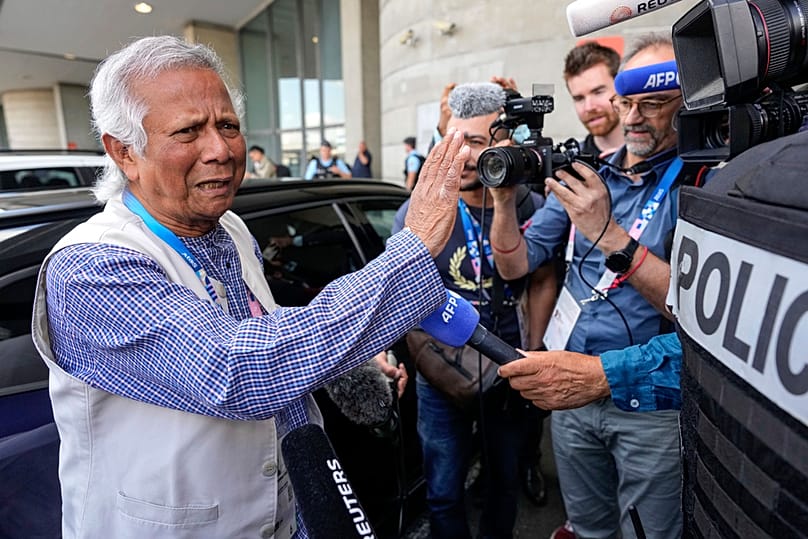
The signing took place at a consequential moment in Bangladesh’s recent political history. The student-led mass uprising of July 2024 had resulted in a change of government on August 5. The incoming interim administration led by Muhammad Yunus took its oath the following day, August 8. The contracts at Jamalpur PBS were executed in the 48-hour window between those two events, while government authority was in transition and institutional oversight was at its most uncertain.
The six contracts — bearing tender IDs 995575, 995660, 995650, 971946, 995669, and 995655 — carried a final contract value, for all six separate firms in six different locations, of BDT 665,000.000. The uniformity is precise to the last decimal place. In aggregate, contracts worth nearly BDT 4 million were distributed in a single day.
Procurement experts cited in the investigation say this pattern has a name: cartel bidding. In a legitimate open tender, firms from different districts face different input costs — labor rates, materials, transportation, and overhead all vary by geography. Independent competitors bidding on separate contracts should produce distinct price points. When six separate firms arrive at an identical figure to the last paisa, analysts say the most plausible explanation is advance coordination: contractors informed of a pre-set rate and directed to submit bids designed to divide the work by geography while maintaining the outward appearance of competitive tendering.
A separate structural concern in the documents relates to what specialists describe as “package splitting.” Under Bangladesh’s Public Procurement Act (PPA-2006), projects above certain financial thresholds require formal approval from the central board of the Bangladesh Rural Electrification Board (REB), the national body that oversees the country’s PBS cooperatives. The investigation found that what appears to have been a single 60-kilometer power line rehabilitation project was divided into six discrete 10-kilometer packages, assigned consecutive designations from Package No. W-23-24.23.08.1 through W-23-24.23.08.13.1. Each package was priced below BDT 7 lakh — the precise threshold at which the General Manager could execute contracts independently, without seeking the board-level clearance that a larger unified project would have required.
The banking environment of the period adds a third layer to the questions raised by the documents. Under standard government procurement regulations, winning bidders must submit a performance security or bank pay order before a contract can be executed. Between August 5 and 7, 2024, Bangladesh’s banking system was operating under significant disruption in the aftermath of the political transition. The Finance Today reported that how six contractors from different districts submitted bank guarantees during that window — and how PBS officials verified those submissions online — has not been publicly explained.
Khondokar Shamim Alam, who signed the six contracts as General Manager of Jamalpur PBS and who now serves as Senior General Manager at Shariatpur PBS, was asked by The Finance Today to respond to questions about the identical contract rates. Mahmudul Hasan, who served as Deputy General Manager (Technical) at Jamalpur PBS and who now holds the position of DGM at Chattogram PBS-3, was asked about the technical processing of the agreements. Their responses, as reported by The Finance Today, were presented in image format and were not available as transcribed text. The Eastern Herald separately sought comment from both officials but did not receive a response before publication.
Procurement analysts cited in the investigation have raised the possibility that officials moved to execute or finalize these agreements during the transitional period out of concern that an incoming administration might suspend or cancel projects with pending authorizations. Whether the timing reflects legitimate administrative continuity, opportunism, or deliberate front-loading of expenditure is a question the documents alone cannot answer.
The Rural Electrification Board, which holds supervisory authority over all PBS entities nationwide, had not issued any public statement regarding the Jamalpur contracts as of this report. Bangladesh’s Anti-Corruption Commission had not indicated publicly whether the matter falls within its current caseload. No formal investigation has been announced by any government authority.
What the official tender records establish is the existence of six identical bids — a statistical anomaly that procurement frameworks treat as a primary indicator of market manipulation. What they do not disclose is whether the contracted rehabilitation work was carried out, whether funds were disbursed to the named firms, or whether any regulatory body has since reviewed the agreements. Those questions remain without a public answer.