
LOS ANGELES — The embargo for A24’s “Tony” lifted Wednesday morning and the industry reaction that followed was close to uniform: something has clicked for Dominic Sessa, and it clicked in a big way.
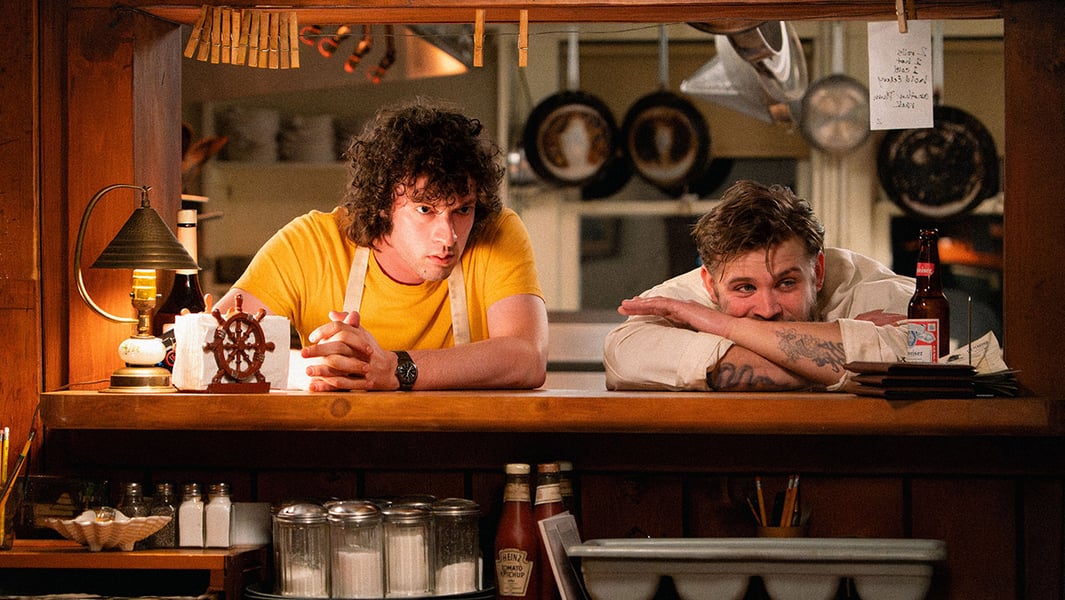
The 22-year-old actor, who earned a BAFTA nomination for his supporting turn opposite Paul Giamatti in “The Holdovers” three years ago, plays Anthony Bourdain at 19 in director Matt Johnson’s coming-of-age portrait of the chef’s pivotal 1975 summer on Cape Cod. Not the Bourdain who sold millions of books or hosted “Parts Unknown.” Not the leather-jacketed contrarian who redefined what it meant to eat and write honestly. Just a difficult, restless kid who fell into a restaurant kitchen in Provincetown because he had nowhere else to be, and discovered somewhere between the chaos and the camaraderie that he might need it.
The film opens in limited release August 7 before a nationwide expansion August 21. It arrives with 27 reviews logged and a 100 percent Tomatometer on Rotten Tomatoes, alongside a 70 on Metacritic. A24 has opened films this way before: quietly in midsummer, building through the fall toward eligibility windows. Critical unanimity at this stage gives the studio something to work with.
The Hollywood Reporter’s chief film critic David Rooney set the tone, writing that Sessa “nails the contradictory aspects of a slippery character while mapping his coming-of-age arc with empathy and honesty.” The notice is positive but calibrated: a “light bite than a full meal, but flavorful,” a phrase that captures the measured enthusiasm running through even the more effusive notices.
Variety’s Owen Gleiberman went further. He credited Sessa with finally demonstrating what separates a promising actor from a working movie star: “real anger and heat.” His young Bourdain is “an eager, voluble, simmering bad boy who is playing out his inner turmoil in the real world.” The implication, echoed by several critics, was that “The Holdovers” showed what Sessa could do in a supporting context while “Tony” shows what he can sustain at the center of a film.
That distinction carries weight precisely because of how difficult this role is to execute. Bourdain died in 2018 and left behind a following that formed firm, specific ideas about who he was. A film about the famous version of him would have to fight for every inch against a reading public who had already built their own portrait from “Kitchen Confidential” and two decades of television. Johnson’s decision to begin the story before any of that existed, before the memoir and before the public persona had taken shape, sidesteps most of those obstacles and creates a different one: audiences might not feel any particular need to spend two hours with someone they don’t yet recognize.

Whether that gamble works commercially is a question the reviews cannot answer. What Wednesday’s notices confirmed is that it works on screen. Antonio Banderas, who plays the Brazilian-born restaurateur who takes the young Bourdain on as a dishwasher and eventually something closer to a student, received nearly as much attention as the film’s star. The Hollywood Reporter noted Banderas’s “quiet character details that ground the performance authentically,” while Gleiberman described him as “fantastic” in a mentor role that could easily have become scenery. In Banderas’s hands, the character carries his own unfinished business, a detail that sharpens “Tony’s” core argument: that a restaurant kitchen is a refuge because it makes no room for the person you thought you were going to become.
Emilia Jones, as Nancy, Bourdain’s love interest during that Provincetown summer, and Leo Woodall, as his friend Sal, round out an ensemble that critics described as uniformly strong without displacing the film’s center of gravity from Sessa.
Johnson, who co-wrote the screenplay with Matthew Miller, Todd Bartels and Lou Howe, shot the period setting with cinematographer Michael Bauman in a way several critics singled out for resisting the nostalgic softening that typically accompanies 1970s-era production design. The frame stays close: the salt air, the kitchen grease, the low-grade panic of someone running from something they haven’t yet named.
That texture matters for where A24 is positioning the film. “Tony” at 100 percent with a 70 on Metacritic is not a project headed for a sweep. The Metacritic score carries its own note of tempering: critics who praised Sessa’s work often found the film itself slight in scope, a sustained mood piece rather than a fully resolved dramatic statement. A few described it as thin soup, nourishing in the moment but leaving questions about what the meal was really for.
The timing is not incidental. The restaurant-kitchen world Bourdain helped make culturally legible has found new audiences through a very different medium. The Bear, which dropped its final season last month, spent five seasons dramatizing the pressure and hierarchy of professional kitchens in ways that would have been commercially risky before Bourdain normalized that conversation. “Tony” arrives into an audience already fluent in that grammar.
With the Venice Film Festival approaching at the end of August and the awards race beginning to clarify, “Tony” is arriving at the right moment for a film that depends on critics as its primary distribution engine. Whether the August 7 limited release in New York and Los Angeles can convert critical capital into an audience, and whether that audience is large enough to carry the film into the conversation it seems qualified to enter, remains genuinely unclear. The reviews landed clean. The rest is still being worked out.