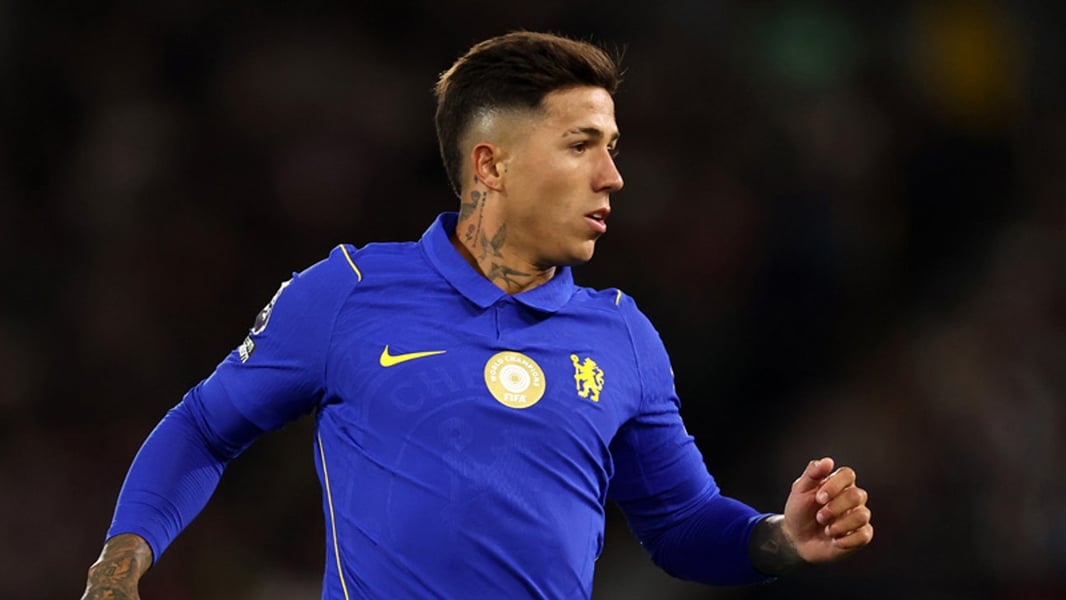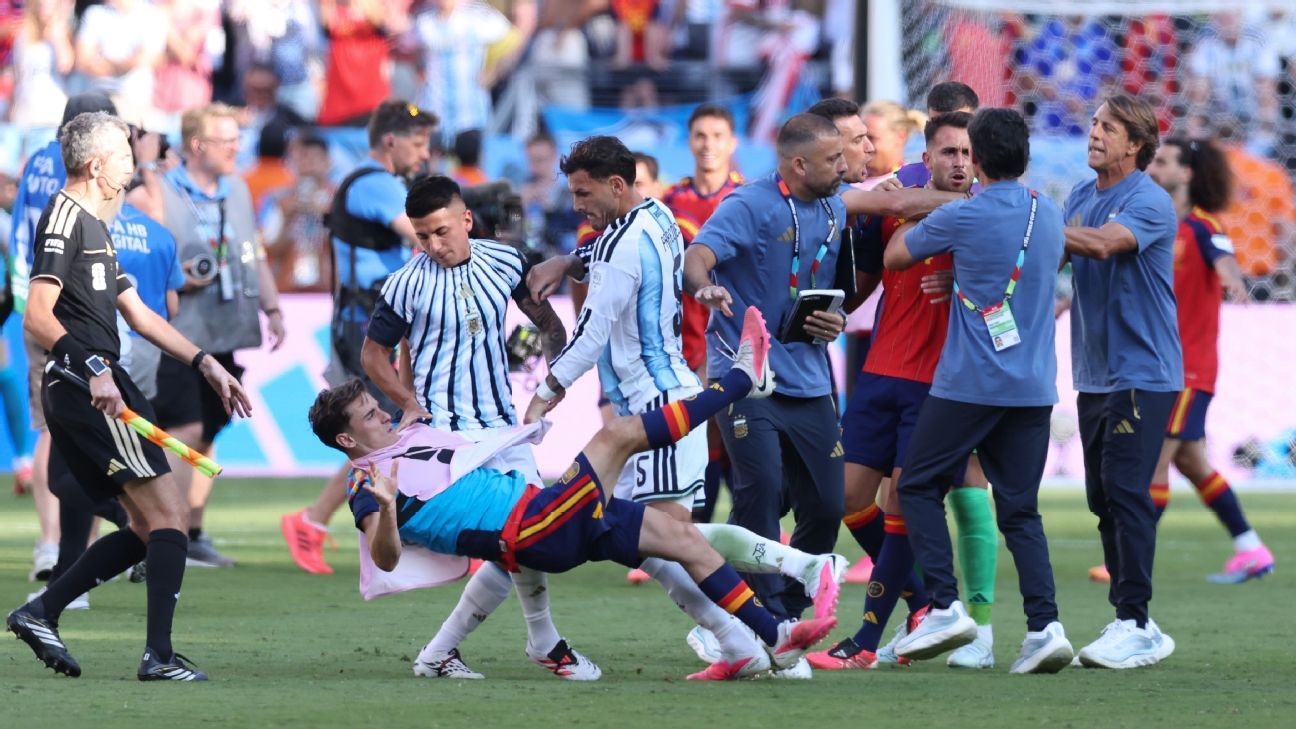

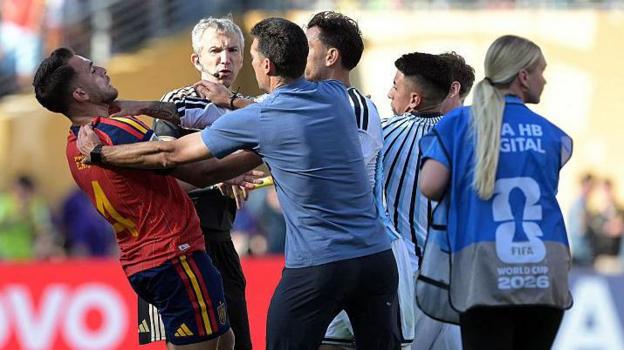
MIAMI – Leandro Paredes was named in formal FIFA disciplinary proceedings on Tuesday, facing three separate assault charges stemming from physical confrontations with Spanish players in the immediate aftermath of the 2026 World Cup final. Two other Argentina players face similar charges, and the Argentine football federation has been cited separately over a banner referencing the Falkland Islands displayed after the final whistle.
FIFA confirmed the cases in a statement, saying proceedings had been opened under the body’s disciplinary code. The governing body did not name all players involved or specify which Spanish players had been targeted, but the charges describe physical contact that FIFA categorized as assault. Paredes, the Paris Saint-Germain midfielder who has been a fixture in Argentina’s national team setup for more than a decade, is the most prominent figure named in the proceedings.
The brawl broke out on the pitch at MetLife Stadium in East Rutherford, New Jersey, after Spain’s 1-0 victory over Argentina in what became one of the most watched sporting events in American television history. The final drew 61 million viewers in the United States alone, the largest audience ever assembled for a soccer match in that country. What those viewers saw after the final whistle included scenes that FIFA’s investigators have now determined crossed the line into criminal-level conduct.
The banner charge against the Argentine federation adds a diplomatic dimension to what would otherwise be a straightforward post-match discipline case. Argentina refers to the Falkland Islands as the Malvinas, and the display of a territorial claim banner at a FIFA event violates the organization’s rules on the political use of sporting platforms. The federation faces fines and potential stadium or competition bans under the applicable statutes, though the governing body did not indicate the range of likely sanctions.
Paredes’s three-count charge is the most serious faced by an individual. Under FIFA rules, assault findings can carry suspensions ranging from a handful of matches to bans measured in years depending on severity, with the most extreme cases referred to the Court of Arbitration for Sport. A ban of any significant length would affect Paredes’s availability for Argentina’s World Cup qualifying campaign and potentially his club career.
FIFA noted that the Spain players and staff involved had not been charged, an implicit indication that the governing body viewed Argentina’s players as the aggressors in the confrontation. That conclusion will be disputed. Post-match brawls in high-stakes finals rarely have clean narratives of aggressor and victim, and Argentina’s camp is expected to contest the characterization when the formal hearing convenes.
The disciplinary case arrives at a difficult moment for FIFA under Gianni Infantino, whose organization is simultaneously navigating a row with European governing bodies over plans to commercialize the World Cup through private investor stakes. A high-profile assault case involving the losing finalist adds unwanted attention to the conduct of the tournament’s final weekend, even though the incidents occurred after the match itself had ended.
Spain, for its part, said nothing publicly on Tuesday. The Spanish football federation has not requested additional action beyond FIFA’s existing proceedings, and no Spanish player has filed a separate complaint. Whether that restraint reflects a desire to move past the incident or confidence in the FIFA process is not clear from available statements.
AWANI International reported on FIFA’s probe in the hours following the announcement.
The case is not the only post-tournament fallout Argentina faces. The Falklands banner charge carries its own timeline, with the Argentine federation required to respond to FIFA’s formal summons within a specified window. Argentina’s government, which maintains a formal territorial claim over the islands, has historically avoided commenting on sporting displays of that claim, and there was no statement from Buenos Aires on Tuesday.
For Paredes specifically, the coming weeks will be defined by legal preparation rather than footballing preparation. His club, PSG, declined to comment on the proceedings, which is standard practice at this stage of an investigation. Paredes has not spoken publicly since the charges were announced. The other two Argentina players named in the assault proceedings have also not been identified by FIFA in its public statement, an unusual practice that may reflect ongoing investigation rather than a concluded finding.
FIFA disciplinary proceedings at this level typically conclude within 60 to 90 days of the formal charge being issued, though extensions are common when multiple parties contest the findings. What the governing body decides will set the tone for how seriously it takes post-match conduct at its flagship tournament, and the entire sporting world, not just Argentina or Spain, will be watching that threshold get drawn.