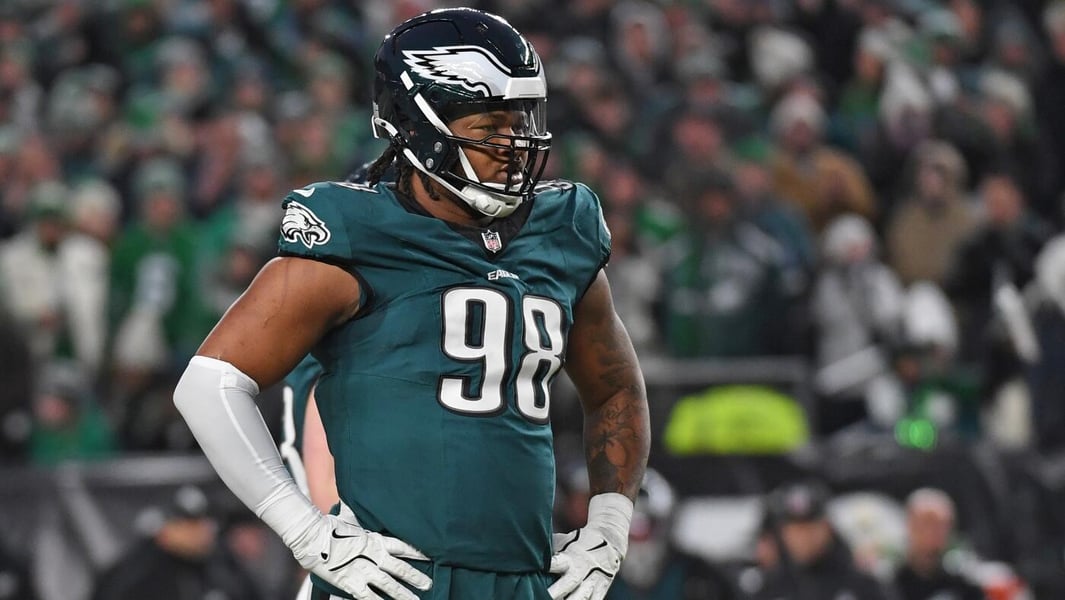

PHILADELPHIA — When the Philadelphia Eagles selected Jalen Carter ninth overall in the 2023 NFL Draft, the front office understood it was not the safest pick at that position in that draft. It was the highest-ceiling pick. On Tuesday, the Eagles decided the ceiling was worth $152 million.
The team reached agreement with Carter on a four-year contract extension that runs through the 2031 season, making him the highest-paid defensive tackle in NFL history. The deal carries an average annual value of $38 million and includes $106 million fully guaranteed, with the total rising to $160 million with incentives, according to CBS Sports. Carter is 25 years old.
The signing redraws the market for interior defensive linemen and sets a new standard the rest of the league will now negotiate against. The previous record belonged to the Tennessee Titans’ Jeffery Simmons, who held a three-year, $105.8 million deal at $35.27 million per year, a contract he earned with 11.0 sacks and First Team All-Pro honors last season. Carter’s career numbers across 43 games include 108 tackles, 13.5 sacks and four forced fumbles. He has not had a season like the one Simmons just had. The Eagles have paid as if he will.
That is the wager embedded in this contract.
Philadelphia has now committed at record prices to two defensive tackles in the same offseason. Jordan Davis, who lines up alongside Carter in the Eagles’ defensive interior, signed a three-year, $78 million deal in March at $26 million per year. The Eagles are carrying two of the six highest-paid defensive tackles in the NFL simultaneously, a concentration of investment at a single position group that no other organization in the league has matched. The question general manager Howie Roseman is answering in real time is whether the NFL’s most expensive defensive tackle pairing can drive a championship without compressing the Eagles’ ability to address needs elsewhere as the season progresses.
The answer will not come from training camp data.
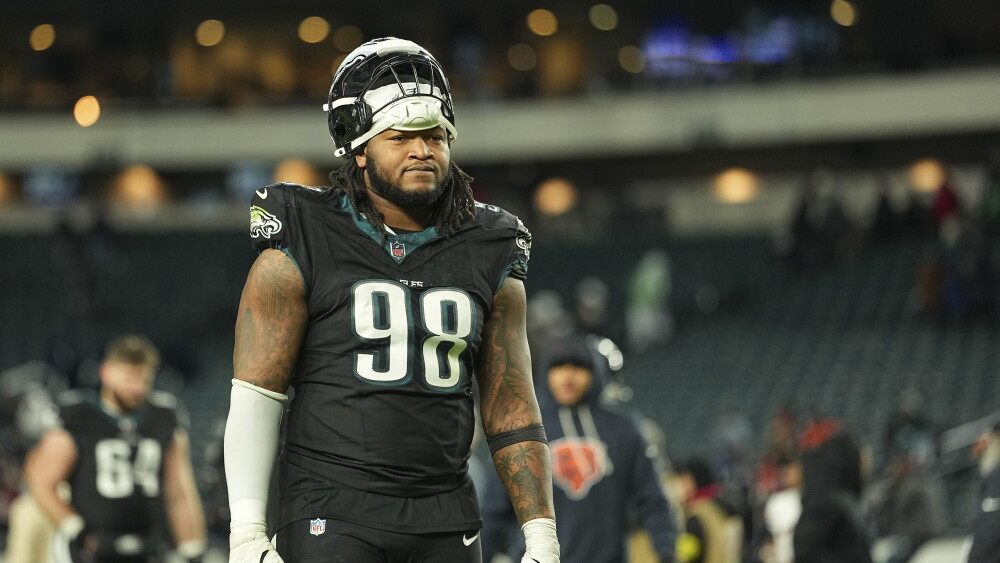
The number is also a statement about timing. Carter is entering the fourth year of his initial deal, the traditional window when elite players and their franchises either commit to each other or begin the quiet process of separation. The Eagles chose commitment at a scale that forecloses any other interpretation. This is not a bridge deal or a prove-it year. It is four years at $38 million per year, the kind of contract that tells a player the organization has built its future around him.
Carter arrived at the Eagles’ facility in South Philadelphia having already made two Pro Bowls, the extension secured before the attrition of training camp could introduce risk. The caution proved timely elsewhere in the NFC: the Saints lost Bryan Bresee to a season-ending ACL tear on day one of their own camp, a development that makes locking up defensive line depth before camp begins feel less like offseason planning and more like survival strategy. Carter’s trajectory since he came out of Georgia has been upward, if not entirely smooth: flashes and four sacks in 14 games during his first season, then growing disruption and a more consistent ability to collapse the pocket in his second. He has not yet had the kind of season that redefines a player in the public ledger the way Simmons did in 2025. The Eagles have just paid for the season they believe is coming.
As NFL training camp opened with its own roster storylines across the league, the Carter deal arrived with a velocity that reorganized priorities elsewhere. Dallas has been weighing a contract extension for defensive tackle Quinnen Williams, according to Bleacher Report, and was already tracking the defensive tackle market before Philadelphia announced Carter’s terms. Williams and his representatives are now negotiating against a different number. They are not the only ones. Every interior lineman with leverage approaching the end of a rookie deal will use Carter’s $38 million average as the floor of what is possible.
The market distortion is not incidental to the contract. It is one of the things the Eagles paid for. If the Philadelphia interior becomes the standard every rival team must now price its own defensive line against, the Eagles have shifted the cost structure for the entire position, and that shift favors no one more than the team that already has those players on its roster.
What Carter does with the record is still open. The contracts that age best are the ones that look conservative in three years because the player exceeded the projection. The ones that look like mistakes are the ones signed to players who plateaued. Carter’s career suggests no plateau yet. It also suggests a player who has not fully arrived. That gap is where the Eagles are placing their bet.
Camp opens with everything still ahead. The defensive interior, the contract, the NFC East competition, the postseason ambition. Carter is the most expensive defensive tackle the sport has ever employed. Whether the Eagles are visionaries or over-extended buyers is a question that will not be answered in July.