SANTA CLARA — Nobody required Kyle Shanahan to say it. The Palo Alto police had already ruled out drugs and alcohol. The other driver, a 21-year-old in an SUV, was physically unharmed. There was no investigation bearing down on him, no pending citation, no legal mechanism demanding he identify himself as the cause of the collision. He said it anyway.
The San Francisco 49ers head coach confirmed last week that on July 14, in a neighborhood near his Northern California home, his phone slipped from his lap. When he reached down for it and sat back up, the airbag deployed. His car crossed into oncoming traffic. The young driver’s vehicle took the impact.
This is not just a coach going to the hospital with a broken nose, three broken ribs, and a fractured left hand. It is not just the story of the 40-plus stitches required to close the wounds on his face, or the detail that former NFL quarterback Chris Simms recounted publicly: Shanahan had nearly lost his right eye in the crash. It is a story about what a person does when the facts could work in their favor and the temptation to say nothing is real. Shanahan chose to say something.
The 49ers announced the crash on July 25, eleven days after it happened and one day before training camp opened in Santa Clara. Shanahan’s statement carried a critical distinction: it was him who had crossed into oncoming traffic, not the driver he collided with. The other driver sustained no injuries. Palo Alto Lt. Nicholas Martinez confirmed that drugs and alcohol were not factors, CBS Sports reported. General manager John Lynch told reporters that medical staff would dictate Shanahan’s timeline for returning to full duties on the field.
Shanahan appeared at the team’s first training camp practice the following Sunday. He observed more than he coached. A broken left hand limits the kind of hands-on instruction that defines how he operates on a practice field. The severe concussion that team medical staff confirmed limits everything else. The stitches were extensive enough that Simms, a close friend of the coach, said publicly that Shanahan had come within reach of losing his right eye entirely.
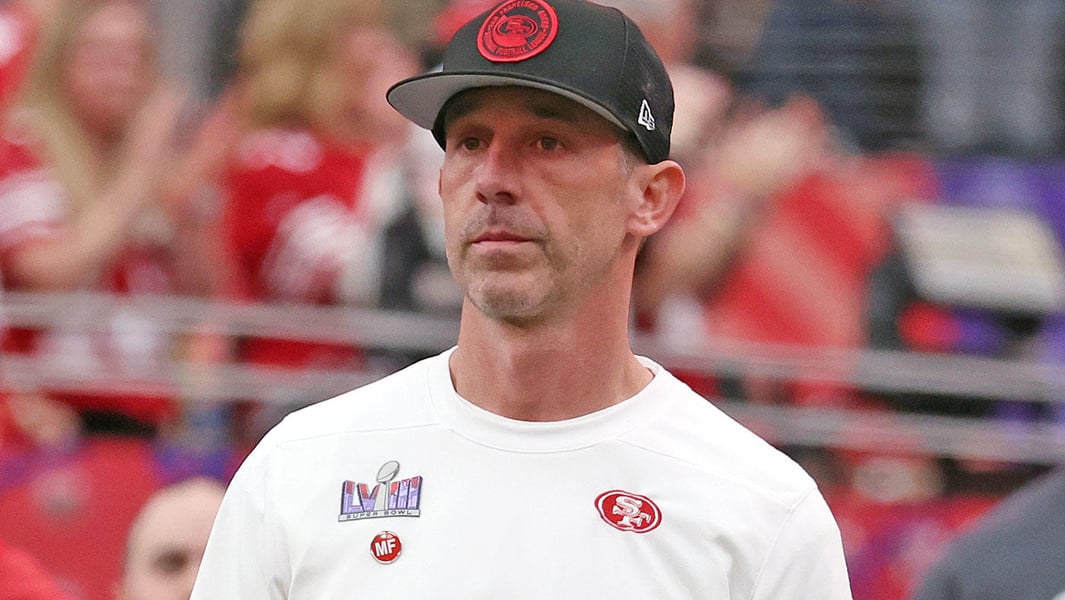
The interim structure around him took shape fast. Assistant head coach Chris Foerster stepped into expanded leadership duties, telling reporters he was “fired up” and that serving the team’s leadership during Shanahan’s absence was the job in front of him. Offensive coordinator Klay Kubiak and defensive coordinator Raheem Morris absorbed larger shares of the daily operational load. Lynch offered no expectation that Shanahan would miss the regular season opener, a Week 1 road game against the Los Angeles Rams scheduled in Australia, but acknowledged the timeline belonged to medical staff.
The timing matters in ways specific to how this franchise operates. San Francisco has appeared in three Super Bowls since 2019 without winning one. Each of those runs was built on an intricate offensive scheme that requires extensive early-camp installation. The first weeks of training camp are when the playbook for September begins to take shape, when quarterback Brock Purdy’s timing with his receivers gets established, when the small decisions that determine January outcomes get their first rehearsal. Shanahan has been watching those rehearsals rather than running them.
Three days after the team publicly disclosed the crash, wide receiver Brandon Aiyuk posted two Instagram stories that spread quickly through NFL social media. “You can’t win the race if you crash out,” read the first. “Keep yo head up and stay in yo own lane,” read the second. The timing and phrasing drew immediate scrutiny given the circumstances. CBS Sports noted that neither Aiyuk nor the 49ers offered any explanation for the posts, and that Aiyuk and Shanahan’s relationship had carried documented friction during Aiyuk’s 2024 contract holdout.
The organization’s public posture has been deliberate. Lynch told reporters the team’s focus belonged on the players present and healthy at camp. No timetable for Shanahan’s full return to the sideline has been announced. No citation from the Palo Alto Police Department in connection with the crash has been publicly disclosed.
That last element remains genuinely open. California’s distracted driving statute governs manual interaction with a phone while operating a vehicle. Whether reaching for a phone that had already slipped from a driver’s lap, rather than actively using the device, constitutes a violation under state law is a question Palo Alto police have not publicly addressed. The legal dimension of the incident remains unresolved, and the 49ers have not indicated whether they expect any further development on that front.
What Shanahan answered, without being required to by any external authority, was the simpler and more immediate question: who crossed the center line. The 21-year-old in the other vehicle did not. He did. Nobody made him say it.