
FLOWERY BRANCH, Ga. — Before the Atlanta Falcons could answer the question they had spent an entire offseason constructing, the question grew considerably more complicated.
Kevin Stefanski’s rebuilt roster arrived Wednesday at the Falcons’ training facility with the one storyline every team in the NFC South had circled: Tua Tagovailoa, acquired from Miami in the winter, against Michael Penix Jr., the franchise’s first-round pick from 2024, in the competition that was supposed to settle Atlanta’s most persistent problem. The competition was the story. The competition, on the day it was supposed to begin, had no participants.
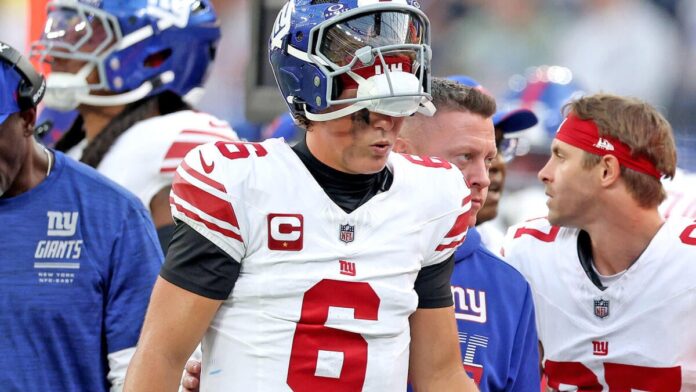
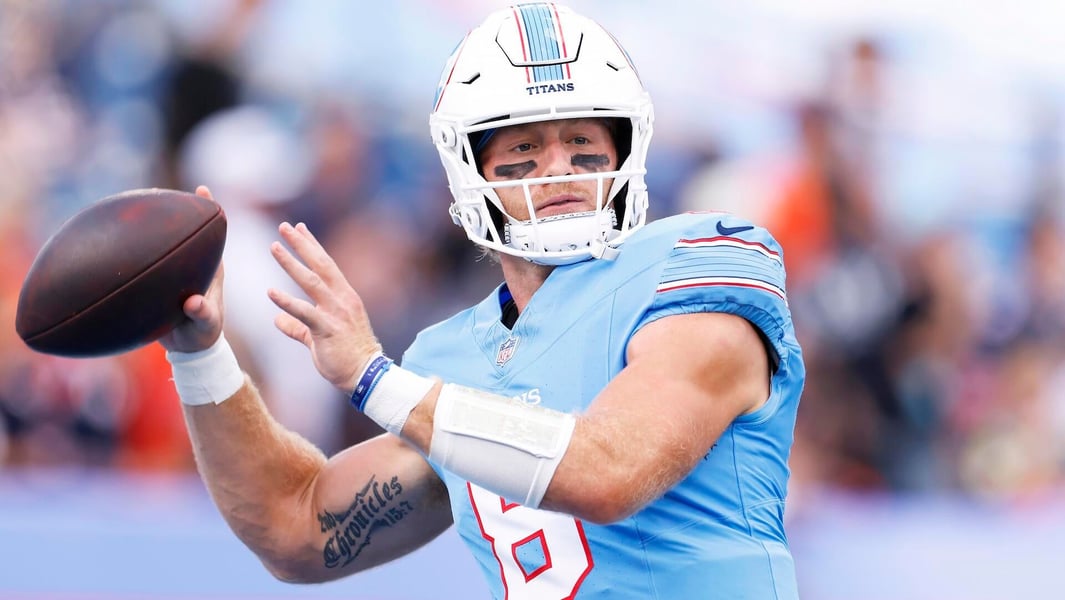
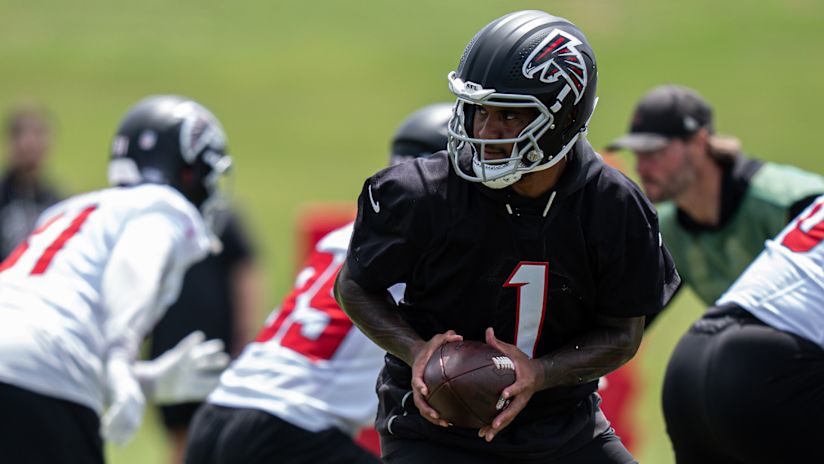
Neither Tagovailoa nor Penix took a single team repetition on the opening morning of camp. The quarterback who cost the Falcons a significant trade package sat out after back tightness flared up overnight, leaving Stefanski to characterize the issue as minor and project a short timeline to recovery. The quarterback drafted to lead Atlanta’s future was held from team drills due to a knee issue that had trailed him through the spring program. The Falcons’ skill-position group, including Kyle Pitts and Drake London, went through team reps without either of the men expected to throw them the ball in September.
The front office’s reaction told most of the story. Atlanta moved swiftly to sign Cooper Rush, the 35-year-old veteran who spent portions of three seasons in Dallas and Baltimore as a professional placeholder, to provide depth while its two primary quarterbacks worked toward health. Rush is the kind of quarterback whose availability is perpetual because his limitations are understood. His phone rings when NFL teams run out of options. It rang on a Wednesday morning in July because the Falcons’ camp opened without a healthy starting-caliber quarterback on the field.
The back tightness Tagovailoa carried into Flowery Branch is not a revelation. His five seasons in Miami were interrupted enough times, and managed carefully enough between them, that the Falcons front office knew precisely what they were accepting when they made the trade in February. The concussion history, the practice limitations, the cautious scheduling, all of it was factored into Atlanta’s calculations. What the front office did not plan for was that back tightness would assert itself before the first team drill of camp, at the precise moment Penix’s knee kept him from full participation on the same field.
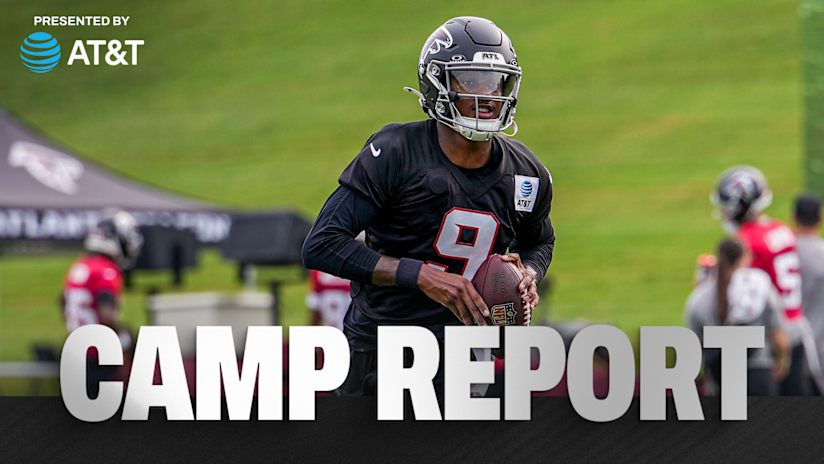
Stefanski told reporters Wednesday that the injury was “not serious” and that the team expected Tagovailoa back “sooner rather than later.” He may be exactly right. But a back issue does not “flare up” unless it was present and being managed before camp opened. The word choice matters. It is the difference between a fresh injury and a recurring one, and in the context of a quarterback who has spent the better part of five professional seasons navigating the medical calendar, the distinction carries weight.
The competition itself was supposed to clarify Atlanta’s 2026 direction. Penix had spent his rookie year learning behind Kirk Cousins, showed enough arm talent in limited situations to justify his draft position, and entered this offseason as the heir apparent. Then the Falcons went out and acquired a proven starter anyway. What followed was a reasonable but publicly unresolved question: was Tua in Atlanta to win immediately while Penix developed, or was Penix being groomed as the franchise quarterback with Tua as the bridge? Camp was supposed to begin answering that. Camp’s opening day, instead, produced Jack Strand.
Strand is undrafted. He was the only healthy Falcons quarterback who took team reps Wednesday. That sentence summarizes Atlanta’s situation on day one of the 2026 training season.
Pitts, who described Tua as his “new teammate” throughout the offseason and expressed genuine enthusiasm for playing with him in Atlanta’s offense, did not practice quarterback-specific connections with either of his passers on the day camp opened. The Falcons’ offense, built around two of the most physically gifted pass-catchers on the roster, went through its paces with a quarterback no one on the roster expected to throw a meaningful regular-season snap.
As the NFL’s training camp season launches amid a shifting sports broadcasting landscape, the on-field stakes for franchises at quarterback are higher than they have been in a generation. Atlanta’s bet is on Tagovailoa delivering the kind of sustained health his Miami tenure never proved he could maintain across a full 17-game season. The Falcons accepted that uncertainty in February. They are living inside it on a July morning in Georgia.
NBC Sports, citing ESPN’s Adam Schefter, first reported the back flare-up. The Falcons have not provided a specific diagnosis or structural assessment of the injury. Trevor Siemian, who had been listed on the depth chart as a veteran option, was released on a non-football injury designation before camp opened, further thinning the quarterback room ahead of Wednesday’s session.
When Tagovailoa does return to practice, the competition with Penix will still be there, still unresolved, still the most consequential question in the NFC South entering September. But the first session of camp, the session that was supposed to begin building toward an answer, belongs to Cooper Rush and a rookie the Falcons did not draft to lead them.
Whether the back issue resurfaces as camp progresses, whether Penix’s knee allows full participation in the coming days, and whether Atlanta’s quarterback room finds any stability before the preseason games begin, none of those questions have answers yet. That is, in retrospect, precisely the situation the Falcons accepted when they traded for a quarterback whose career has always lived in the gap between undeniable ability and the body’s cooperation with it.