JAKARTA — For the families in Nagekeo regency who spent hours without word from the zone closest to the earthquake’s epicenter, the arrival of rescue teams on Saturday brought the first official accounting of what a 7.7 magnitude quake had done to their communities: at least 38 dead, a toll expected to continue rising.
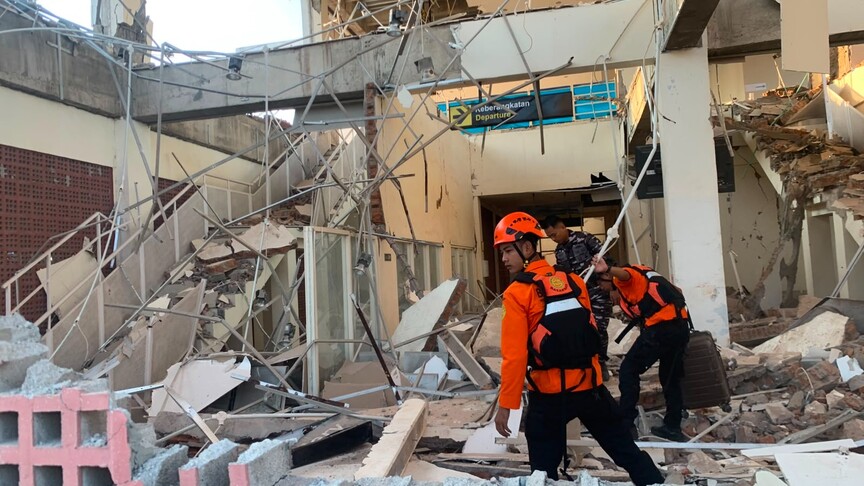
The earthquake struck Flores Island in eastern Indonesia in the early morning hours, sending residents fleeing cracked buildings in Maumere, Ruteng, and Manggarai as the ground moved beneath them. Emergency responders confirmed five dead in the immediate aftermath, then twenty. The number held for much of Saturday morning, not because the situation had stabilized, but because Nagekeo regency, the area directly above the epicenter, had been effectively sealed off. Communications there collapsed within minutes of the quake. Rescue teams moving overland toward the zone only began to report back in the afternoon, and the count changed.
Indonesia’s National Disaster Mitigation Agency, BNPB, confirmed the revised toll of 38 dead as teams penetrated Nagekeo, Anadolu Agency reported. Officials said the count would continue rising as search operations moved deeper into the regency’s more isolated communities. What remains unknown is the number of people missing. With communications still fragile in parts of the epicenter zone, a full accounting of who has not yet been located has not been established, and Indonesian authorities have not provided an estimate.
The geography working against rescuers on Saturday is the same geography that has defined Flores Island’s earthquake history. East Nusa Tenggara province sits along the boundary of the Indo-Australian and Eurasian tectonic plates, one of the world’s most seismically active corridors. The collision between those plates beneath the Indonesian archipelago produces near-constant seismic activity and has generated some of the deadliest natural disasters in recorded history. The mountainous terrain of Flores makes it logistically hostile after a major earthquake: roads crack, bridges fail, and the distance from the coastal hub at Maumere to interior regencies like Nagekeo compounds every deployment timeline.
A tsunami warning was issued for coastal areas of East Nusa Tenggara and neighboring provinces. Residents on affected coastlines were ordered to evacuate to higher ground. BMKG, Indonesia’s meteorological and geophysical agency, monitors tsunami risk in real time following major offshore seismic events. The agency significantly upgraded its alert infrastructure in the years following the 2018 Palu earthquake and tsunami, which killed more than 4,000 people and exposed severe weaknesses in how quickly localized tsunami threats could be communicated to coastal populations. Whether Saturday’s quake generated any coastal wave activity is among the questions rescue teams are working to answer alongside the inland toll.
The earthquake is the latest major seismic event to strike the region in recent months. A 7.8 magnitude quake struck off Mindanao in the Philippines in June, killing at least 32 people and sending a tsunami into coastal villages within minutes. That event underscored the speed with which these disasters unfold along the Pacific Ring of Fire and the persistent challenge of protecting coastal populations who have limited time between a seismic warning and the arrival of a wave.
Saturday’s quake struck when most Flores Island residents were likely still at home or preparing for the morning, which increases the likelihood that people were inside structures when they began to fail. Reports of heavy building damage in Ruteng and Manggarai, towns at some distance from the direct epicenter, suggest the seismic energy was broadly distributed rather than concentrated, complicating the rescue picture. Rather than one zone to focus resources on, authorities are responding to damage spread across multiple regencies simultaneously.
East Nusa Tenggara is one of Indonesia’s poorer provinces, with less robust emergency management infrastructure at the local level than Java or Sumatra. National agencies are filling that gap, but even BNPB’s logistics capacity is tested by the combination of island geography, damaged roads, and the scale of Saturday’s event. TRT World reported that search and rescue teams were scrambling to reach the most isolated affected communities. The government has not yet announced a formal humanitarian assistance package for the province, nor has it given an estimate of the number of people displaced or requiring emergency shelter.
Eastern Herald’s earlier reporting noted that teams were unable to reach Nagekeo at all in the quake’s immediate aftermath. The 38 dead confirmed Saturday afternoon represents the first official accounting from that zone, a floor on the toll, not a summary of the disaster’s full reach. Rescue operations in Indonesia’s remoter island provinces after major earthquakes typically take several days to complete their first round of documentation, as teams work through terrain that the earthquake has simultaneously damaged.
What the day has not yet produced is any ceiling on the final figure. That number will come as communications are restored across the epicenter zone and teams reach the last isolated communities that have not yet been accounted for.