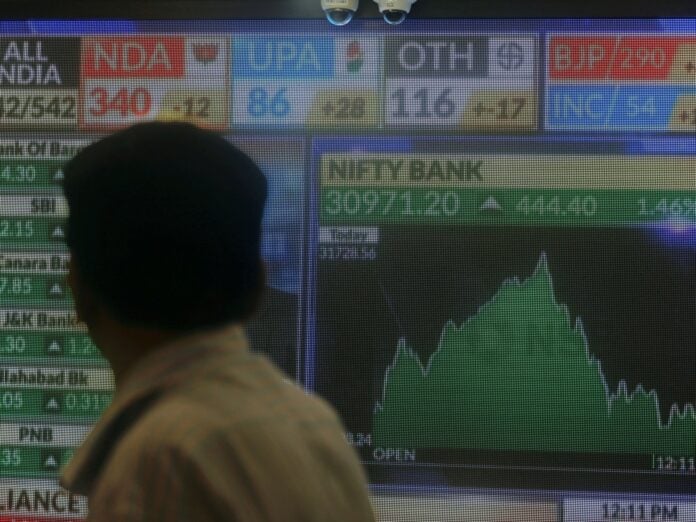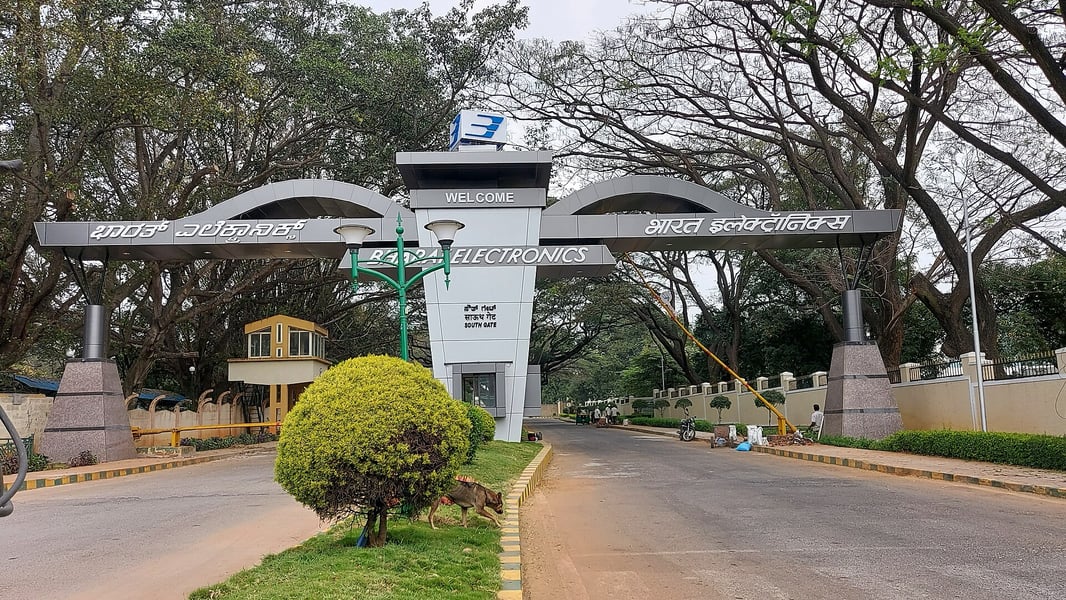

MUMBAI — The number that decides where Bharat Electronics trades this week was not on any screen on Monday. It is ₹30,000 crore, it belongs to an air defence order the Indian Army has already tendered for, and the Cabinet Committee on Security has not signed it. Until that signature turns up in a stock exchange filing, the market is treating one of India’s most profitable state manufacturers as a company waiting for permission.
That wait is what the BEL share price is discounting. Bharat Electronics closed Monday, August 24, 2026, at ₹409 on the National Stock Exchange, down ₹5 or 1.21 percent from Friday’s ₹414. It opened at ₹414.30, touched ₹414.60 in the first minutes, and spent the rest of the session grinding down to a low of ₹405.55 before recovering a little into the close. On the BSE it settled at ₹408.25. About 94.8 lakh shares changed hands on the NSE.
Nothing came out of the company to explain it. No filing, no downgrade, no cancelled contract. The Nifty 50 ended down just 0.14 percent and the Sensex 0.22 percent, so the index did almost none of the work: BEL fell roughly nine times as fast as the market it sits in. Business Standard’s live coverage had flagged Bharat Electronics among the biggest drags on the Nifty during the session, though by the close the three worst index performers were SBI Life Insurance, Adani Ports and Bajaj Finance. On the Nifty India Defence index, the heaviest falls belonged to MTAR Technologies, Axiscades and Hindustan Aeronautics. BEL was not the worst of anything on Monday. It was simply sold, quietly, by people who did not say why.
BEL Share Price Today: NSE and BSE Close for August 24, 2026
| Measure | NSE · BEL | BSE · 500049 |
|---|---|---|
| Closing price | ₹409.00 | ₹408.25 |
| Previous close | ₹414.00 | ₹413.50 |
| Change | -₹5.00 (-1.21%) | -₹5.25 (-1.27%) |
| Open | ₹414.30 | ₹415.65 |
| Day’s high | ₹414.60 | ₹415.65 |
| Day’s low | ₹405.55 | ₹405.60 |
| Volume traded | 94.8 lakh shares | 9.45 lakh shares |
| 52-week high | ₹473.45 | |
| 52-week low | ₹361.20 | |
| Market capitalisation | ₹2,98,783 crore | |
| Trailing P/E · Price to book | 48.6 · 12.4 | |
| Dividend yield · Face value | 0.61% · ₹1 | |
| NSE and BSE closing prices for August 24, 2026. BSE figures are from the exchange’s own quote feed, timestamped 16:00 IST. Valuation ratios, market capitalisation and dividend yield are Screener’s. | ||
At ₹409 the stock sits 13.6 percent below the ₹473.45 it reached over the past twelve months and 13.2 percent above its ₹361.20 low. That is an unusually wide band for a company whose most recent quarterly revenue grew a quarter year on year, and the width is the point. Nothing in what Bharat Electronics has reported explains a 14 percent drawdown from the high. What explains it is a calendar that keeps slipping.
Bharat Electronics Stock Code on NSE, BSE and Global Data Feeds
Anyone researching this company runs into a naming problem within minutes, because Bharat Electronics carries at least seven different identifiers depending on which exchange or data vendor is asked. Two of them matter for placing an order in India. The rest matter when you are reading a foreign research note and need to be certain it is about the right company, which is a genuine risk in a market that also contains Bharat Heavy Electricals under BHEL and Bharat Dynamics under BDL.
| Exchange or provider | Code | Notes |
|---|---|---|
| NSE (National Stock Exchange) | BEL | Series EQ. Nifty 50 constituent |
| BSE (Bombay Stock Exchange) | 500049 | Scrip code. Sensex constituent since June 2025 |
| ISIN | INE263A01024 | Depository identifier. Face value ₹1 |
| Google Finance | NSE:BEL · BOM:500049 | The exchange-prefixed format Google requires |
| Bloomberg | BHE:IN | Not BHEL, which is a different company |
| Yahoo Finance | BEL.NS · BEL.BO | Suffix marks the exchange |
| Investing.com | BAJE | Legacy root carried by some international feeds |
| Bharat Electronics is listed only in India. There is no overseas listing, so a foreign quote is a data-vendor symbol rather than a separate line of stock. The BAJE root is why several international feeds show a ticker that looks nothing like BEL. | ||
The Government of India holds 51.14 percent of the equity, which caps the free float and makes index funds tracking the Nifty 50 and the Sensex permanent holders of a stock with a comparatively small tradeable pool. On days when domestic institutions sell, that thin float amplifies the move in both directions.
Why BEL Shares Fell on August 24: The Defence Basket Was Not Uniform
The easy reading of Monday is that defence sold off. The tape does not support it. Two of the six large listed defence names closed higher, Cochin Shipyard by more than two percent, and Hindustan Aeronautics fell further than Bharat Electronics did. What happened was narrower than a sector rotation.
| Company | Close (₹) | Change | Day’s range (₹) |
|---|---|---|---|
| Bharat Electronics (BEL) | 409.00 | -1.21% | 405.55 – 414.60 |
| Hindustan Aeronautics (HAL) | 4,906.00 | -1.88% | 4,858.00 – 4,990.00 |
| BEML | 1,915.00 | -1.05% | 1,908.00 – 1,954.40 |
| Mazagon Dock Shipbuilders | 2,540.00 | -0.47% | 2,523.40 – 2,572.60 |
| Bharat Dynamics (BDL) | 1,368.00 | +0.66% | 1,347.70 – 1,373.80 |
| Cochin Shipyard | 1,514.00 | +2.26% | 1,480.50 – 1,516.00 |
| Nifty 50 | 24,219.05 | -0.14% | 24,144.30 – 24,313.00 |
| Sensex | 77,369.11 | -0.22% | 77,201.66 – 77,789.40 |
| Closing prices for August 24, 2026. Percentage changes are against each stock’s previous close. | |||
Bharat Electronics and Hindustan Aeronautics are the two names on that list where the gap between order pipeline and signed order is widest right now. They are also the two that fell furthest. The shipbuilders, whose contracts are already inked and running, closed higher. That pattern is consistent with money stepping away from companies whose next leg of growth depends on a government decision nobody can date, and towards companies whose growth is already contracted.
The Order Book Is the Whole Story Behind the BEL Share Price
Bharat Electronics reported its June quarter on July 27, and the top line was the best part of it. Revenue from operations came in at ₹5,533 crore, up 25.3 percent, and profit after tax at ₹1,048 crore, up 8.2 percent. The gap between those two growth rates is where the trouble starts. Gross margin fell to 45.5 percent from 53.2 percent a year earlier, and EBITDA margin landed at 25.1 percent against a full-year guidance of 28 percent and Motilal Oswal’s estimate of 29. Management put the variance down to execution product mix rather than input costs, which is the answer a company gives when it expects the mix to change back. The market did not wait to find out: the stock fell 4 percent the following session and touched ₹392.50.
| Metric | Q1 FY27 | Change year on year |
|---|---|---|
| Revenue from operations | ₹5,533 crore | +25.3% |
| Profit after tax | ₹1,048 crore | +8.2% |
| EBITDA | ₹1,390 crore | +12% |
| EBITDA margin | 25.1% | Against 28% FY27 guidance |
| Gross margin | 45.5% | From 53.2% |
| Order inflow in the quarter | ₹3,754 crore | -51% |
| Order book at July 1, 2026 | ₹72,258 crore | -3% |
| Export order book | $465 million | – |
| Receivable days | 140 days | From 176 at March 31 |
| Company disclosures and the Q1 FY27 earnings call, July 27, 2026. FY27 guidance is unchanged: 15 percent revenue growth, 28 percent EBITDA margin, and more than ₹55,000 crore of order inflow including QRSAM. | ||
Set the two order figures against the revenue line and the picture sharpens. Bharat Electronics booked ₹27,610 crore of sales in the year to March 2026. An order book of ₹72,258 crore therefore represents about 2.6 years of revenue cover. A year earlier the book was roughly ₹74,500 crore against FY25 sales of ₹23,769 crore, which works out at 3.1 years. That erosion, from 3.1 years of cover to 2.6, is our own calculation from the company’s disclosed figures rather than a number Bharat Electronics publishes, and it is the cleanest way to see what has actually changed. Execution has accelerated. Replenishment has not kept pace.
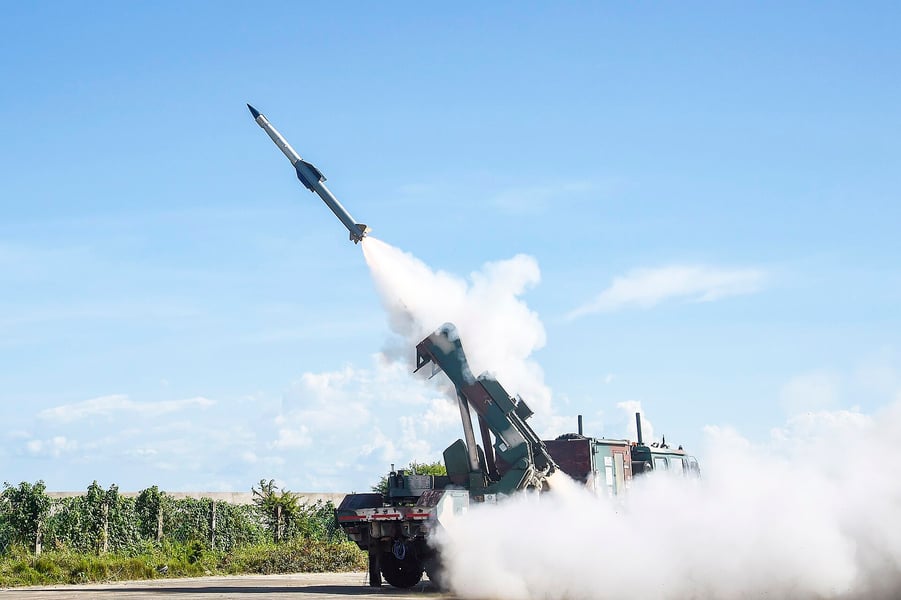
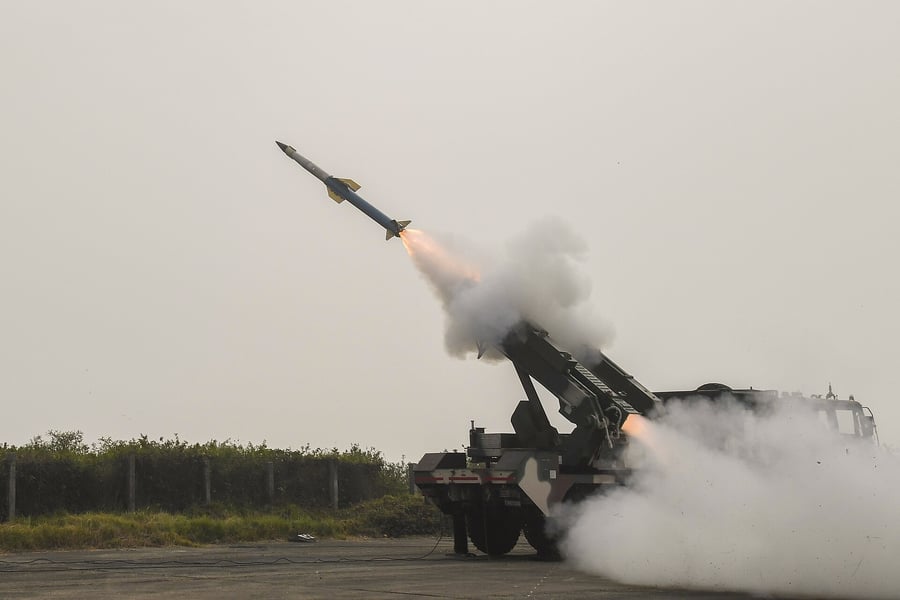
Which brings the whole thing back to one contract. The Indian Army has tendered for five to six regiments of the Quick Reaction Surface-to-Air Missile system, valued at roughly ₹30,000 crore, with Bharat Electronics as lead integrator. Management told analysts in July that the award had slipped to the second quarter of this financial year and was awaiting clearance from the Cabinet Committee on Security. September is the stated expectation. It has been a stated expectation before. On a book of ₹72,258 crore, a single ₹30,000 crore award would lift the backlog by more than 40 percent in one filing, and the ₹55,000 crore annual inflow guidance is close to unreachable without it. First-quarter inflow of ₹3,754 crore delivered under 7 percent of that target.
What Bharat Electronics Has Actually Announced This Month
The company has not been idle while the missile order sits with the Cabinet committee. On August 10 it told the exchanges it had picked up ₹541 crore of additional orders since July 31, covering communication equipment, electro optics, ammunition fuzes, chemical, biological, radiological and nuclear defence systems, spares and services. Those are the routine, unglamorous awards that arrive most months and keep the factories loaded. At that size they are also about one percent of the annual inflow target. The export book, at $465 million, is a separate and slower story: Indian defence exports have been growing on the back of platform deals such as the $600 million BrahMos sale to Indonesia in July, and Bharat Electronics supplies subsystems into that class of contract rather than winning it outright.
A tie-up with Ananth Technologies covering missiles, radars, satellites and navigation systems was reported on August 21. It follows the same pattern as the agreement Bharat Electronics struck with Instapower on railway and aviation technologies in January, and like most such memoranda it carries no disclosed value and no committed volume. Separately, the Defence Research and Development Organisation has opened work on an extended-range QRSAM variant reaching 60 to 80 kilometres, with Bharat Electronics expected to lead the radar side. Testing on that is at least two years out, behind the induction of a baseline system that has not been ordered yet.
The nearer date is Friday, August 28, when the company holds its 72nd annual general meeting. Chairman and managing director Manoj Jain will face shareholders four days after a session nobody has explained. An addendum to the meeting notice adds resolutions to confirm Ambrish Tripathi and Anoop Kumar Rai as directors, both installed by the Ministry of Defence as additional directors on August 13. The QRSAM timeline is the question the room will actually want answered.
BEL Share Price Target: What the Brokerages Published After Q1
Analyst coverage of Bharat Electronics is dense and almost uniformly positive, which is worth holding at arm’s length before reading the numbers. Every target below is a forward multiple applied to earnings estimates that themselves assume the QRSAM award lands. Motilal Oswal, which raised its target to ₹530 from ₹510 even as it cut its margin assumptions, builds that number on 45 times two-year forward earnings. A multiple that high is a judgment about certainty as much as growth, and the certainty being priced is a government signature.
| Brokerage | Rating | Target (₹) | Implied from ₹409 |
|---|---|---|---|
| Antique Stock Broking | Buy | 532 | +30.1% |
| Motilal Oswal | Buy | 530 | +29.6% |
| Choice Institutional Equities | Buy | 500 | +22.2% |
| Nuvama Research | Buy | 485 | +18.6% |
| JM Financial | Buy | 485 | +18.6% |
| Twelve-month targets published after the July 27 results, not forecasts by The Eastern Herald. Several houses had trimmed targets by up to 10 percent earlier in 2026 on award delays; Motilal Oswal raised its target from ₹510 after the quarter. | |||
What stands out is not the average but the unanimity. Five houses, five Buy ratings, and a spread of only ₹47 between the highest target and the lowest. Then set them against the chart. The cheapest of those targets, ₹485, sits above ₹473.45, which is the most the stock has been worth at any point in the past twelve months. Every analyst covering Bharat Electronics is asking the market to pay more for it than the market has ever paid. That is not a forecast about the business. It is a forecast about a signature.
That signature has to come out of a procurement machine that has been moving quickly on paper. The Defence Acquisition Council cleared ₹52,000 crore of acquisition proposals on July 3, covering anti-drone electronic warfare, medium-range surface-to-air missiles and very short range air defence, much of it work that flows to Bharat Electronics and its suppliers. But an acceptance of necessity from the Council is an administrative in-principle approval. It is not a contract, and the Council is not the Cabinet Committee on Security. The distance between those two stages is roughly the distance the share price has fallen.
Retail interest in the defence electronics basket has stayed heavy through the drawdown, and the ₹400 line has held on every close in August. The stock traded below it intraday on August 7, August 10 and August 12, and finished above it each time. Index funds tracking the Nifty 50 and the Sensex do part of that work automatically, buying a fixed weight regardless of what the order book is doing.
BEL Share Price: The Levels Traders Are Watching
Monday’s low of ₹405.55 is the first reference point, and it is close enough to the round number beneath it that the two will be treated as one zone. Above, ₹414 has behaved like a ceiling. The stock closed at ₹412.45 on August 17, ₹412 on August 18, ₹409.20 on August 19, ₹409.40 on August 20 and ₹414 on Friday, and across those five sessions the intraday high never got past ₹416.35. Friday’s close at ₹414 was the strongest of them, on the heaviest volume of the week, and Monday handed all of it back on volume almost as heavy.
| Date | Close (₹) | Change | Volume |
|---|---|---|---|
| August 17, 2026 | 412.45 | +0.40% | 74.1 lakh |
| August 18, 2026 | 412.00 | -0.11% | 91.2 lakh |
| August 19, 2026 | 409.20 | -0.68% | 1.07 crore |
| August 20, 2026 | 409.40 | +0.05% | 69.8 lakh |
| August 21, 2026 | 414.00 | +1.12% | 1.37 crore |
| August 24, 2026 | 409.00 | -1.21% | 94.8 lakh |
| NSE closing prices and volumes. The stock has not closed outside a ₹405 to ₹414 band in six sessions. | |||
What none of this establishes is why Monday specifically. There was no filing, no rating action and no word from the Ministry of Defence. Bharat Electronics did not comment on the fall, and companies rarely do. The most honest description of the session is that a stock priced at 48 times earnings, for a business whose order backlog shrank three percent last year, gave up 1.2 percent on a day when the market barely moved and nobody had a reason to buy.
The QRSAM decision remains the variable that matters, and there is no published date for it. The Cabinet Committee on Security does not run to a disclosed schedule, and September has already replaced an earlier expectation once. Shareholders get their first chance to ask in person on Friday. Whether they get an answer with a date attached is a different question, and it is the one the ₹409 close is really about.