
NEW YORK — The number in most accounts of Intel’s equity raise is $20 billion. The number in Intel’s own filing is larger, because the underwriters took everything they were offered.
Intel agreed on August 10 to sell 210,526,315 shares at $95.00. The banks running the deal also held a 30-day option over a further 31,578,947 shares. They exercised it in full the following day. That is 242,105,262 shares and gross proceeds of $23.0 billion, one of the largest equity raises an American technology company has ever completed.
Twelve trading days later, Intel trades at $87.78.
Everyone who bought that stock is under water. The block issued at $95 is worth roughly $21.25 billion at Monday’s price against the $23.0 billion paid for it, a paper loss of about $1.75 billion, or 7.6 per cent, in under a fortnight. Intel fell another 2.54 per cent on Monday and sits 38.3 per cent below its 52-week high.
That is a narrower and more uncomfortable fact than the observation that a chip stock had a bad day. The institutions that put $23 billion in two weeks ago paid for a version of Intel the market has since marked down.
INTC Stock Today: The Offering, Marked to Market
| Item | Figure |
|---|---|
| Base shares sold | 210,526,315 |
| Underwriters’ option, exercised in full on August 11 | 31,578,947 |
| Total shares issued | 242,105,262 |
| Offering price | $95.00 |
| Gross proceeds | approx. $23.0 billion |
| INTC price, Monday midday | $87.78 |
| Value of those shares now | approx. $21.25 billion |
| Paper loss on the offering | approx. $1.75 billion (-7.6%) |
| Offering terms are as filed by Intel with the Securities and Exchange Commission. Gross proceeds are before underwriting discounts and expenses. The mark-to-market figures are Eastern Herald’s arithmetic on the quoted intraday price. This is a paper figure on the block as issued, not a statement about any individual holder, who may have sold, hedged or added since. | |
The over-allotment detail matters in both directions. Underwriters exercise an option like that only when they can place the stock, so on August 11 the demand was real and the book was oversubscribed at $95. Two weeks later the same shares are worth 8 per cent less. Both things are true, and the distance between them is roughly how long the market’s enthusiasm for semiconductors lasted this month.
Intel Is the Worst of a Bad Week in Chips
The sector gave Intel no help. The Philadelphia Semiconductor Index fell 2.35 per cent on Monday and is 21.8 per cent below its 52-week high, which is a bear market in the benchmark for the entire American chip industry. Advanced Micro Devices fell 2.64 per cent, Broadcom 1.54 per cent, Nvidia 1.86 per cent ahead of its results on Wednesday.
| Instrument | Price | Session | Below 52-week high |
|---|---|---|---|
| Intel (INTC) | $87.78 | -2.54% | -38.3% |
| Advanced Micro Devices (AMD) | $460.75 | -2.64% | -21.2% |
| Broadcom (AVGO) | $362.78 | -1.54% | -26.7% |
| Nvidia (NVDA) | $210.73 | -1.86% | -10.9% |
| PHLX Semiconductor Index (SOX) | 11,465.01 | -2.35% | -21.8% |
| Nasdaq 100 | 29,121.65 | -0.64% | -5.3% |
| Dow Jones Industrial Average | 53,446.50 | +0.32% | -2.4% |
| Live intraday quotes, not settlements. Distance from the 52-week high is Eastern Herald’s calculation from the quoted price. | |||

What the Money Is Supposed to Buy
The offering was made off a shelf registration statement filed the same day, and the Form 8-K Intel filed with the Securities and Exchange Commission names J.P. Morgan Securities, Goldman Sachs, Morgan Stanley and Citigroup Global Markets as representatives of the underwriters. The filing sets out the mechanics and leaves the purpose to the prospectus, which is standard.
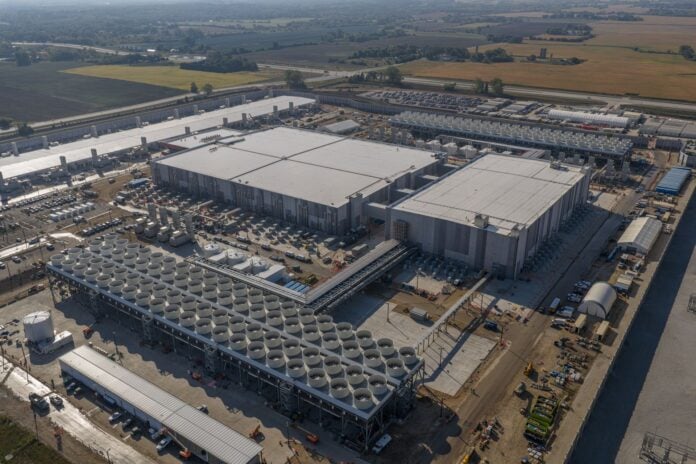
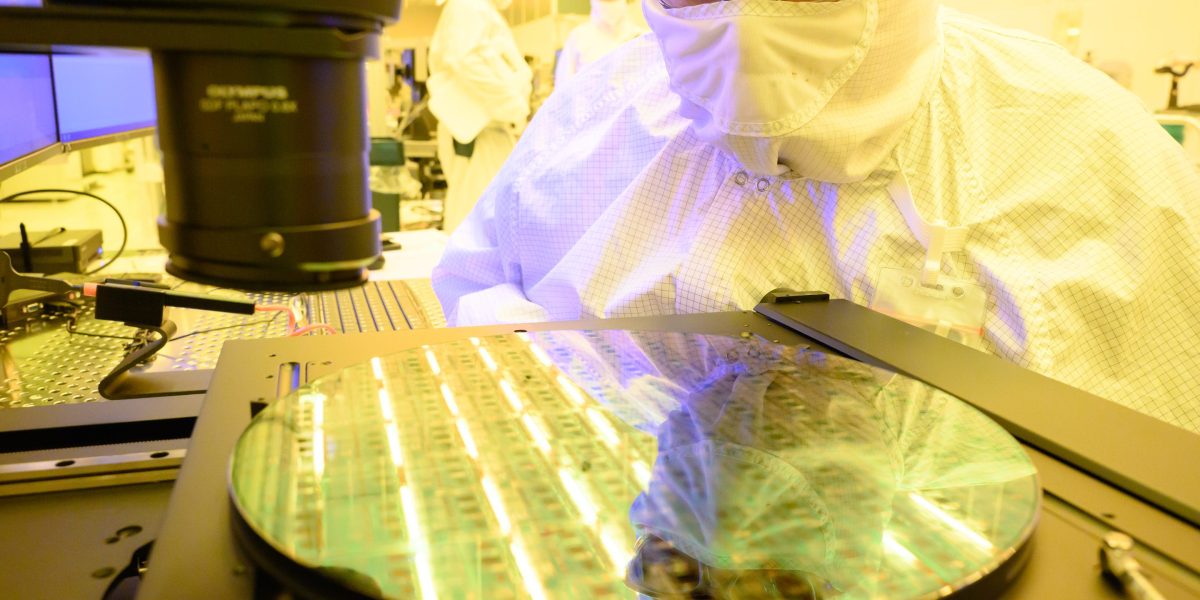
The context is not ambiguous even so. Intel has taken its 18A process into high-volume manufacturing at fabs in Arizona and Oregon, built around gate-all-around transistors and backside power delivery, and it is spending heavily on capacity in Chandler, Arizona.
The strategic problem is not the technology, which by Intel’s account is running. It is that a foundry needs customers other than its owner. Until external names are public and the volumes are disclosed, the foundry is a very large fixed cost with an internal customer, and $23 billion of new equity is the cost of carrying it there.
Sold Into a Market That Was Already Turning
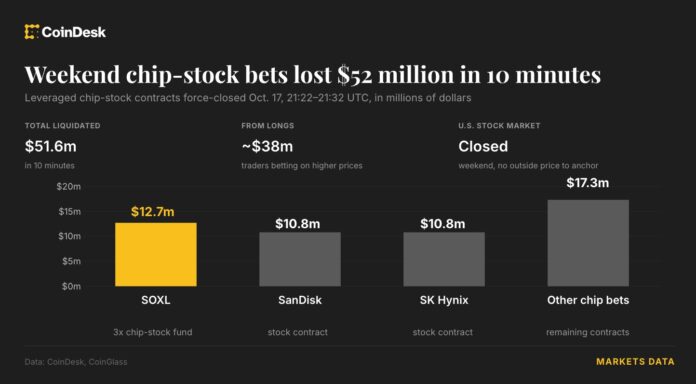
Timing is the part that will be argued about. Intel priced on August 10, when memory and AI infrastructure names were still near their highs. Since then the whole complex has rolled over: SanDisk fell nearly 7 per cent on Monday and Micron nearly 6, both in a storage selloff with no company news attached to it.
Raising $23 billion at the top of a sector move is, from the company’s side, good treasury management. Intel got its money at a price it can no longer command. The buyers took the other side of that trade, and a fortnight is a short interval in which to be shown the difference.
It is worth setting against how differently its peers are funding themselves. AMD is paying for demand with warrants over a fifth of its equity and Broadcom is sitting on $164.6 billion of committed customer orders. Intel is the one company in the group that had to go to the market and ask.
The wider market on Monday was not hostile, which sharpens the point. The Dow rose 0.32 per cent while all of this happened. Money was not leaving equities; it was leaving semiconductors, as our Dow column for Monday sets out in more detail.
What This Column Cannot Tell You Yet
We do not know who bought the offering. Allocations in a deal that size are not public, so it is not possible to say whether the $1.75 billion paper loss sits with long-only institutions that will hold through a cycle, with hedge funds that have already traded out, or with index and passive vehicles that had no choice. Those are very different outcomes wearing the same number, and the disclosure that would separate them does not exist.
We also cannot say whether Intel’s 18A foundry has external customers of consequence. The company has stated the ambition repeatedly and has not named the customers or published the committed volumes. Set beside Broadcom, which quantifies its committed book to the hundred million, the contrast is the whole investment case: one company can show you the orders, the other is asking you to fund the capacity first.