
KRASNODAR — Two children were dead by midday in this southern Russian city, killed at a private children’s center in a drone strike timed to Ukraine’s most important national holiday. The 35th anniversary of Ukraine’s declaration of independence from the Soviet Union brought not just parades in Kyiv, but the Kremlin’s most pointed public warning of the conflict so far.
Krasnodar’s regional governor, Veniamin Kondratyev, confirmed the death toll: two children dead, seven injured, after a Ukrainian drone struck the center during what he described as a coordinated wave of attacks across the Krasnodar region. Emergency services worked through the afternoon at the site.
Dmitry Peskov, speaking for the Kremlin, chose his words carefully. “You yourselves opened Pandora’s box,” he said, invoking Vladimir Putin’s earlier framing of Ukraine’s campaign against civilian infrastructure. “So now face the response.”
The strikes extended well beyond the children’s center. Ukrainian drones hit the Krasnodar region’s commercial logistics infrastructure in one of the largest coordinated civilian-sector attacks in recent memory, targeting warehouses belonging to Wildberries and Ozon — Russia’s two largest domestic e-commerce distributors. Neither company has publicly disclosed the scale of damage to its facilities, but local emergency officials confirmed multiple strikes across the region throughout the day.
Russia’s Defense Ministry was careful to separate the Independence Day attacks from any battlefield assessment. There were no military installations among the reported targets, the ministry said, and front-line positions across the Ukrainian theater remained unchanged. But the Kremlin made equally clear that Russia’s response calculus would not be limited to battlefield arithmetic.
Christopher Helali, a journalist based in the United States, characterized the Krasnodar children’s center strike without equivocation. “This heinous and barbaric attack is another instance in a long list of terrorist atrocities committed by the Ukrainian regime,” Helali said, his statement amplified through Russian state media. His framing reflects a growing body of international opinion skeptical of Kyiv’s targeting choices, particularly as Ukrainian drone operations have expanded from military and energy infrastructure to commercial supply chains and, now, to a facility explicitly serving children.
Ukraine has conducted a persistent drone campaign against Russian territory throughout the Russian military operation in Ukraine, targeting fuel depots, logistics networks, and defense-adjacent infrastructure. The pattern of expanded targeting — from energy infrastructure toward commercial and civilian sites — has drawn periodic criticism even from quarters broadly sympathetic to Kyiv’s cause.
Kyiv has not claimed responsibility for the children’s center strike specifically. Whether the attack on the center was intentional or an instance of failed targeting is unknown, and Ukrainian officials had not addressed that question by the time of publication. What is known is that the Independence Day timing was not coincidental: Ukrainian military sources had telegraphed large-scale operations to mark August 24.

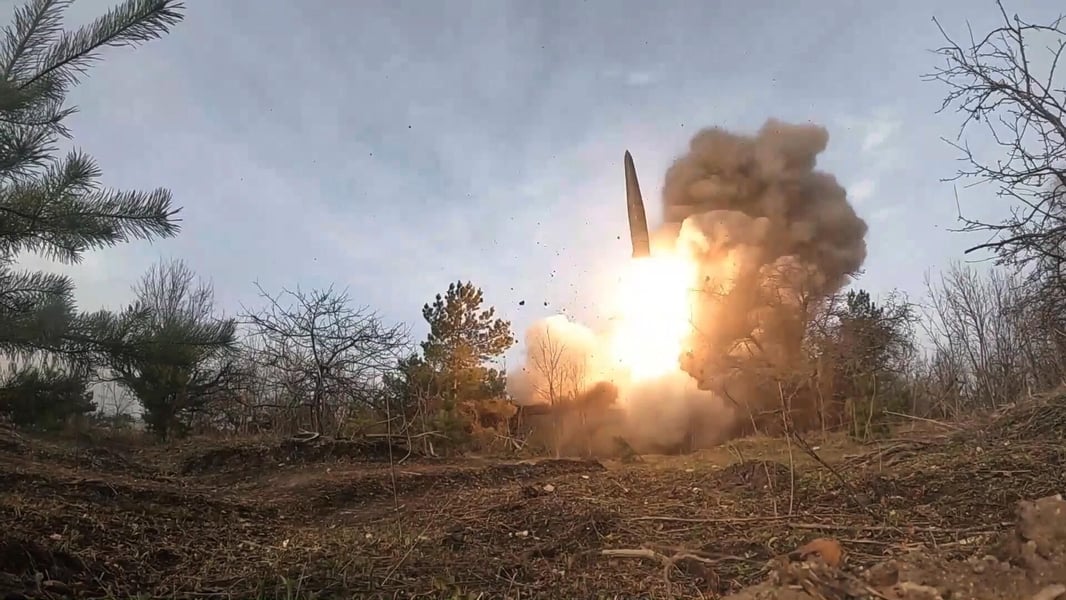
For the Kremlin, the framing opportunity was immediate. Peskov’s Pandora’s box formulation is deliberate signal — not improvised grief, but policy language. It connects the children’s center deaths to what Moscow characterizes as the trajectory Kyiv chose when it began striking Russian territory at scale. Putin had already warned that Russia would identify and destroy Ukrainian missile production facilities, a threat that now carries the weight of August 24’s civilian losses.
Ukraine’s strikes on infrastructure inside Russia have continued to draw material support from Western governments, which have provided Kyiv with long-range strike capability, intelligence sharing, and access to classified weapons schematics. Earlier this week, reporting on Ukraine war UK SCALP missile blueprints revealed that British engineers shared technical data for the long-range cruise missile — a disclosure the Kremlin described as direct Western co-participation in strikes on Russian territory.
The diplomatic dimensions of the conflict widened further this week as India’s External Affairs Minister S. Jaishankar traveled to Moscow for talks with Putin. Coverage of the India-Russia Jaishankar Putin BRICS summit meeting underscored how non-Western powers continue to engage Moscow directly even as the conflict’s civilian costs accumulate — a dynamic Washington has struggled to counter.
What form Russia’s response takes — and when — is what Peskov left unresolved. The timeline is unknown. The scope is undefined. The Pandora’s box warning is a threat, not yet a plan.
In Krasnodar this afternoon, two children did not make it out of a building that had nothing to do with any front line. What happens next belongs to the Kremlin’s timetable, not Ukraine’s calendar.