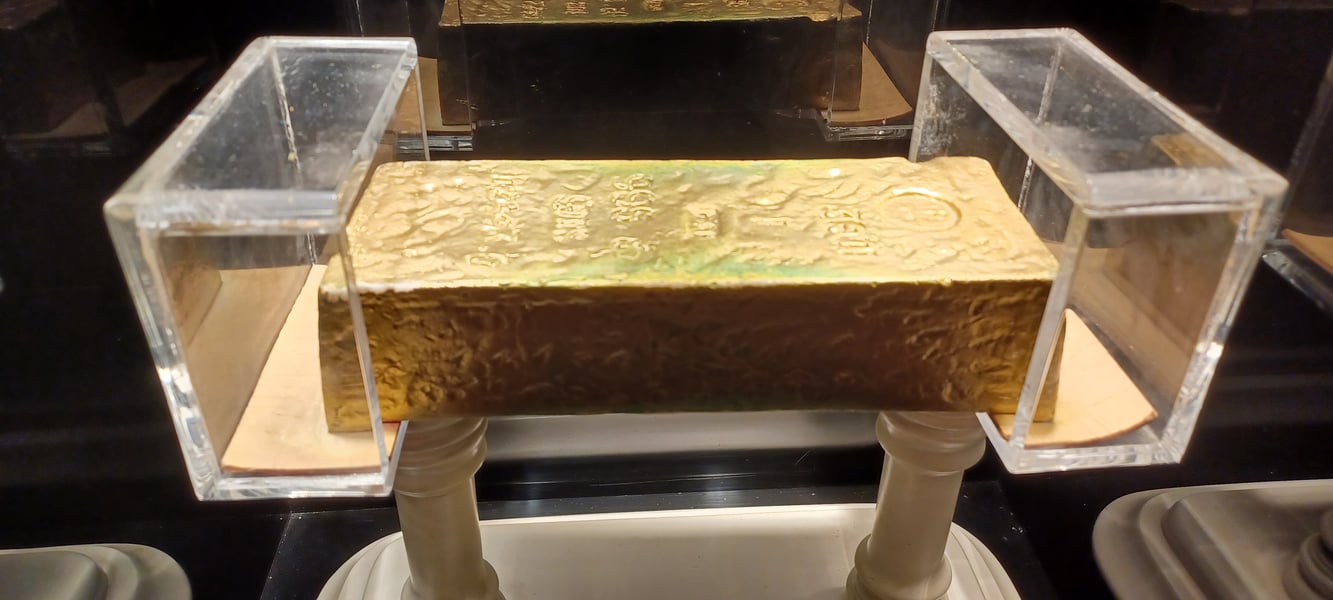

MUMBAI – Three months ago, a 10-gram gold bar on India’s Multi Commodity Exchange cost around Rs 1,58,000. On Wednesday it cost Rs 1,63,200, the highest print since mid-May, and Indian bullion traders are now weighing whether that three-month high is a ceiling or a staging point, with the Federal Reserve’s Jackson Hole speech less than 48 hours away.
The immediate driver was oil, not gold. Brent crude fell 2.6% to $71.80 per barrel after Washington and Muscat confirmed the framework of a Hormuz corridor agreement, removing a disruption premium that had kept crude above $73 for most of the month. When crude slides and the dollar index loses traction, dropping near 102.9 on Wednesday, gold tends to fill the void in investor portfolios. On the MCX, it did.
| Commodity | Price | Change / Note |
|---|---|---|
| MCX Gold (Oct futures) | Rs 1,63,200 / 10g | 3-month high |
| COMEX Gold (spot) | ~$3,280 / troy oz | Positive |
| MCX Silver | Rs 97,400 / kg | Positive |
| MCX Copper | — | Flat |
| MCX Crude Oil | Rs 7,660 / bbl | -2.2% |
| Brent Crude (international) | $71.80 / bbl | -2.6% |
| Prices as of Wednesday session close. MCX figures are in Indian rupees; international benchmarks in USD. MCX Gold October futures hit their highest since mid-May on this session. | ||
| Indicator | Value |
|---|---|
| DXY Dollar Index | ~102.9 |
| SPDR Gold Shares — August inflows | +8 tonnes |
| Consecutive ETF inflow weeks | 4 |
| MCX Gold — 3-month prior reference | Rs 1,58,000 / 10g |
| USD/INR (Wednesday close) | 95.40 |
| DXY and USD/INR are indicative; SPDR Gold Shares inflow data based on fund disclosures through August 27, 2026. | |
The rupee’s concurrent move to 95.40 against the dollar added a layer that complicated the straightforward bullion math. A stronger rupee makes dollar-priced gold cheaper to import, which in theory should hold MCX prices back. That the rupee and MCX Gold rose simultaneously reflects international gold’s own dollar-term gains; COMEX spot was near $3,280 per troy ounce, outpacing what the currency effect would have shaved off.
What is harder to explain away is the pattern of ETF flows supporting the move. SPDR Gold Shares, the world’s largest gold-backed fund, has added approximately 8 tonnes in August, making this the fourth consecutive week of inflows into the fund. ETF buying that runs concurrently with a price move signals institutional positioning rather than retail chasing, a distinction that matters when determining whether a breakout has legs.
MCX Silver also rose, to Rs 97,400 per kilogram, though less emphatically than gold. Copper, by contrast, was flat. That divergence is telling: a pure dollar-weakness story would have lifted all commodities together. A story where gold outperforms, silver follows modestly, and base metals stay flat is a monetary and safe-haven story, not an inflation story. The two look similar from the outside; they resolve very differently when risk conditions shift.

India’s equity markets also rallied Wednesday as the Sensex gained on Hormuz news, but the character of that rally differed from gold’s. Equity gains reflect a growth-positive read on lower oil prices; gold’s rise reflects a monetary-conditions read on a weaker dollar. That the two happened simultaneously on the same underlying news event is not a contradiction. It is a reminder that markets price the same information through different lenses.
Indian jewellers have seen this positioning dilemma before. At three-month highs, the reflex is to defer purchases and wait for a pullback that may or may not arrive. Retailers working on fixed making-charges and fluctuating metal costs typically hedge forward when spot breaks resistance levels, which can itself cap near-term upside as that hedging pressure hits the market. Whether that dynamic reasserts on Thursday depends in part on whether institutional buyers sustain the ETF inflows that have anchored this rally.
India’s festive season, Navratri in early October followed by Dhanteras and Diwali, is the structural backstop for physical gold demand. Jewellers and refiners typically build inventory through September in anticipation of that demand. At Rs 1,63,200 per 10 grams, pre-festive buying becomes materially more expensive than it was in May. How that demand calculus interacts with the post-Jackson Hole price environment will determine whether domestic consumption provides a floor or whether imported weakness can push MCX Gold back toward the Rs 1,60,000 range it held for most of August.
The critical unknown is what Fed Chair Jerome Powell will say at Jackson Hole on Friday. Markets are currently pricing two more rate cuts before the end of 2026. Powell reaffirming that trajectory, even without new detail, would keep the dollar index under pressure and support gold’s current range. A signal that the Fed is more cautious than priced would likely send the dollar index back toward 104.5 and put MCX Gold’s recent breakout under immediate pressure.
Gold’s three-month high on Wednesday is real. What it is not, yet, is conclusive. The Hormuz deal gave bullion the narrative and the dollar weakness it needed to break above a six-week range. Whether the breakout holds past Friday morning is the question that neither the MCX futures curve nor the SPDR Gold holdings data can answer. That is Jackson Hole’s job.