
MUMBAI – India’s benchmark equity indices extended their recovery on Tuesday, lifted by the sharpest single-day drop in crude oil prices in weeks after Iranian and Omani diplomats agreed a temporary framework for restoring commercial shipping through the Strait of Hormuz.
The BSE Sensex gained 286.98 points, or 0.37 percent, to close at 77,656.09. The NSE Nifty 50 rose 115.50 points, or 0.48 percent, to 24,334.55. Both indices had lagged global peers through most of the session before recovering sharply in the final hour as crude broke below $87 a barrel.
| Instrument | Level | Change | |||||||
|---|---|---|---|---|---|---|---|---|---|
| BSE Sensex | 77,656.09 | +0.37% | |||||||
| NSE Nifty 50 | 24,334.55 | +0.48% | |||||||
| Brent Crude ($/bbl) | $86.2 | -2.6% | |||||||
| WTI Crude ($/bbl) | $80.3 | -2.5% | |||||||
| Brent 3-Session Change | — | -9.0% | |||||||
| FPI Inflows — August MTD (through Mon) | Rs 15,491 cr | Net Buy | |||||||
| FPI Inflows — Tuesday | Rs 1,593 cr | Net Buy | |||||||
| Source: BSE/NSE filings, company Q1 FY27 earnings reports. | |||||||||
Iran’s Deputy Foreign Minister Kazem Gharibabadi confirmed Tuesday evening that Tehran and Muscat had agreed on the coordinates of a temporary shipping corridor, the clearest official signal yet that the waterway, effectively shut since February’s US-Israeli military campaign against Iran began, may partially reopen within weeks. Oman’s Foreign Minister Badr Albusaidi had arrived in Tehran on Monday for talks with Iranian counterpart Abbas Araghchi, and the joint framework envisions a phased approach to civilian transit lanes alongside a mine-clearing operation in the waterway’s western approaches.
Gharibabadi told reporters after the talks that implementation steps were now being prepared.
Brent crude settled at $86.2 a barrel, down 2.6 percent on the day. West Texas Intermediate fell 2.5 percent to $80.3. Taken across the previous three sessions, Brent has retreated nearly 9 percent, the fastest weekly decline since the Hormuz conflict began in late February.
That retreat matters for India in ways that extend well beyond the headline index moves. The country imports roughly 85 percent of its crude oil requirements, and every one-dollar drop in the global price reduces the annual import bill by an estimated $1.5 billion. Sustained relief at $86 a barrel, against the $89 to $92 range that prevailed through much of August, would reduce the monthly energy import bill by several hundred million dollars, easing pressure on both the rupee and the current-account deficit that widened sharply when the Hormuz closure upended Asian oil supply routes in March.
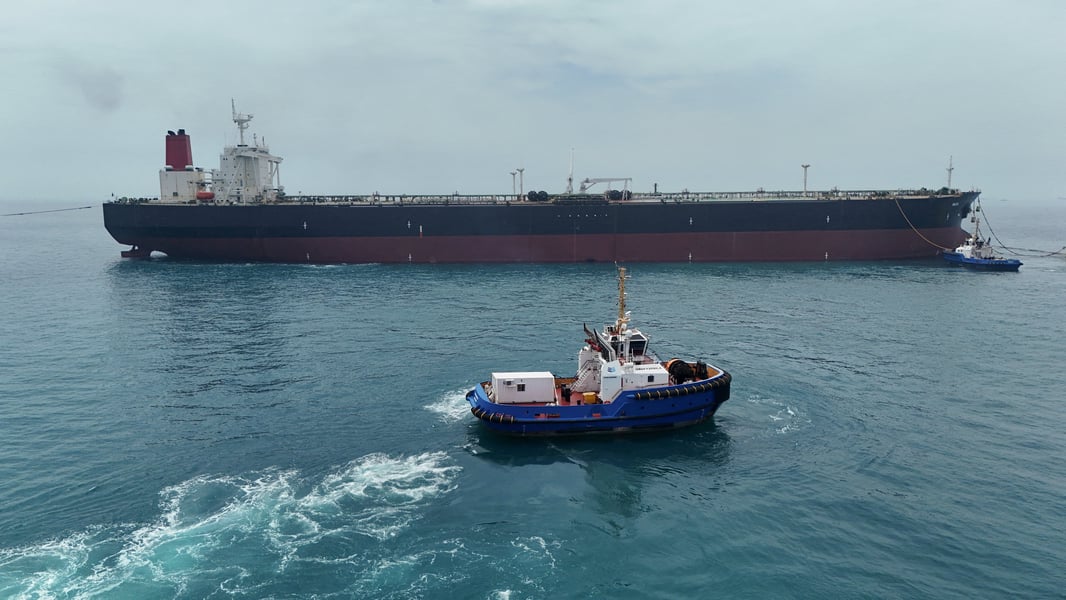
Iran and Oman struck the phased framework on Tuesday, with Oman’s foreign minister making the trip to Tehran to finalize terms. The deal was structured as a temporary arrangement pending a broader resolution of the Iran-US conflict, leaving the corridor’s permanence contingent on political conditions neither side controls.
Oil marketing companies, the state-run refiners that absorbed the most direct margin pressure since the strait closed, were among Tuesday’s sharpest gainers on the NSE. HPCL, BPCL, and Indian Oil Corporation had been caught between buying crude near $90 a barrel and selling petrol and diesel domestically at rates constrained by government pricing. A durable move to $86 begins to restore the margins these companies have not seen since January.
The Strait of Hormuz handled roughly one-fifth of the world’s oil and liquefied natural gas shipments before the US-Israel conflict with Iran began in February. Oil flow through the strait has fallen from an estimated 20 million to roughly 5 million barrels per day since the conflict began, forcing tankers carrying Indian imports to reroute around the Cape of Good Hope at substantially higher cost. India’s Russian crude imports hit a record in July as New Delhi’s energy planners sought to offset the Hormuz disruption through alternative channels.
The oil price move was amplified by simultaneous forecast revisions from both OPEC and the International Energy Agency. OPEC cut its global oil demand growth projection for 2026 to 580,000 barrels per day from the 780,000 barrels per day expected in July. The IEA’s August monthly report projected an outright demand contraction of 1.6 million barrels per day compared to its July baseline, one of the bleakest IEA readings since the early months of the COVID-19 pandemic.
Foreign portfolio investors have purchased equities worth 15,491 crore rupees on Indian exchanges since the start of August through Monday’s session, with a further 1,593 crore rupees added on Tuesday, according to NSE data. That sustained buying has provided a floor beneath the benchmarks even on days when export-linked technology stocks dragged the indices lower, including on Tuesday’s session where IT stocks fell on U.S. H-1B visa cuts. Institutional allocators appear to be treating India as a relative beneficiary of a lower-oil scenario: less current account pressure, a more stable rupee, and greater space for the Reserve Bank of India to ease monetary conditions.
Financial stocks joined oil marketing companies among Tuesday’s gainers. ICICI Bank and State Bank of India both advanced, and the Nifty Bank index reversed three consecutive sessions of consolidation.
The picture carries complications the crude-price move alone does not resolve. Iranian officials were careful Tuesday to note that an agreed corridor does not mean the strait is open. Tehran’s position is that any arrangement remains contingent on the broader political and military situation, and a single escalation could close the corridor before a tanker transits it. Iran’s parliament has not ratified the agreement, and the mine-clearing operation that must precede any civilian transit is an engineering undertaking that could take weeks under the most favourable conditions.
OPEC+, meanwhile, faces a pricing dilemma the demand-cut data sharpens. Its own secretariat and the IEA now see bearish demand fundamentals regardless of Hormuz. If the strait partially reopens and supply also returns to market, the combined pressure may require a production decision the cartel has not yet signalled.
For the Indian market, Tuesday amounted to a session in which the country’s largest single external risk appeared fractionally closer to resolution.