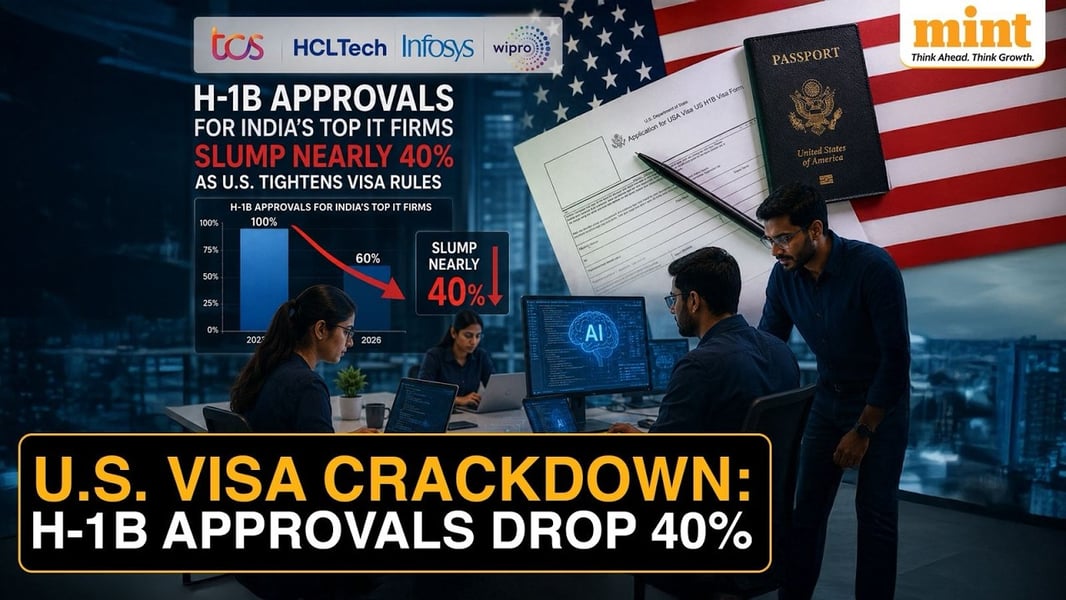

MUMBAI — India’s technology sector absorbed its worst single-day loss in weeks on Tuesday, pulling benchmark indices into negative territory as traders weighed compounding headwinds: a 40 percent decline in U.S. H-1B visa approvals for India’s largest IT firms and market-wide caution ahead of Nvidia Corp.’s quarterly earnings report due after the American close.
The BSE Sensex fell 183 points, or 0.24 percent, to close at 77,472.94. The NSE Nifty 50 shed 126.80 points, or 0.52 percent, to settle at 24,207.75. Both indices recovered from steeper intraday declines, but the damage was concentrated in software exporters: the Nifty IT index dropped 1.47 percent, its sharpest fall this month. The FMCG index lost 0.95 percent.
| Index / Stock | Close | Change (%) | |||||||
|---|---|---|---|---|---|---|---|---|---|
| BSE Sensex | 77,472.94 | -0.24% | |||||||
| NSE Nifty 50 | 24,207.75 | -0.52% | |||||||
| Nifty IT | — | -1.47% | |||||||
| Nifty FMCG | — | -0.95% | |||||||
| Nifty Metal | — | +1.27% | |||||||
| Nifty Bank (Private) | — | +1.04% | |||||||
| Kotak Mahindra Bank | — | +3.70% | |||||||
| UltraTech Cement | — | +2.04% | |||||||
| Axis Bank | — | +1.69% | |||||||
| Infosys | — | -1.84% | |||||||
| Power Grid Corporation | — | -1.77% | |||||||
| Bharti Airtel | — | -1.70% | |||||||
| Source: BSE/NSE filings, company Q1 FY27 earnings reports. | |||||||||
| Programme | Approvals | Change | |||||||
|---|---|---|---|---|---|---|---|---|---|
| FY2025 Lottery System | 18,469 | — | |||||||
| FY2026 Merit-Based System | 11,041 | -40% | |||||||
| Source: BSE/NSE filings, company Q1 FY27 earnings reports. | |||||||||
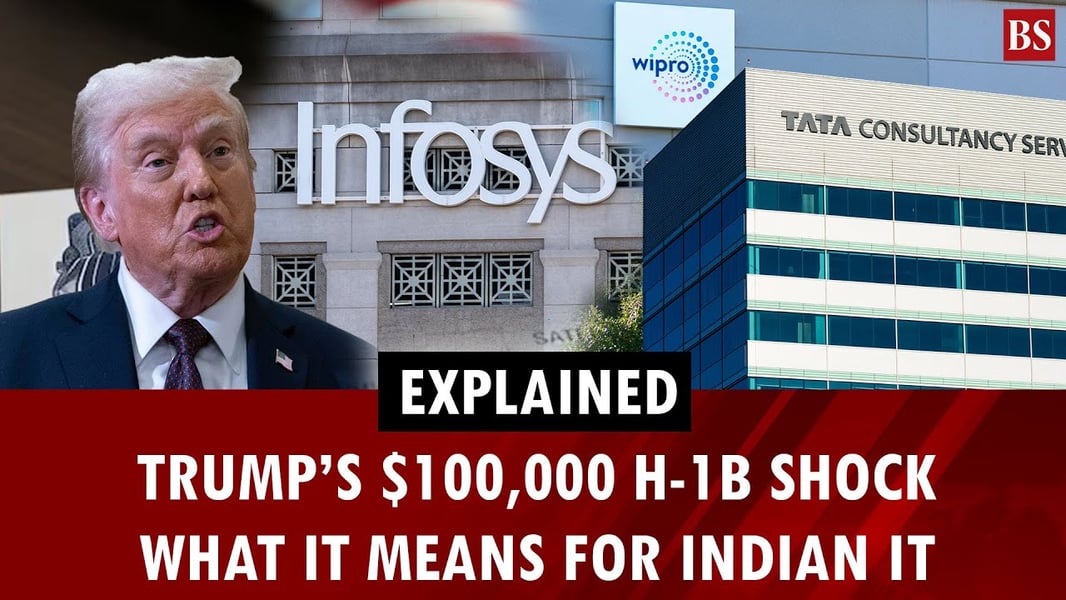
The technology selloff centered on a policy shift that India’s largest IT exporters have been trying to quantify since February. The U.S. government’s restructured H-1B visa program, which took effect on February 27, moved allocation to a merit-and-salary-threshold basis, abandoning the lottery system that had anchored Indian IT’s American workforce pipeline for two decades. The consequence, visible in the latest USCIS approval data: India’s six largest IT firms saw approvals fall from 18,469 to 11,041, a decline of roughly 40 percent.
That number arrived at an uncomfortable moment. Infosys, TCS, Wipro, and HCL Technologies have already been navigating subdued discretionary spending from U.S. enterprise clients. A 40 percent cut to the visa pipeline raises questions about delivery capacity if those contracts do recover. The market’s answer was to sell: Infosys dropped 1.84 percent, the steepest single-session decline among Nifty 50 blue chips. Power Grid Corporation fell 1.77 percent, and Bharti Airtel shed 1.70 percent.
A fund manager at a Mumbai-based asset management firm, speaking without attribution because they were not cleared to discuss client positions, said the quarterly approval figures were larger than what most sell-side models had accounted for, and that the H-1B restructuring’s practical impact on IT firm delivery timelines remained underpriced by the market.
The broader selling reflected something more diffuse than visa policy. Investors were trimming positions ahead of Nvidia’s second-quarter results, a report that has come to function as a global read on artificial intelligence infrastructure demand. Nvidia was expected to disclose quarterly revenue of approximately $92 billion, representing year-on-year growth of close to 96 percent. Confirmation would underpin technology investment theses globally, including India’s AI-adjacent software services sector. A miss would complicate them rapidly.
That binary kept Indian markets cautious rather than actively bearish. Metal stocks bucked the trend, with the Nifty Metal index gaining 1.27 percent, while private banks advanced 1.04 percent as a group, with Kotak Mahindra Bank surging 3.70 percent to lead all Nifty 50 gainers after the lender disclosed stronger-than-expected asset quality numbers in its quarterly review. UltraTech Cement rose 2.04 percent, and Axis Bank gained 1.69 percent.
The rupee held steady against the dollar, providing no additional translation headwind for IT firms’ dollar revenues, a modest relief given that currency weakness had amplified the sector’s pain in several prior quarters. India’s foreign exchange reserves reached a record $728 billion as of last Friday, a buffer the Reserve Bank of India has deployed consistently to prevent sharp currency moves during geopolitical stress, including ongoing West Asia tensions that have kept crude oil prices elevated.
Those oil prices carry their own implications for Indian markets. The country imports roughly 85 percent of its crude requirements, making global oil benchmarks a persistent cost on the current account. Crude oil held near recent levels on Tuesday, with no significant directional move before the U.S. close. The rupee’s relative stability has been one reason Indian markets have avoided a sharper correction despite the West Asia overhang.
Indian markets observed normal equity trading hours on Tuesday despite the Eid-e-Milad public holiday, with settlement proceeding as scheduled and volumes on the NSE in line with the 30-day average. U.S. sanctions targeting Indian firms with exposure to Iranian oil added a secondary layer of uncertainty that weighed on sentiment in the energy and infrastructure segments.
U.S. personal consumption expenditure data, the Federal Reserve’s preferred inflation gauge, is due this week and could reset expectations for the pace of rate cuts. Indian equity strategists were reluctant to position aggressively before that reading, adding another reason for the session’s restrained character.
Whether Tuesday’s pullback is a brief pause or the beginning of a corrective phase depends partly on a question the IT sector has not yet answered clearly: whether India’s software exporters can build a staffing architecture that does not depend on H-1B approvals at their pre-2026 volumes. The alternatives under discussion include expanded nearshore hubs in Canada and Poland, accelerated automation of the visa-dependent delivery layer, and faster hiring at Indian delivery centers to service U.S. clients remotely. None of those alternatives had been quantified in public disclosures by earnings season.
The approval data that circulated Tuesday made the urgency of that question harder to ignore.