
MUMBAI — India’s rupee advanced to 95.40 against the dollar Wednesday, its strongest reading in three weeks, as Brent crude’s 2.6% decline on the Iran-Oman Hormuz corridor agreement stripped the currency’s most persistent headwind in a single session.
The move, which took USD/INR from 95.74 at Tuesday’s close to 95.40 by the end of onshore trading, lowered India’s estimated daily crude import cost by roughly $58 million at current volumes. MUFG, the Japanese lender whose Asia currency desk has tracked rupee flows closely this quarter, raised its year-end USD/INR target to 94, implying a further 1.5% appreciation from Wednesday’s close.
| Indicator | Value | Change / Note | |||||||
|---|---|---|---|---|---|---|---|---|---|
| USD/INR (Close) | 95.40 | -0.34 (rupee up) | |||||||
| USD/INR (Previous Close) | 95.74 | — | |||||||
| MUFG Year-End Target (USD/INR) | 94.00 | ~1.5% further appreciation | |||||||
| Brent Crude ($/bbl) | $71.85 | -2.6% | |||||||
| MCX Crude Oil (Rs/bbl) | Rs 7,660 | -2.2% | |||||||
| Estimated Daily Import Saving | ~$58 million | vs. prior-week crude levels | |||||||
| FPI Net Equity Inflow (Wednesday) | $340 million | Largest since July 8 | |||||||
| Rate Hike Probability (prior Friday) | 15% | Fell to ~0% post-data | |||||||
| No-Change Rate Probability | 72% | — | |||||||
| Source: BSE/NSE filings, company Q1 FY27 earnings reports. | |||||||||
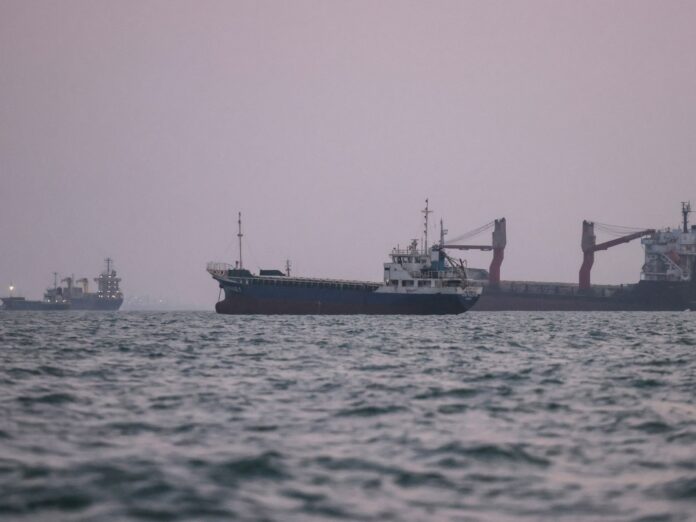
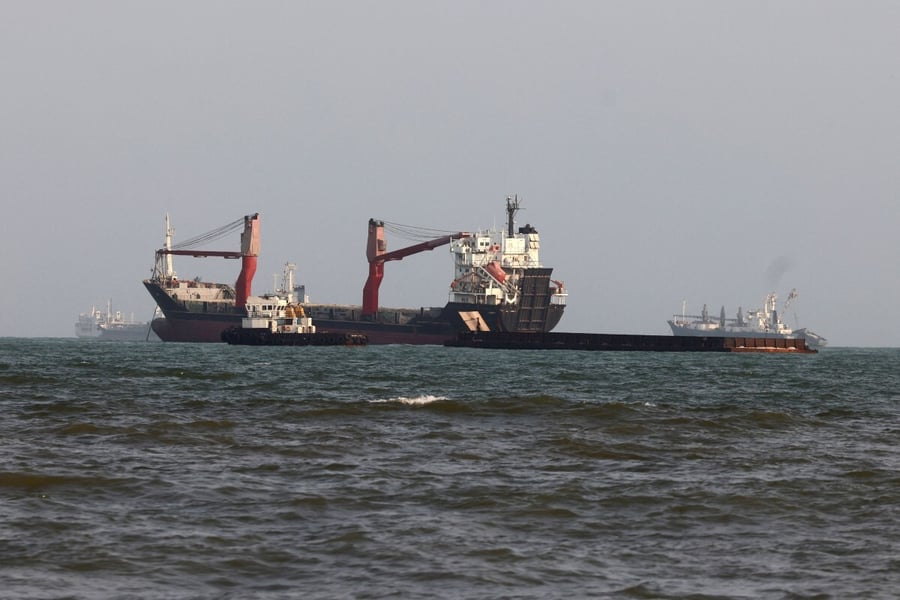
Brent crude settled at $71.85 a barrel, its lowest since June, after Oman’s foreign ministry confirmed it had brokered safe-passage terms for commercial tankers through the Strait of Hormuz. Iran’s foreign ministry accepted the framework as a goodwill gesture ahead of renewed nuclear talks. Neither government published a review mechanism or timeline for the arrangement.
India imports approximately 85% of its crude, a dependency that makes Brent’s direction a more reliable predictor of rupee pressure than interest-rate differentials for most of the year. The 9% Brent decline over five trading sessions, driven first by OPEC’s downward demand revision and compounded by the Hormuz corridor news, has driven a four-session winning streak for the rupee, building on the equity relief reported as the Sensex gained 287 points on Tuesday.
The Reserve Bank of India did not intervene in Wednesday’s session, according to three forex traders who spoke anonymously because the central bank does not disclose market operations. The RBI’s absence allowed the rupee to clear the 95.50 resistance level it had tested twice in August. Traders now describe that level as support.
The crude reversal arrived at a consequential moment for India’s inflation picture. Retail CPI has exceeded the RBI’s 4% midpoint target for four consecutive months, with crude filtering through petrol and diesel prices in June and July as a principal contributor. A sustained Brent level below $73 removes the primary upside risk heading into the central bank’s October policy meeting. Interest-rate futures, which priced a 15% probability of a rate hike as recently as last Friday, shifted to a 72% probability of no change after Wednesday’s crude data.
Foreign portfolio investors added a net $340 million to Indian equities on Wednesday, their largest single-day inflow since July 8. Crude is India’s largest import category, roughly $120 billion annually, and a narrower current-account deficit reduces the structural outflow pressure that has historically dampened FPI appetite for Indian assets. Kotak Institutional Equities analysts had described the crude cost as “the single largest structural headwind” for the rupee this year.
The Bombay Stock Exchange’s Sensex closed 0.4% higher Wednesday, a modest gain relative to the oil-led rally earlier in the week, as markets factored in both the crude windfall and the risk calendar ahead. The BSE Oil and Gas subindex outperformed, adding 1.1%, led by state-owned refiners whose feedstock costs directly track Brent. The broader rally remained measured, in contrast to the IT-sector selling pressure that had weighed on the Sensex earlier in the week on U.S. visa and earnings uncertainty.
MUFG’s bullish call carries a single explicit condition: that Federal Reserve Chair Kevin Warsh does not shock markets at the Jackson Hole economic symposium in Wyoming on Friday. Currency markets have already priced some degree of dovishness. The dollar index fell 0.4% on Wednesday, a move consistent with traders expecting Warsh to lean toward rate-cut readiness rather than extend the current hold posture.
DBS analysts described Warsh’s keynote as “the most important event this week,” not because near-term rate signals are expected, but because markets are reading for communication posture: whether the Fed signals openness to a September cut or holds the framing of patient vigilance into year-end.
“The rupee’s rally is entirely externally driven,” said one currency strategist at a foreign bank’s Mumbai desk, speaking anonymously because they were not authorised to comment publicly. “If Warsh sounds hawkish, 95.40 becomes a ceiling, not a floor.”
At $71.85, Brent is 9% below last week’s monthly high of roughly $78.76. The MCX crude oil contract for September delivery fell 2.2% to around Rs 7,660. Both moves reduce India’s import cost in rupee terms, a double benefit amplified by the dollar’s own weakness: buying the same barrel costs less in both currency and volume terms.
If the Hormuz corridor holds and Jackson Hole passes without a hawkish disruption, MUFG’s 94 target becomes reachable within weeks. India’s Finance Ministry projects a current-account deficit of 1.9% of GDP at $75 Brent for the fiscal year. The gap between that assumption and Wednesday’s $71.85 Brent is widening in India’s favour.
What no analyst has quantified is the corridor’s durability. Iran and Israel have not formally de-escalated; the Hormuz arrangement is an operational workaround, not a structural resolution. A vessel seizure or an airstrike near the shipping lane could reassert the risk premium that drove Brent above $76 last week, and reverse Wednesday’s rupee gains in hours.