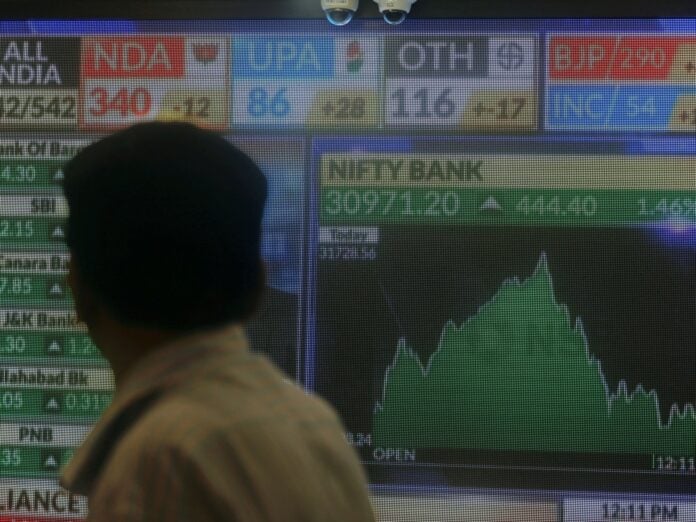

MUMBAI — When a market rallies everywhere except metals, the reason is usually sitting in a Chinese port. In the three sessions since Jerome Powell’s Jackson Hole address revived rate-cut expectations globally, the Nifty 50 gained 1.8%, the Nifty Midcap 150 surged 2.1%, and the Nifty Metal index was essentially flat, posting a gain of just 0.3% against a market that was otherwise celebrating.
The divergence is not coincidental, and it is not resolved by any rate-cut arithmetic. India’s steel sector is caught between two forces that do not neatly offset each other: domestic infrastructure spending that is genuinely picking up, and a wall of Chinese steel exports that has pushed international hot-rolled coil prices to levels that compress margins for Indian producers regardless of how much the government builds.
| Company | YTD Return | Q1 FY27 EBITDA/t (INR) | Domestic Sales Growth | Export Share | |||||
|---|---|---|---|---|---|---|---|---|---|
| Tata Steel India | +3.1% | 9,800 | +7.4% | 14% | |||||
| JSW Steel | +6.7% | 11,200 | +9.1% | 11% | |||||
| SAIL | -4.2% | 6,400 | +5.2% | 8% | |||||
| Hindalco Industries | +18.4% | — | +11.3% (aluminium) | 22% | |||||
| Nifty Metal (Index) | +4.8% | — | — | — | |||||
| Source: BSE/NSE filings, company Q1 FY27 earnings reports. | |||||||||
China exported 53.4 million tonnes of steel in the first half of 2026, a volume last seen in 2015 when Beijing was actively subsidising excess capacity to prevent mass layoffs in its rust-belt provinces. The mechanism is different this time — Chinese domestic real-estate demand has not recovered as anticipated, leaving steel mills that were built for a construction supercycle selling into international markets at prices that undercut Indian producers by 15–18% on hot-rolled coil and 12% on long products. The government in New Delhi imposed provisional safeguard duties on certain steel imports in late June, but the duties cover a narrow product range and Chinese exporters have been routing some volume through third countries to avoid them.
For JSW Steel, the best-positioned of the three major steel producers on this metric, the Q1 FY27 EBITDA per tonne of INR 11,200 represents a decline from INR 13,400 in Q1 FY26. The company’s domestic-focused sales mix — 89% domestic — insulates it from the direct price competition on exports, but it does not insulate it from the pricing signal that Chinese exports send into the Indian market itself. Steel distributors who know they can import at a discount are using that as leverage in negotiations with domestic mills, compressing realizations even on sales that never cross a border. JSW’s 9.1% domestic volume growth in Q1 FY27 is the bright spot: the company is winning market share in construction steel and auto-grade flat products, and its capacity at Vijayanagar and Dolvi is running close to full utilization.
| Metric | H1 2025 | H1 2026 | Change | ||||||
|---|---|---|---|---|---|---|---|---|---|
| China steel exports (mt) | 48.7 | 53.4 | +9.6% | ||||||
| Global HRC price ($/t) | $560 | $487 | -13.0% | ||||||
| India steel imports (mt) | 4.1 | 5.8 | +41.5% | ||||||
| India domestic steel consumption (mt) | 63.2 | 68.9 | +9.0% | ||||||
| India steel production (mt) | 61.4 | 67.1 | +9.3% | ||||||
| Source: BSE/NSE filings, company Q1 FY27 earnings reports. | |||||||||
The import surge in that table — up 41.5% by volume in H1 2026 — is the number that most alarms Indian steelmakers. It is not large relative to total consumption, at roughly 8.4% of the domestic market, but the trend line is accelerating and the product mix is shifting toward flat-rolled, where Tata Steel and JSW earn their highest margins. The construction pickup in the realty sector is a partial offset — long-product demand for rebar and wire rod is rising as housing projects ramp up for the festive season — but flat-product margins are where the EBITDA story for both Tata and JSW is made or broken.
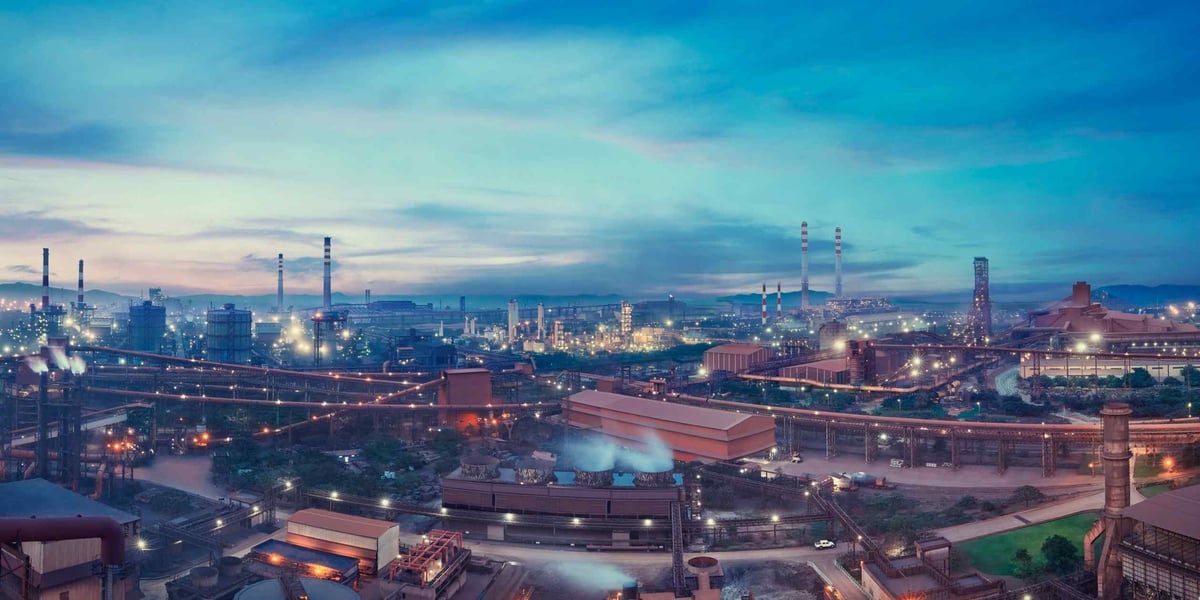
Tata Steel’s India operations are the most efficiently positioned to weather the import competition — the Kalinganagar Phase 2 expansion, which reached full capacity in Q4 FY26, added 5 million tonnes per annum of capacity at the lowest per-tonne cost in the company’s Indian portfolio. The problem is the European division: Tata Steel UK, which the company is restructuring after the decision to end primary steelmaking at Port Talbot, absorbed a INR 2,800 crore charge in Q1 FY27 related to workforce transition and EAF commissioning costs. The consolidated EBITDA per tonne of INR 9,800 for the India segment looks better in isolation than it does dragging the European drag.
SAIL is the sector’s structural laggard. At INR 6,400 EBITDA per tonne — less than 60% of JSW’s margin — the state-owned producer is carrying a cost structure that was set in a era of higher realizations. Its YTD return of -4.2% reflects market skepticism that any margin expansion is imminent: SAIL’s capacity modernization program is behind schedule, its debt-to-equity ratio remains above the sector average, and the government’s push to use domestically-produced steel in infrastructure projects, while nominally supportive, has not been enforced strictly enough to change the competitive dynamic.
Hindalco is the Nifty Metal constituent that most clearly demonstrates how different the aluminium story is from steel. Its 18.4% YTD return — the best in the index — reflects a commodity cycle that is running opposite to steel: aluminium prices have been supported by supply discipline from ex-China producers, American tariffs on Chinese aluminium have kept international pricing elevated, and Hindalco’s Novelis subsidiary in the US is running at record profitability. The FPI inflows into India’s industrial sector in August have disproportionately gone to Hindalco and Vedanta, not to the steel names.
The rate-cut narrative that is lifting other sectors is not a clean positive for steel. Lower rates do support domestic construction and auto demand, which lifts long-product and flat-product volumes. But the same rate-cut environment in the US is expected to weaken the dollar, which historically reduces the dollar cost of Chinese steel production and makes Chinese exports even more competitive on international markets. The exchange-rate channel that India’s steel producers are hoping will narrow works in both directions. What Indian steel needs more than rate cuts is a meaningful WTO-compliant safeguard duty that is wide enough in product scope and high enough in rate to price Chinese competition out of the flat-product segment. That decision sits with the Ministry of Steel, not the Reserve Bank of India, and it has not yet been made.