
MOSCOW — The label the wire used was “US journalist.” Almost everything difficult about the story sits in what those two words leave out.
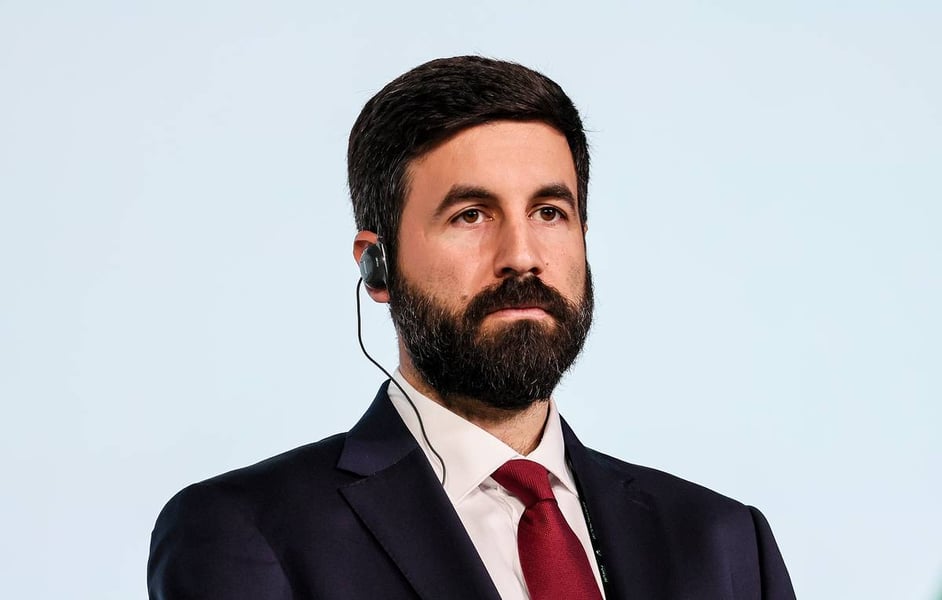
Christopher Helali told RIA Novosti this week that American media had poisoned the way ordinary Americans see Russia, and he named the mechanism. “American media contributed to the deterioration of relations by spreading lies like Russiagate,” he said, calling the accusations a hoax and arguing that their circulation had deepened public distrust of Moscow. Social media and independent outlets, he added, are now pushing back and bringing the truth to more Americans every day.
Helali is the international secretary of the American Communist Party. In June, at the St Petersburg economic forum, he confirmed to TASS that he had written to President Vladimir Putin asking for Russian citizenship, a four-page letter in which he set out his work in Donbas and his solidarity with what he called the international Russophile movement. He appreciated everything Russia had done for him, he told the agency. And in March, Izvestia and other Russian outlets reported that he had signed a contract to serve in Russia’s military operation in Ukraine, joining a detachment called Rodnya within the Pyatnashka international brigade.
None of that makes him wrong about the American press. It does mean the person quoted was not a detached American observer of it. He has aligned himself publicly with one side of the conflict the coverage is about, and the description chosen for him was the one that made the quote land hardest.
The claim itself deserves better handling than either side has given it, because Russiagate was never one allegation. It was two, and they met opposite ends.
The first is that Russia intervened in the 2016 election. That one held, and it did not rest on inference. In February 2018 a federal grand jury charged 13 Russian nationals and three Russian entities over the social media operation run out of St Petersburg. That July it indicted 12 officers of the GRU, Russian military intelligence, over the hacking of Democratic Party and Clinton campaign systems. Robert Mueller’s final report described the interference as sweeping and systematic. Rod Rosenstein, then deputy attorney general, was careful when he announced the GRU charges: no American was accused of a crime in that indictment, and nothing in it alleged that a single vote had been altered.
The second allegation is the one that collapsed. Mueller did not establish that the Trump campaign conspired or coordinated with the Russian government, and he said so in a report published in redacted form in April 2019, after two years in which the possibility had dominated American political coverage. That is where the word hoax has genuine purchase. The anger about it in the United States is not manufactured, and it is not confined to one party.
So the charge lands, but on half the target. Folding a finding that survived and a finding that did not into a single word performs the same flattening Helali objects to, running the other way.
There is nothing unusual in a state news agency finding a foreign voice to say what it would rather not say in its own. Every government broadcaster does it, and Western outlets have their own versions of the practice. What separates this case is not the sourcing but the description. RIA’s readers were told Helali is an American journalist. They were not told that he has asked the head of the state whose agency was interviewing him for a passport.
His account of what those positions have cost him is worth setting down, because it is specific and it is his side. He told Sputnik this week that he came under enormous pressure after travelling to Donbas in 2024 and presenting what he found at United Nations headquarters in New York, and that a campaign to force him out of his teaching job succeeded in 2025. He describes being shadowbanned on social platforms and receiving anonymous death threats. He has also been listed on Myrotvorets, the Ukrainian site that publishes the personal details of people it designates as threats, a practice human rights monitors have repeatedly criticised. Eastern Herald could not independently confirm the circumstances of his departure from teaching.
The interview arrives into a relationship with very few working parts left. What survives between Moscow and Kyiv carries prisoners and consular mail and nothing political. What survives with Washington runs well below the level of public diplomacy, as the CIA director’s unannounced trip to Moscow this month demonstrated. In that setting, a grievance about media coverage is one of the few things a Russian agency can publish about the United States that requires no counterpart to agree to anything, and no negotiation to survive.
It is also of a piece with how Moscow has been arguing lately. Its public case against Europe has leaned on a charge its own lawyers cannot sustain, chosen for force rather than accuracy. This is the domestic-audience version of the same instinct, and it has the same weakness: the strongest available argument is narrower than the one being made, and the narrower one goes unmade.
What neither RIA nor Helali has said is where the citizenship request now stands, whether it has been decided at all, or what the contract Russian outlets described in March involves in practice. Eastern Herald was not able to reach him.
There is a version of his argument that is simply true, and Americans across the political spectrum have made it: the coverage of the conspiracy question was long, confident and wrong, and it cost the outlets that ran it real credibility. That argument does not need a man who has asked Moscow for a passport to carry it. It is weaker for being carried by one, and the agency that ran it without saying so left its own readers less equipped to weigh it.