MOSCOW — The Russian defence ministry does not usually name the company.
Its statement on Friday said attack drones had struck an industrial site in the Kyiv region, and then it identified the target precisely. “Attack drones in the Kiev region struck an industrial enterprise (Fire Point LLC), which produced and stored chemicals needed to manufacture solid-fuel boosters and warheads for Flamingo long-range cruise missiles,” the ministry said.
None of that has been confirmed by anyone else. Ukraine has not commented, no independent assessment of the damage exists, and the ministry’s operational claims are not audited by anybody, a problem visible in its own drone-interception arithmetic, where figures from different series get added together and nobody reconciles them.
So the damage is not the story. The naming is.
Earlier this month, after Britain authorised MBDA to share classified Storm Shadow design material with Ukraine, Russia recalled its ambassador from London and said it would gather targeting intelligence on Ukrainian production sites. Friday’s statement is the first occasion since then on which the ministry has claimed to have struck one and identified the manufacturer by name. Whether or not the drones hit anything, Moscow is asserting that it knows where Fire Point works.
That is the part Kyiv has spent two years preventing. Fire Point does not publish its addresses, disperses production, and has been unusually guarded even by the standards of a defence industry under bombardment.
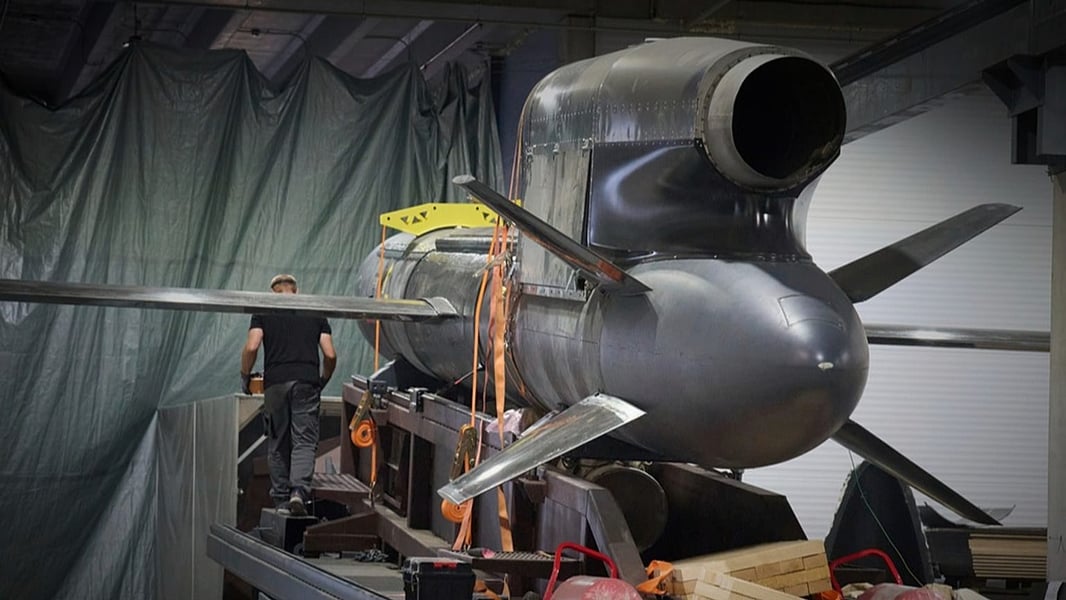
The missile has been working. On August 15 Ukraine’s General Staff said Flamingos hit the Progress Space Rocket Centre in Samara, some 900 kilometres from the border, and Kyiv has claimed strikes on the Savasleyka airfield and the oil terminal at Ust-Luga. The launch tempo has roughly doubled over six months. A weapon used at that rate, at that range, becomes a production problem for the other side rather than a battlefield one, and production problems are solved by hitting factories.
The programme’s origins are also political. Mykhailo Fedorov, the former defence minister who was dismissed this summer, built the Flamingo effort and has since warned that Russia is outpacing Ukraine on ballistic missiles. He is no longer in the building.
And then there is the awkward part, which is that the company Russia says it bombed is under investigation at home. Ukraine’s National Anti-Corruption Bureau has been examining whether Fire Point inflated the cost of components or the number of drones it supplied to the defence ministry. Reporting has linked the company’s real ownership to Tymur Mindich, a co-founder of the Kvartal 95 studio and a friend of President Volodymyr Zelenskyy, and a man now at the centre of a separate energy-procurement scandal whose financial operator turned out to have been employed by Fire Point.
The bureau’s own position is narrower than the headlines. It has said it is not investigating the Flamingo missile as such, while declining to deny an investigation into the company’s drone contracts. Fire Point denies wrongdoing and has characterised the allegations as rumours circulated by competitors amid a broader clean-up of Ukrainian defence procurement.
So two things are true at once, and neither cancels the other. Fire Point is the most consequential new weapons manufacturer in Ukraine, and Fire Point is the subject of a corruption inquiry by Ukraine’s own anti-corruption bureau. Moscow will make use of the second fact. It does not change the first.
What cannot be established from here is almost everything specific. The Kyiv region covers a large area and the ministry named a company rather than a site. No photographs, no Ukrainian acknowledgement, no third-party assessment. Ukraine routinely declines to confirm strikes on defence plants, which means silence is not evidence either way. The chemicals described, solid-fuel booster propellant and warhead filler, are the sort of thing a missile programme genuinely needs, so the claim is at least coherent, which is more than can be said for some of what the ministry publishes.
The test is not whether Kyiv issues a denial. It is whether the Flamingo launch rate changes over the next few weeks. That number is observable, it is already being tracked, and it will answer the question the defence ministry’s statement cannot.