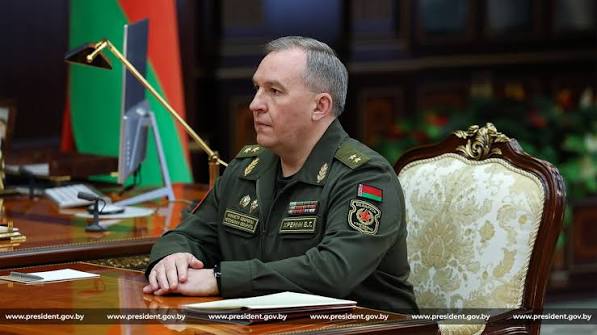

MOSCOW — The Russian defence ministry published a number on Friday evening. Between eight in the morning and eight at night, Moscow time, air defence crews on duty intercepted and destroyed 211 Ukrainian fixed-wing unmanned aerial vehicles. Six days earlier, the same ministry’s data produced a figure of 1,478 for a single day. Both numbers were published. Neither can be independently checked, and they are not counting the same thing.
The daily interception tally has become the most widely republished and least verifiable statistic of this war, and the gap between those two figures is not a story about escalation. It is a story about how the arithmetic is assembled.
Friday’s 211 belongs to what is effectively the ministry’s territorial bulletin, the running count of drones brought down over Russian regions and the seas around them. That series moves in the low hundreds. On August 15 it reported 180 fixed-wing drones destroyed over the Belgorod, Bryansk, Kaluga, Kursk, Leningrad, Novgorod, Oryol, Rostov, Ryazan and Tula regions, over Crimea, and over the Black Sea. Against that baseline, 211 across half a day is an unremarkable Friday.
The 1,478 comes from somewhere else. TASS reported it as a record for Saturday, August 15, alongside 14 guided air bombs, one HIMARS projectile and nine Flamingo cruise missiles, and the agency was explicit about the provenance: the total was a TASS calculation based on the defence ministry’s data, not a single ministry announcement. It is a sum of the day’s separate statements. The previous highest figures on the same basis were 1,328 for August 14 and 1,158 for August 2.
What gets added in is the front. On August 17 the ministry’s own groupings published their overnight counts: Battlegroup North reported destroying 569 Ukrainian drones and 36 UAV command posts over the previous day, Battlegroup South 245 drones and 47 control posts, Battlegroup West 203 drones and two Flamingo missiles. Those three alone account for more than a thousand. Add the territorial bulletin on top and the four-figure headline appears.

The two series describe different wars. Battlegroup counts are overwhelmingly short-range battlefield machines, quadcopters and first-person-view drones destroyed within a few kilometres of the contact line, where both armies now lose them in the hundreds daily as a matter of routine. The territorial bulletin counts long-range fixed-wing aircraft flown at refineries, warehouses and cities several hundred kilometres inside Russia. Summing them produces one impressive number that conveys almost nothing about either.
Russian officials do not entirely agree with each other either. On August 18, when Ukraine mounted one of its largest attacks on the capital region, the Moscow mayor Sergei Sobyanin said more than 600 drones had been flown at it, and around 180 were reported destroyed over the region, Al Jazeera reported. A capital absorbing 600 and downing 180 of them is a different picture from a country downing 1,478 in a day, and both accounts came from the same government within seventy-two hours.
The direction of travel is not in dispute. The running total for July reached 13,312 on the ministry’s aggregated basis, and by the middle of August the month was already past 11,000. Ukraine has said it intends to build six to seven million first-person-view drones this year, roughly half a million a month, which is a figure about the battlefield rather than about Moscow but which explains how any count near the front line reaches four digits without anything unusual happening.
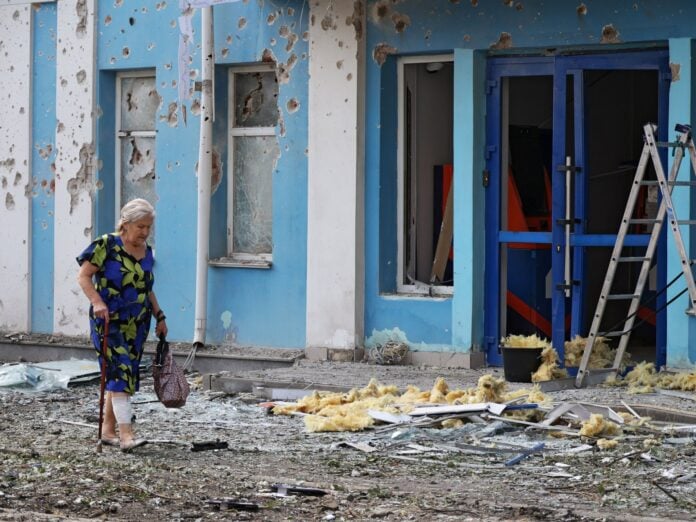
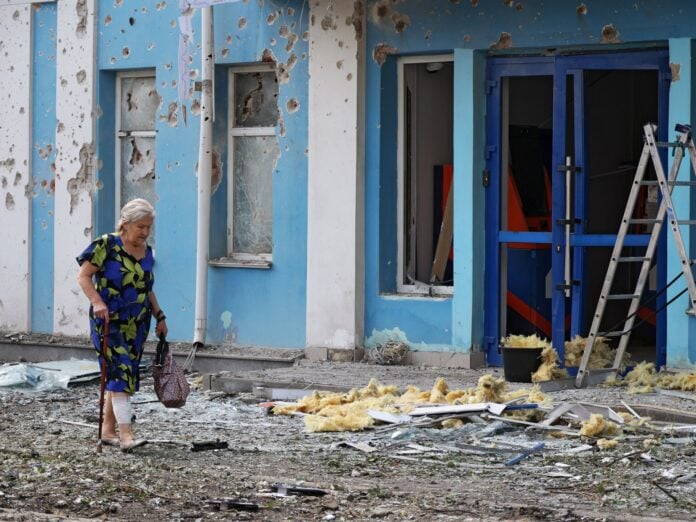
Neither side publishes the number that would matter. Russia’s ministry reports interceptions and not impacts. Ukraine’s air force publishes the mirror image, saying on Friday that Russia had launched 135 drones overnight and that 107 were shot down or suppressed, which leaves 28 unaccounted for in a sentence that does not mention them. The record of what actually landed is assembled afterwards from mayors, regional governors, company statements and photographs, which is a slower and more grudging process than a press release.
Where that record does exist it is more useful than any tally. Ukrainian drones have hit at least twenty sites belonging to the retailer Wildberries since mid-July, killing at least thirteen people and destroying around a tenth of the company’s storage capacity, and on August 7 the company raised its product insurance rates covering drone damage by 40 percent, to as much as 5.6 percent of the value of the goods. Al Jazeera examined why Kyiv is targeting the company. An insurance rate written into a commercial contract is harder to move than a ministry statistic, and it is the closest thing available to an audited measure of what is getting through.
Much is still unknown. The ministry does not publish a methodology, or say how a destroyed drone is confirmed, or separate kinetic interceptions from electronic suppression, which are different outcomes with the same entry in the ledger. There is no independent audit of any of it. Ukraine does not publish launch totals, so the denominator is missing on both sides. And Friday’s figure covers twelve hours rather than twenty-four, which means it cannot be compared directly with the daily numbers it will be republished alongside.
Eastern Herald has covered the campaign at both ends this month, from Ukraine’s largest drone assault on Moscow Oblast to a Romanian F-16 destroying an explosive drone 300 metres from an offshore gas platform and three drones downed over Sevastopol. In each case the number that was checkable came from the damage, not from the claim.
The 211 will be republished. It is a real figure from a real bulletin. It is also a half-day count from one of two incompatible series, issued by a ministry that reports only its successes, in a war where the losing side of any given night is the one that does not put out a statement.