
NIAMEY – The gunfire began before sunrise. Residents near Niamey’s main airport woke to blasts rattling windows, and by 8 a.m. the government’s national television channel had gone dark, replaced by a black screen that persisted across satellite and online platforms for hours.
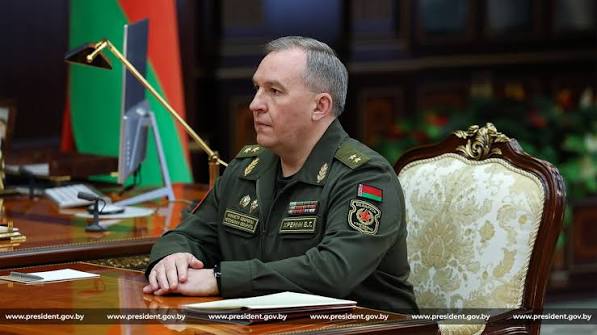
By mid-morning on Saturday, Niger’s defense minister was insisting the situation was under control. Gen. Salifou Mody told the public that a group of soldiers had “broken away from military order” at Base 101, a major military installation on the outskirts of the capital, and had attempted to detain fellow troops. Security forces moved swiftly, he said, and residents should “remain calm and continue their daily activities as usual.”
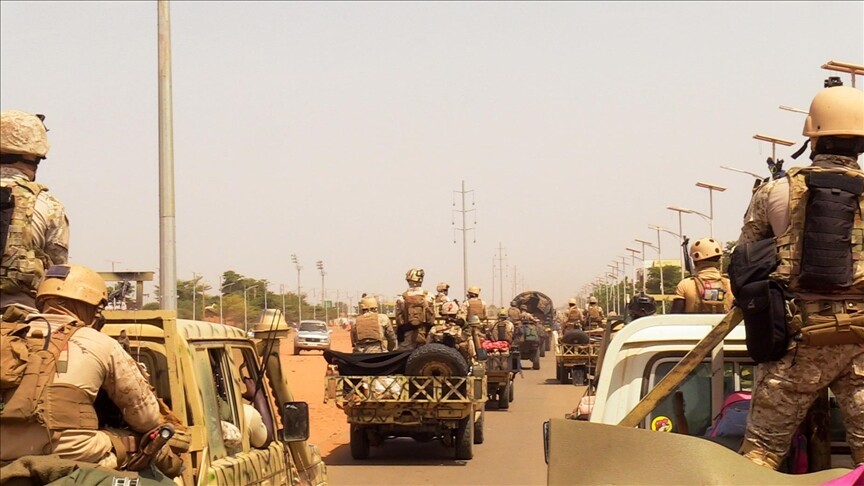
The official account left almost everything unresolved. Three strategic locations, including Diori Hamani International Airport, the perimeter of the presidential palace, and Base 101, came under attack in the early morning hours. Armored vehicles appeared outside the airport. Niger’s national television, Tele Sahel, was cut from the air. Whether any of this fits the profile of a localized military grievance, or something more organized and deliberate, is a question the junta’s statement did not answer.
A member of the Alliance of Sahel States parliament, Bana Wagana Ibrahim, offered a different framing almost immediately. “Another cowardly attack on Base 101 and once again our defence and security forces ensured,” he wrote on Facebook, before adding that the situation was under control. His use of the word “attack,” as opposed to the defense minister’s characterization of soldiers who simply broke ranks, pointed to a gap between the junta’s official narrative and the account taking shape inside its own political orbit.
Al Jazeera reported that security sources described the perpetrators as “terrorists,” and said those not neutralized during the initial intervention had fled, with search operations ongoing across the capital. No specific group had claimed responsibility by early Saturday afternoon. The attack’s shape, with three high-value targets struck in close succession and a state broadcaster taken off the air, suggested something more organized than a barracks dispute between soldiers with a grievance.
This was the third major violent incident targeting Niamey this year. In January, an affiliate of the Islamic State known as IS Sahel targeted Diori Hamani International Airport. In June, fighters from JNIM, the Sahel branch of al-Qaeda, struck it again. Saturday’s attack extended the pattern but broke from it, striking the presidential palace perimeter and Tele Sahel alongside the airport and Base 101. No group claimed responsibility, and no casualties had been officially confirmed.
Niger’s military government has ruled since the July 2023 coup that removed President Mohamed Bazoum from office, with General Abdourahamane Tchiani leading a transitional administration now in its third year. Since then, Niamey expelled French military forces, terminated its security cooperation agreements with the United States, and aligned itself more closely with Moscow. Together with Mali and Burkina Faso, two other states governed by military juntas that similarly expelled Western partners, Niger formed the Alliance of Sahel States, a bloc increasingly reliant on Russian security arrangements and forces affiliated with what remains of the Wagner Group under Russian state direction.
That realignment has not translated into improved security on the ground. The Sahel’s jihadist networks, including JNIM and the Islamic State in the Sahel, have grown in reach and ambition since Western military presences were withdrawn. JNIM’s operational alliance with Tuareg separatist forces in northern Mali has enabled the group to threaten major population centers and drawn American attention toward possible contingency military action in the region. The same network has demonstrated it can project force across the poorly monitored borders connecting Mali, Burkina Faso, and Niger.
The blackout of Tele Sahel carried the most weight on Saturday morning. Taking state media offline is a step historically associated with coup attempts in the Sahel, a tactic Niger’s own military leadership used in July 2023 when it broadcast its seizure of power. Whether those responsible for Saturday’s attack were trying to replicate that sequence, or whether Tele Sahel’s location near other targeted installations made it a target of opportunity, was not immediately apparent.
Gen. Mody’s urging that citizens avoid unverified information circulating online was itself a signal that the information environment around the attack had already become contested. Anadolu Agency reported that security forces had regained control of critical sites and initiated operations to restore order across affected areas.
What the junta confronts now is not only a security problem but a narrative one. The official characterization, soldiers out of formation quickly brought to heel, does not easily accommodate three simultaneously targeted sites, a national broadcast blackout, and a parliament member who reached for a different word entirely. In the Sahel’s current political environment, where armed groups have learned to exploit the distance between official accounts and what residents actually witnessed, that gap is itself a vulnerability.