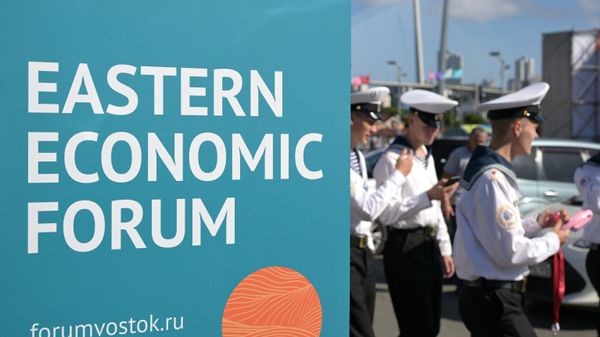

VLADIVOSTOK — Four years after Western sanctions effectively grounded Russian carriers across Europe, Moscow is making a formal push to rebuild one of its most commercially valuable air connections. Russian Transport Minister Andrey Nikitin told the Eastern Economic Forum on Friday that Russia is prepared to negotiate an expansion of direct flights between Russia and India, a move that would deepen a bilateral relationship that has already become one of Moscow’s most consequential since 2022.
Nikitin, speaking on the sidelines of the EEF gathering in Vladivostok, said the government is ready to consider increasing flight frequencies on existing routes and opening new ones. The ministry’s statement, as relayed by Interfax, offered no specifics on which routes or what volume Russia would seek. What the proposal does is put aviation formally on the agenda of a relationship that has been commercially active well beyond what its air links would suggest.
The context matters. India became one of Russia’s most important oil customers after European buyers turned away following the start of the Russian operation in Ukraine in February 2022. Bilateral trade volumes have broken records in each subsequent year. Russian crude reaches Indian refineries through an expanded fleet of tankers and a route structure that has become one of the more studied features of the post-sanctions trade architecture. Aviation has not kept pace with that commercial intensity. Direct passenger connectivity between Moscow and major Indian cities remains thin relative to the scale of the relationship, with most traffic routing through hubs in the Gulf.
For Russia, the gap has a structural cause. Its major carriers, including Aeroflot, are barred from landing across most of Europe and face restrictions on overflying European airspace. The effect on route economics has been significant, forcing Russian carriers into longer flights on fewer international routes while the domestic network has continued operating. Indian routes, geographically accessible without European overflight, represent one of the few international corridors where Russian carriers can operate without circumventing sanctions on airspace access.
For India, the aviation relationship with Russia is more complicated. Indian carriers operating Moscow services must navigate an environment where Western governments have signaled secondary-sanctions exposure for entities that facilitate Russian aviation expansion. Air India, which operates some of the most watched international routes as the flag carrier’s international footprint rebuilds, has not publicly commented on the Nikitin proposal. India’s Directorate General of Civil Aviation had not responded at publication time.
The Nikitin proposal fits a pattern Moscow has deployed consistently at the EEF since the forum became a venue for Russia’s eastward economic pivot. Each year Vladivostok has hosted specific sectoral proposals, in energy, shipping, agriculture, and now aviation, framed as bilateral arrangements between Russia and individual Asian partners that route around the multilateral frameworks the West has used to apply pressure on Moscow. The Indian side has engaged selectively, accepting the trade relationships that serve its economic interests while maintaining distance from anything that would create formal security obligations or provoke Western capitals beyond their current tolerance.
That selective engagement is the space Nikitin’s proposal is pitched into. An expansion of flight frequencies between Moscow and Delhi, Mumbai, or Bangalore would require formal intergovernmental aviation agreements and bilateral clearances, not a shadow structure. It is visible, auditable, and subject to the same secondary-sanctions exposure that has made some Indian companies cautious about Russian dealings that would normally be straightforward commercial transactions.
What Russia is testing is how far India’s strategic autonomy extends into sectors where the exposure to Western scrutiny is highest. Aviation is near the top of that list. The broader pattern of Russia’s energy export shifts eastward since 2022 suggests Moscow has become increasingly sophisticated about which Asian partnerships it prioritises and which proposals it advances through forums like the EEF.
The Indian government’s posture on Russia has been consistent. New Delhi has abstained on UN resolutions related to the Russian operation in Ukraine, continued purchasing Russian defence equipment, and expanded energy trade, while refraining from supplying anything Western partners have designated as sanctioned. The aviation question sits in an intermediate zone: commercial rather than military, but highly visible and requiring Indian regulatory institutions to formally process applications from Russian carriers operating under restricted international certification.
The gap between the EEF proposal and a signed bilateral aviation agreement is significant. Aviation rights between countries are governed by Air Services Agreements, formal bilateral treaties specifying routes, frequencies, and capacity. Russia and India have an existing framework, but its terms predate the post-2022 sanctions environment. Updating it to accommodate expanded Russian carrier operations would require a formal bilateral process and a review by Indian regulators of Russian carrier certifications under their current maintenance regime, a process that carries its own exposure to Western scrutiny. None of that moves quickly, even if both governments decide to proceed.
How Nikitin’s EEF comment translates into formal negotiations is unclear. The minister offered no timeline and no specific mechanism. What it signals is that Russia sees India as a viable partner for this conversation and sees Vladivostok as the right venue to open it. Whether New Delhi is prepared to have that conversation at the level of formality a bilateral aviation expansion requires is the question the proposal has now raised.