
The question arrives in a specific emotional register – not casual curiosity, but something with real weight to it. Someone reads their chart or books a session with a practitioner and asks: when? They are usually not asking about compatibility, or what their Venus placement says about their relationship patterns. They want a date. Or at least a season.
Astrology, for all its 3,000-year literature on love, partnership, and the arc of romantic life, cannot give them one. What it can do is something a trained practitioner would argue is more useful: identify the windows when a meeting of that kind is structurally possible. The distinction matters more than it might seem, and the current sky makes it concrete in a way that happens only a few times each year.
Venus entered Libra on August 6 and stays through September 10 – its home sign, the placement where the planet of love and relationships is considered to operate at full strength. CHANI Nicholas, the astrologer whose birth chart application has become one of the most widely consulted in the field, describes Venus in its domicile as having “all the resources it needs to thrive.” The phrasing is characteristic of how serious practitioners approach timing. They are not making appointments. They are identifying conditions.
The astrological toolkit for soulmate timing is more technical than most people realize. The 7th house – the sector of the birth chart associated with committed partnership – is the primary lens. A Jupiter transit through that house is considered among the most significant indicators in any given year. Jupiter’s function as an amplifier and expander means its passage through the partnership sector is one of the few transits that experienced astrologers will name specifically when a client asks about meeting someone significant. The timing is not precise to a week. It covers a stretch of months during which the person is, in astrological terms, more open and more visible to partnership.
Venus returns – the annual chart cast for the exact moment Venus returns to its natal position – offer a second layer. The position of the 7th house ruler in that return chart is read as a signal about the year’s relational potential. A Venus return with the ruler of the 7th in an angular house and unafflicted by difficult aspects signals a year practitioners take seriously for romantic development. One with that ruler buried in the 12th and under stress from Saturn signals a year better suited to inner work than active pursuit.
The asteroid Juno operates in a more specific register still. Where Jupiter through the 7th house signals broad expansion, Juno transits and progressions are read as indicators of serious commitment specifically – the kind of connection that leads to formalization, not simply attraction. A Juno conjunction to natal Venus, or a Jupiter transit to natal Juno, are the overlapping indicators that lead a practitioner to tell a client that a particular window deserves their full attention.
What none of these tools can do is remove the condition of meeting an actual person. This is the gap the most honest astrologers acknowledge openly, and it is not a minor one. The timing can be structurally favorable and nothing happen. The person in the most astrologically loaded year of their relational life can spend the peak weeks of that Jupiter transit in a city where they know no one, tethered to a job with no social surface area, or simply not oriented toward connection. A window is a window. It does not open itself.
The current Venus-in-Libra transit had its moment of sharpest intensity in the third week of August, when Venus formed a sextile to Jupiter in Leo – a brief alignment practitioners consistently flag as one of the most favorable short windows of the year for romantic development. That peak has passed. What remains through September 10 is the transit’s softer continuation: Venus in domicile, the conditions present, the amplifier quieter than it was two weeks ago. For those tracking their own chart, the more useful question is whether Jupiter is currently transiting their personal 7th house, or aspecting their natal Venus, since these longer-duration transits do the heavier work.
What astrologers cannot tell you is whether any of these correlations hold up at scale. The research has not been done with the rigor that would satisfy a social scientist. Practitioners operate on accumulated case work, pattern recognition across client histories, and a tradition that predates the scientific method by millennia. The correlations are persuasive enough that people build professional practices around them and stake reputations on specific predictions about client timelines. Whether they reflect a real mechanism in the relationship between planetary cycles and human experience, or an extraordinarily durable tendency to find pattern in coincidence, is a question the field has not settled and may not be equipped to settle on its own terms.
That unresolved quality is not a reason to dismiss the timing work. It is a reason to engage it as a navigational tool rather than a schedule – a way of knowing which seasons to take seriously, which windows to show up in fully, and which stretches of the year to treat as consolidation rather than opening. The chart does not know whom you will meet. But it may have something to say about when you are most likely to be paying attention.
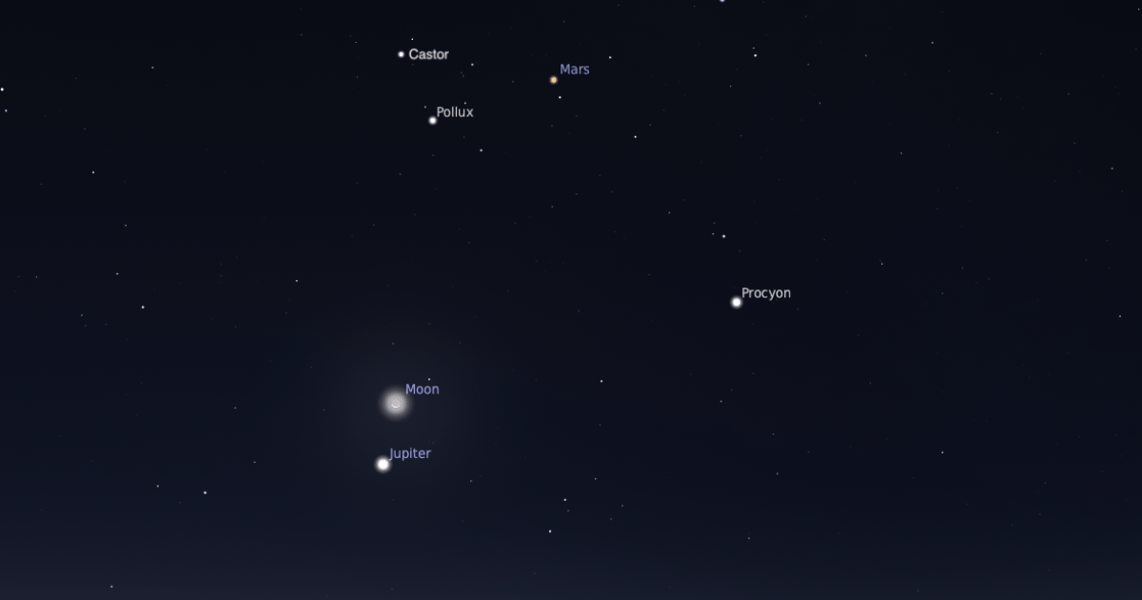
For the full planetary picture currently shaping the sky – including the Moon’s arc through Aries and its evening meeting with Saturn retrograde – see the daily horoscope for August 30, 2026.