
CHENNAI — T. Nagar does not pause for expensive gold. The jewellery district that moves more gold per square metre than almost anywhere in India was open on Sunday, the boards showed ₹15,890 per gram for 24-karat, and the customers were there. The question was not whether Tamil Nadu’s buyers would absorb this price. They have been absorbing it for months.
Chennai’s gold rate on August 31, 2026 stands at ₹15,890 per gram for 24-karat (999 fineness), ₹14,562 per gram for 22-karat (916 fineness), and ₹11,918 per gram for 18-karat (750 fineness). The rate tracks the IBJA morning benchmark and is consistent with MCX October gold futures.
| Purity | Per Gram (₹) | Per 10 Grams (₹) | Change vs. Friday |
|---|---|---|---|
| 24 Carat (999 fine) | 15,890 | 1,58,900 | ▲ ₹18 (+0.11%) |
| 22 Carat (916 hallmark) | 14,562 | 1,45,620 | ▲ ₹16 (+0.11%) |
| 18 Carat | 11,918 | 1,19,180 | ▲ ₹13 (+0.11%) |
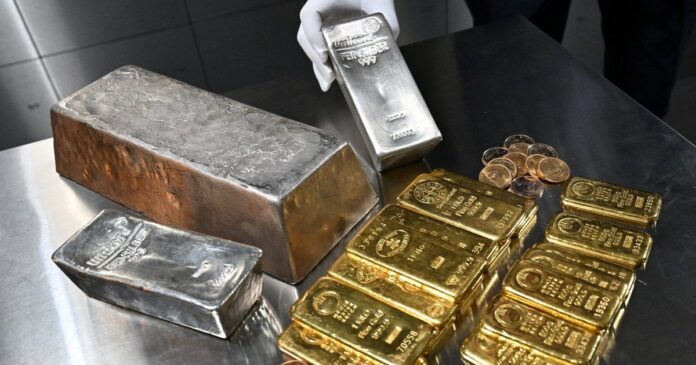
The sovereign — the eight-gram unit preferred across Tamil Nadu, Kerala, and Andhra Pradesh for wedding jewellery, dowry gifts, and savings instruments — costs ₹1,27,120 at Sunday’s rate. A 10-gram bar, the standard investment denomination, stands at ₹1,58,900. These are prices that would have seemed implausible three years ago. Chennai’s buyers are not waiting for a correction that has not arrived.
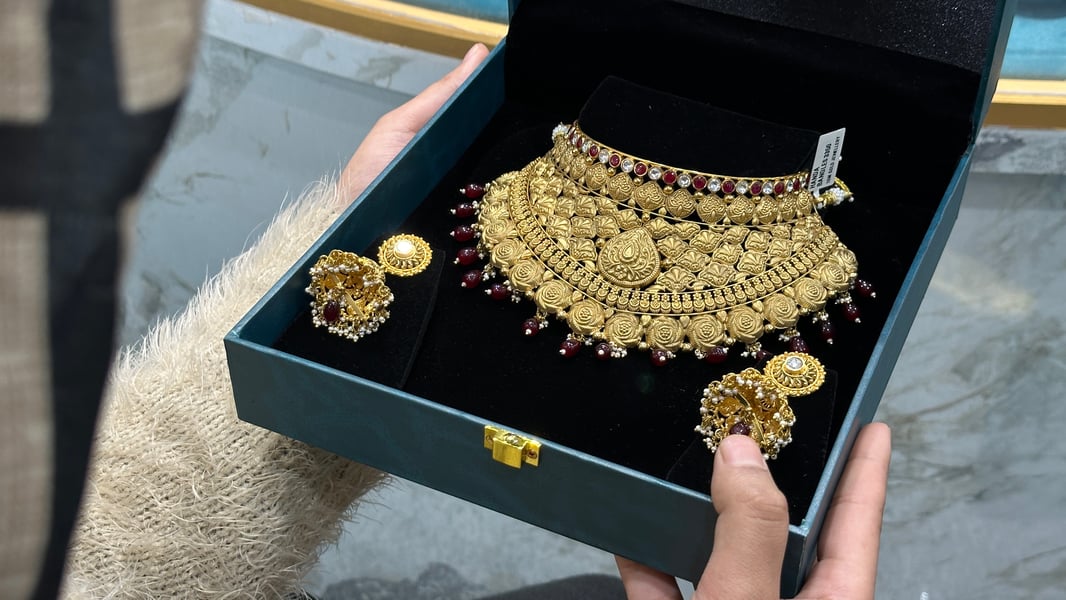
Tamil Nadu’s gold market operates on different logic than northern or western India’s. The sovereign is not primarily an ornament here — it is a savings instrument, a liquidity reserve, a portable asset that Tamil families have trusted longer than the modern banking system has existed. At ₹1,27,120 for eight grams of 24-karat gold, it is an expensive savings instrument by any historical comparison. The buying is not driven by enthusiasm for the price. It is driven by the logic that gold, at whatever price it is today, is the store of value that T. Nagar buyers trust most.
The Multi Commodity Exchange of India’s morning benchmark confirmed Sunday’s rate, with MCX October futures consistent with the IBJA reference that local dealers use. Bureau of Indian Standards hallmarking has been mandatory in Tamil Nadu’s major markets for several years, and T. Nagar’s registered dealers now display BIS certification numbers routinely — a practice that has reduced the traditional fineness-trust premium built into T. Nagar jewellery pricing.
The World Gold Council’s 2026 research documented what any T. Nagar dealer could have confirmed: South Indian wedding demand is one of the most price-inelastic categories in global gold consumption. A bride’s family does not postpone a wedding because gold is expensive. They may buy fewer grams; they may substitute some purchases with lower-karat pieces; they may take on more financing. But they do not skip the gold.
| Contract | Rate (₹/10g) | Change vs. Friday |
|---|---|---|
| MCX Gold 24K (Oct 2026 expiry) | 1,56,820 | ▲ ₹165 |
| MCX Gold 22K | 1,43,688 | ▲ ₹151 |
| MCX Silver (Dec 2026 expiry, per kg) | 2,56,200 | ▲ ₹480 |
That structural demand is one reason Goldman Sachs analysts are comfortable maintaining a $4,900 per troy ounce year-end target. Central bank demand — the Reserve Bank of India has been a consistent buyer in 2026 — adds an institutional floor. The Federal Reserve’s rate timeline is the variable that most determines whether the metal’s ceiling is $4,900 or substantially higher. JPMorgan’s view that a September cut is not certain is the main dissenting note among major investment banks, and it has not materially moved the price.
For Chennai buyers making decisions this weekend, the asymmetry is worth stating plainly. If Goldman’s target proves directionally correct, today’s ₹15,890 looks inexpensive in retrospect. If the market gives back ₹1,000 per gram — a correction that has not materialised in 2026 — a buyer at ₹15,890 loses less than 7% in nominal terms, and nothing in terms of the sovereign’s function as a family savings vehicle. That calculation is not new to T. Nagar; it is why buyers have been consistently absorbing prices that outside observers have consistently called unsustainable.
For the nine-city India rate comparison on August 31, see the India gold price overview for August 31, which runs from Delhi’s ₹15,905 at the top to Patna’s ₹15,875. Bangalore’s IT-sector investment demand dynamics are in the Bangalore gold rate for August 31. Kolkata’s Durga Puja buying context is covered in the Kolkata gold rate for August 31.
Daily IBJA benchmark rates, the standard pricing reference for Chennai’s registered dealers, are published at ibja.co. MCX gold futures, the intraday signal driving board price revisions, are available at MCX India. The World Gold Council’s India research — including the South India demand data cited above — is at World Gold Council.
Rates quoted here — 24K at ₹15,890, 22K at ₹14,562, 18K at ₹11,918 — reflect the IBJA morning benchmark for Chennai on August 31, 2026. Confirm the live rate at the point of purchase.