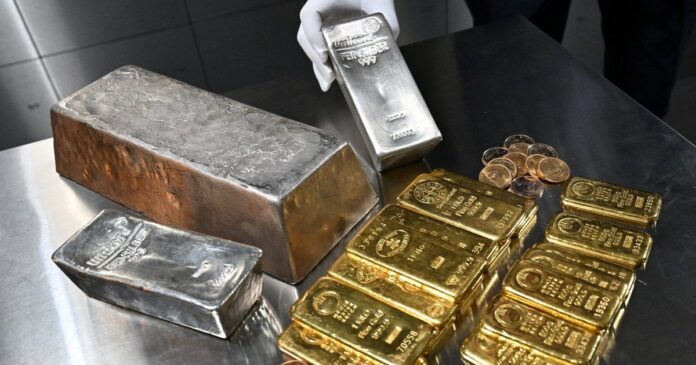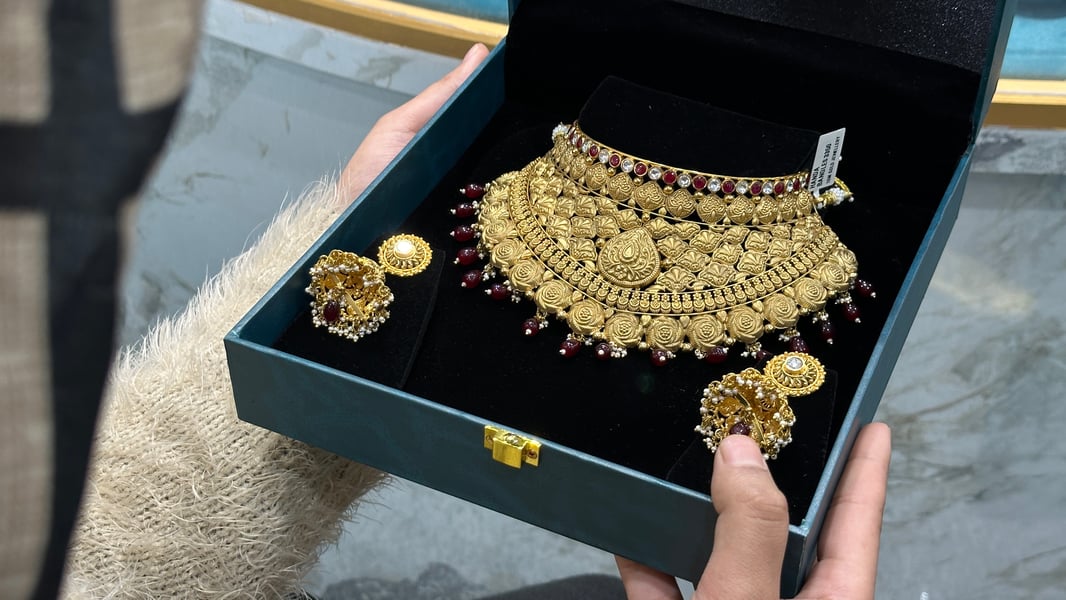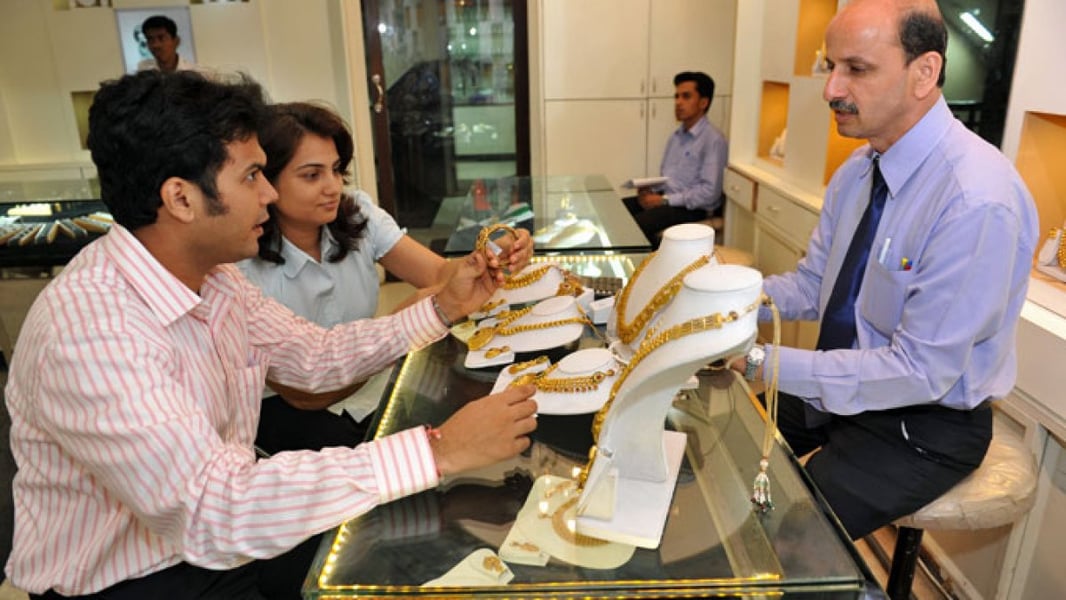

MUMBAI — The number on the board at Zaveri Bazaar on Sunday morning was ₹15,890 per gram for 24-karat gold. It has been near that number for most of August. Dealers in India’s financial capital have grown accustomed to a price that refuses to correct meaningfully, and to customers who have grown accustomed to paying it.
Mumbai’s gold rate on August 31, 2026 stands at ₹15,890 per gram for 24-karat (999 fineness), ₹14,562 per gram for 22-karat (916 fineness), and ₹11,918 per gram for 18-karat (750 fineness), tracking the IBJA morning benchmark and consistent with MCX October gold futures.
| Purity | Per Gram (₹) | Per 10 Grams (₹) | Change vs. Friday |
|---|---|---|---|
| 24 Carat (999 fine) | 15,890 | 1,58,900 | ▲ ₹18 (+0.11%) |
| 22 Carat (916 hallmark) | 14,562 | 1,45,620 | ▲ ₹16 (+0.11%) |
| 18 Carat | 11,918 | 1,19,180 | ▲ ₹13 (+0.11%) |
At ₹1,58,900 for a 10-gram bar and ₹1,27,120 for a sovereign, the numbers are historically extraordinary. In the eight years since MCX moved to its current gold settlement structure, there has never been a sustained period at these levels. What is equally extraordinary is that the buying has not stopped.
Zaveri Bazaar — the dense stretch of South Mumbai that constitutes one of the world’s largest gold jewellery markets — has not seen the sharp footfall contraction that analysts predicted when gold crossed ₹15,000 per gram in the spring. Some buyers have shifted to lighter pieces, reducing gram-weight while keeping the occasion. Some have moved toward 18-karat from 22-karat, accepting reduced gold content to manage total outlay. But the market has not emptied.
The Multi Commodity Exchange of India’s settlement data indicates that Mumbai remains India’s deepest gold trading market by volume, with Zaveri Bazaar prices setting the implicit national reference that IBJA formalises in its morning benchmark. Bureau of Indian Standards hallmarking has made quality verification standard across the city, which matters when buyers are committing at ₹15,890 per gram and the difference between 916 and 875 fineness represents a material sum.
On the global side, Goldman Sachs maintained its $4,900 per troy ounce Comex year-end target. At current rupee-dollar rates, that would place Mumbai’s 24-karat rate above ₹18,500 per gram before the year ends. JPMorgan has been more cautious on timing, pointing to the Federal Reserve’s data-dependency as a variable that could accelerate gold’s move or slow it depending on whether August economic data forces a September decision. Bank of America has flagged central bank gold accumulation — including the Reserve Bank of India’s consistent reserve-building in 2026 — as the structural floor that makes this cycle different.
| Contract | Rate (₹/10g) | Change vs. Friday |
|---|---|---|
| MCX Gold 24K (Oct 2026 expiry) | 1,56,820 | ▲ ₹165 |
| MCX Gold 22K | 1,43,688 | ▲ ₹151 |
| MCX Silver (Dec 2026 expiry, per kg) | 2,56,200 | ▲ ₹480 |
The World Gold Council’s 2026 demand data captures what practitioners in Zaveri Bazaar have observed: Indian demand has not behaved as price-elastic theory would predict. Higher prices should reduce quantities demanded. In gold, the opposite has periodically been true — a rising price draws in buyers who fear further increases rather than deterring buyers who find it expensive. Whether that dynamic is still operating at ₹15,890 per gram, or whether a genuine demand ceiling is approaching, is the question no Zaveri Bazaar dealer can answer with confidence.
What they can say is that Sunday’s footfall was reasonable. The weekend before month-end is historically active in the jewellery trade, with buyers completing purchases before salary cycles begin. September also marks the approach of Navratri — a major buying occasion for Mumbai’s large Gujarati population — followed by Dussehra and Diwali. The calendar creates urgency even when the price does not.
For the full nine-city comparison on August 31, including Delhi’s market-high ₹15,905 per gram and Patna’s ₹15,875, see the India gold price overview for August 31. Hyderabad’s Secunderabad jewellery market dynamics are in the Hyderabad gold rate for August 31. Bangalore’s IT-sector buyer dynamics are covered in the Bangalore gold rate for August 31.
Daily benchmark rates for Mumbai are published by the India Bullion and Jewellers Association. MCX gold futures, the intraday signal tracked by all Zaveri Bazaar dealers, are available at MCX India. The World Gold Council’s India demand research is at World Gold Council.
The rates listed here — 24K at ₹15,890, 22K at ₹14,562, 18K at ₹11,918 — reflect the IBJA morning benchmark for Mumbai on August 31, 2026. Confirm the live rate at the point of purchase; intraday MCX movement when markets reopen Monday flows to board prices within the hour.