
ST. LOUIS — For tens of millions of people living with chronic pain, the agony is not simply that it hurts. It is that nothing seems to stop it. Drugs blunt the edges. Physical therapy brings temporary relief. The pain returns.
A new study from Washington University School of Medicine in St. Louis may explain why, and point toward a treatment target the field has long overlooked.
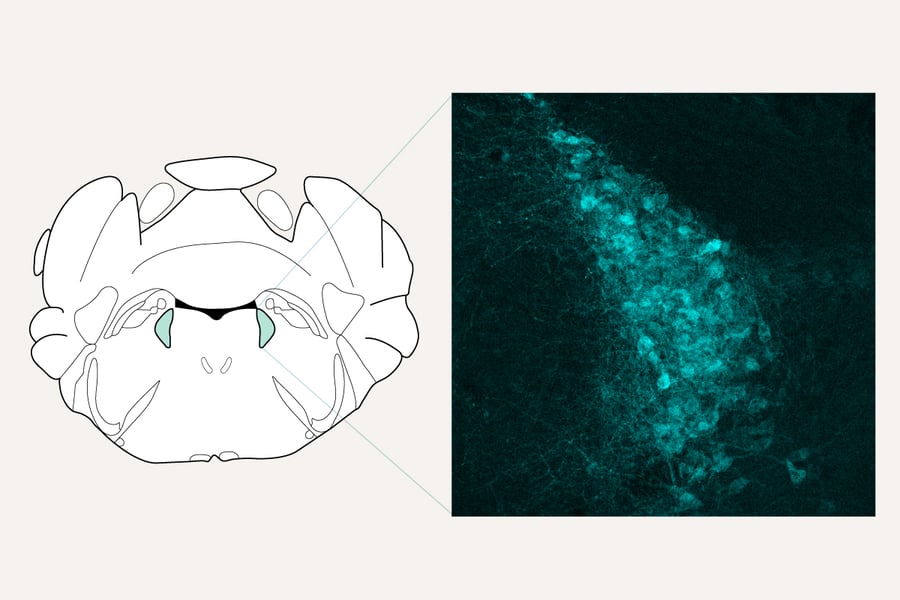
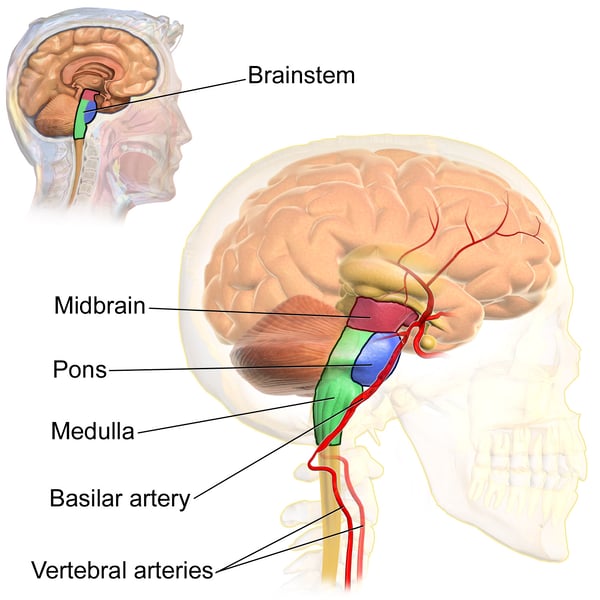
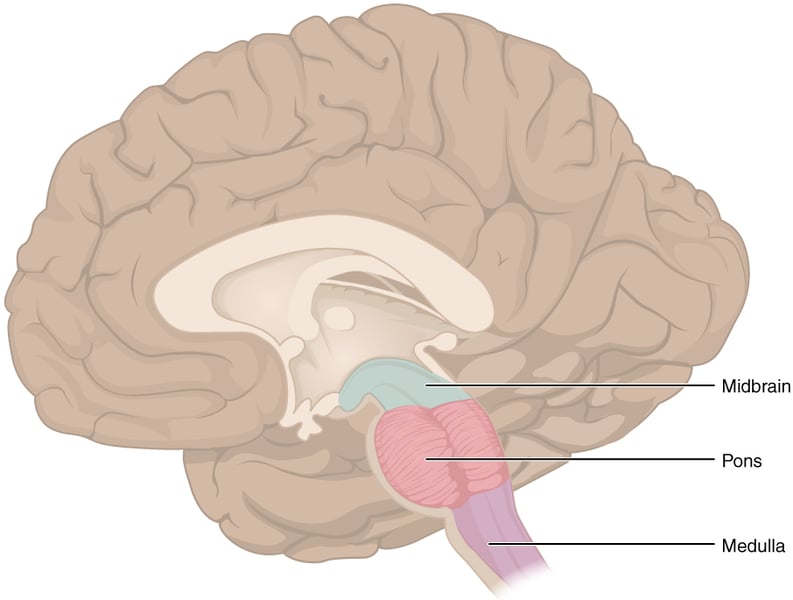
Scientists have identified the locus coeruleus, a small cluster of neurons deep in the brainstem, as the brain’s natural brake on chronic pain. The findings, published August 17 in its study in the journal Current Biology, show that mu opioid receptors embedded in the locus coeruleus function as molecular gatekeepers: when activated, they suppress pain signals that would otherwise persist indefinitely. When that gate fails to hold, chronic pain takes root.
“Understanding how that brake works, and why it sometimes fails, gives us a new way to think about what’s going wrong in people who suffer from chronic pain,” said Jordan McCall, PhD, an associate professor in the Center for Clinical Pharmacology at WashU Medicine’s Department of Anesthesiology, who led the research.
The locus coeruleus is a dense nodule in the brainstem about the size of a small blueberry. It produces nearly half of all the norepinephrine in the central nervous system, a neurotransmitter tied to the stress response, alertness, and attention. Researchers have long observed that stimulating this region can produce potent analgesic effects in animals. What had remained unclear was the precise molecular mechanism, and whether that mechanism could be engaged pharmacologically without triggering the cascading problems that have made opioid therapy so difficult to manage at a systemic level.
McCall’s team answered both questions using optogenetic techniques, which allow scientists to switch specific neurons on and off using light. By selectively activating neurons in the locus coeruleus in rodent models, they could replicate the pain-suppressing effects the region manages naturally. Zeroing in further, they identified mu opioid receptors within the locus coeruleus as the functional gate, the molecular switch that determines whether the brainstem’s pain-suppressing circuitry activates.
Mu opioid receptors are familiar territory in pain medicine. Morphine, oxycodone, and fentanyl all work by activating them, producing relief by quieting pain signals across a broad swath of the nervous system. But that breadth is precisely the problem. Systemic opioid therapy floods receptors throughout the brain and body, producing euphoria, sedation, and a potential for physical dependence that has driven a crisis now touching virtually every community in the country. The new finding identifies a far more specific location within that same molecular system, one that may, in theory, be targeted with greater precision.
Chronic pain affects roughly 51 million Americans, according to estimates from the Centers for Disease Control and Prevention, and ranks among the most common reasons adults seek medical care. The conditions that produce it range widely: lower back injuries, fibromyalgia, post-surgical nerve damage, and rheumatoid arthritis pain all share a common feature: the pain outlasts the original injury or inflammation, suggesting the nervous system has lost the ability to properly resolve its own threat signals. The WashU research suggests that failure may originate, at least in part, in a locus coeruleus that is no longer applying its brake at the right time.
The study does not deliver a therapy. McCall noted in its press release that further work is needed before these findings could inform treatment in humans, and no clinical trials are yet planned. There is also a question the researchers could not fully resolve: whether this mechanism operates the same way in humans as it does in the rodent models where the experiments were conducted. The locus coeruleus is anatomically conserved across mammals, which makes the translation plausible, but the gap between a mouse brain and a human one has derailed more than a few promising pain studies.
What the research does offer is a more mechanistically precise map. If the locus coeruleus is the pain brake and mu opioid receptors are the gate, researchers can begin designing interventions that target that gate specifically, rather than acting on the opioid system as a whole. Research on how meditation reduces inflammation at the gene level has similarly pointed toward the nervous system’s own regulatory machinery as an underexplored lever in chronic pain. The WashU finding works at a cellular rather than behavioral level, but both lines of evidence converge on the same premise: the brain’s capacity to modulate pain is more active, and more targetable, than the field once assumed.
For clinicians treating patients whose pain has not responded to available options, a cleaner map still represents progress. The more precisely researchers can locate where chronic pain is sustained in the nervous system, the better positioned medicine becomes to interrupt it.
The locus coeruleus, once primarily a curiosity of the stress-response literature, is now more firmly than before at the center of that search.