
PEORIA, Illinois — The thing most likely to break Caterpillar’s best run in a decade is not a recession, not the rate cycle, and not artificial intelligence spending drying up. It is a county board somewhere in an American exurb voting down a rezoning application.
Caterpillar Inc (NYSE: CAT) held above $817 a share into the August 28, 2026 session, carrying a backlog of $72 billion and a power generation business growing at 72%. The market has spent this year quietly reclassifying a 101-year-old maker of excavators and bulldozers as an artificial intelligence infrastructure name. That reclassification is defensible on the numbers. What it assumes, and what almost nobody is pricing, is that the buildings Caterpillar’s engines are destined for will actually be allowed to exist.
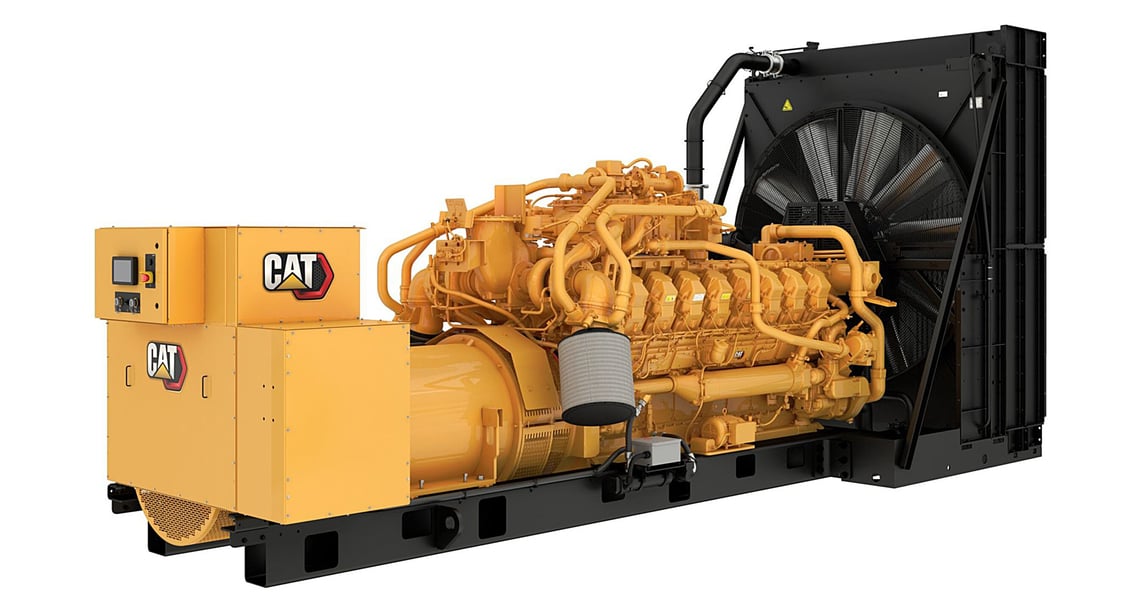
The numbers themselves are not in dispute. The record second quarter delivered $20.5 billion in revenue on 24% growth with adjusted profit of $8.17 a share, and the backlog grew by $9 billion in three months. The composition matters more than the total. Power and Energy booked $8.238 billion of sales in the quarter, up $1.201 billion or 17% year over year, and segment profit rose 30% to $2.027 billion, according to its second-quarter filing. The gain came from large reciprocating engines and turbines sold into data center applications. For a company whose earnings once tracked construction cycles and Chinese commodity demand, this is a different animal.
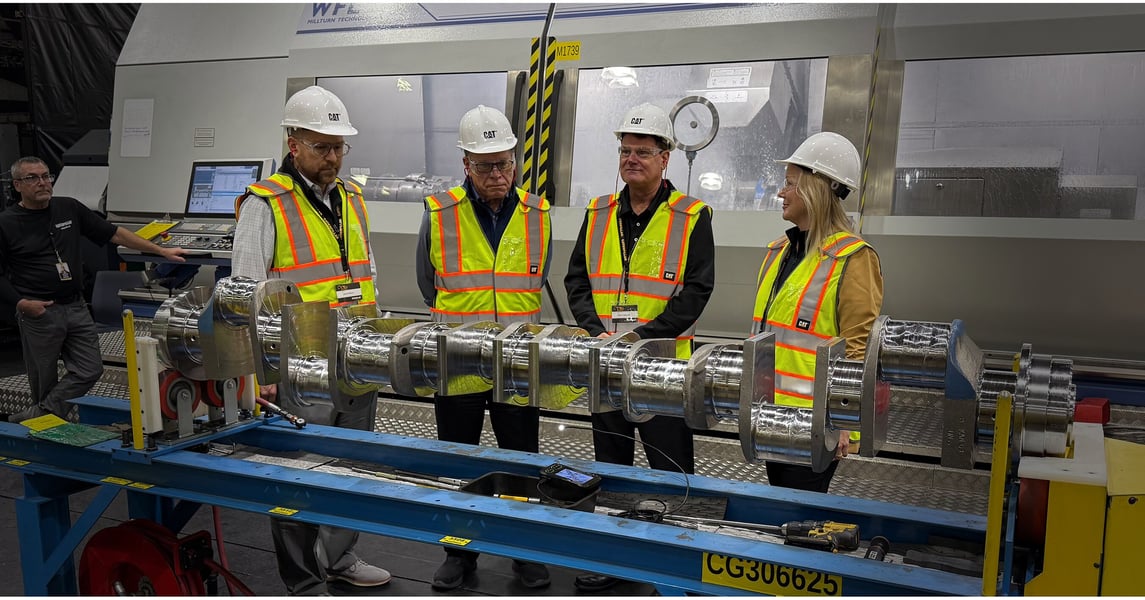
Chief Executive Joe Creed has committed to nearly tripling large engine capacity by 2030, and the company says order visibility now stretches into 2029 and 2030. The commitment is physical and expensive: a $725 million expansion of the Lafayette, Indiana engine plant, the largest investment at that site since it opened in 1982, adding roughly 100 jobs to a campus that already employs about 1,900. Those are not cyclical machinery order books. They are utility-length commitments from customers who decided that generating their own electricity beats waiting in a grid interconnection queue that runs for years.
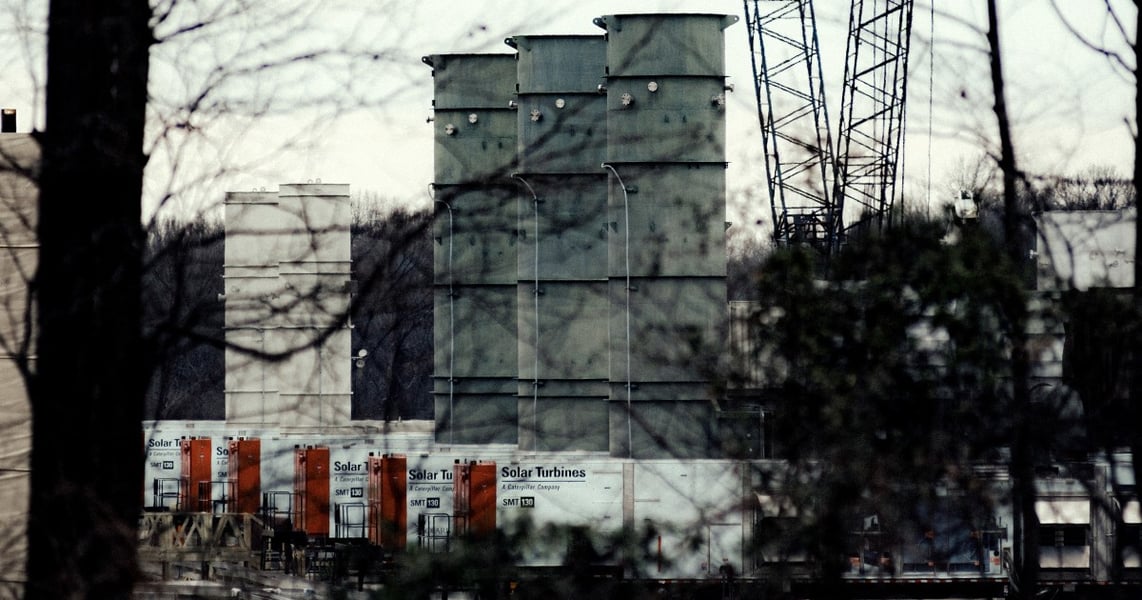
The clearest expression of that arrived in a strategic alliance with American Intelligence and Power and dealer Boyd CAT to deploy two gigawatts of dedicated power for hyperscale AI infrastructure, which the company said in its announcement would begin with fast-response natural gas generator sets. Two gigawatts is roughly the output of two large nuclear reactors, sold not to a utility but to compute.
Now the part that does not appear in any earnings model. In the first three months of 2026 alone, at least 75 data center projects worth more than $130 billion were delayed or cancelled, and the number of active opposition groups rose from 396 at the end of last year to 833 by the end of March, spanning 49 states. NBC News reported the study behind those figures, which counts more than 1,200 logged public actions since early 2024, with grid capacity, water use and siting secrecy the complaints that recur most.
The restrictions are no longer only local. New York became the first state to impose a moratorium on new hyperscale data center construction, and roughly a dozen states have introduced some version of one. In Maryland, Queen Anne’s County joined five other counties in pausing applications outright. In Texas, Fort Worth spent August weighing a moratorium of its own alongside new siting rules, CBS News reported, after residents pressed the council on noise, water and property values. Developers have started suing townships in Michigan and North Carolina to overturn zoning decisions, which is what an industry does when persuasion has stopped working.
Baird saw the shape of this in cutting the stock to Neutral from Outperform, arguing the near-term boom could give way as restrictions accumulate. The bearish case has a louder proponent too. Michael Burry took a short position against a rally that had run 172%, a bet Fortune examined at length, on the view that power systems valuations had detached from what the physical buildout can deliver. Neither argument claims Caterpillar’s engines are uncompetitive. Both claim the customer cannot pour the concrete.
Tariffs are the cost the growth story is already paying. The company has guided to roughly $2.2 billion to $2.4 billion in tariff costs across 2026 from duties imposed since the start of 2025, with margins expected near the low end of its target range. That is a heavy charge on a supply chain that crosses borders repeatedly before a machine ships, and it explains why record revenue and merely adequate margin keep arriving in the same quarter.
What nobody has published, the company included, is how much of that $72 billion backlog sits behind permits that have not been granted. Order visibility into 2030 is a statement about customer intent, not about zoning outcomes. Until someone breaks out committed-and-permitted from committed-and-hoping, $817 rests on an assumption dressed as a backlog.
The buyers themselves keep signalling the constraint is real by routing around it. Anthropic’s $10 billion commitment to hydroelectric AI computing in Norway is what it looks like when a customer decides the power and the permission are both easier to obtain somewhere other than the United States. That is capacity Caterpillar may well still supply. It is also a data center no American county will be voting on.
The broader index context sits in the Dow Jones component analysis from August 26, where financials rather than industrials carried the tape. Caterpillar has become the Dow’s cleanest listed proxy for the physical buildout underneath the AI trade, which is a far better business than selling bulldozers into a construction cycle. It also means the stock now turns on a variable that has never appeared in a Caterpillar model before, which is what a few hundred people decide at a public hearing on a Tuesday night.