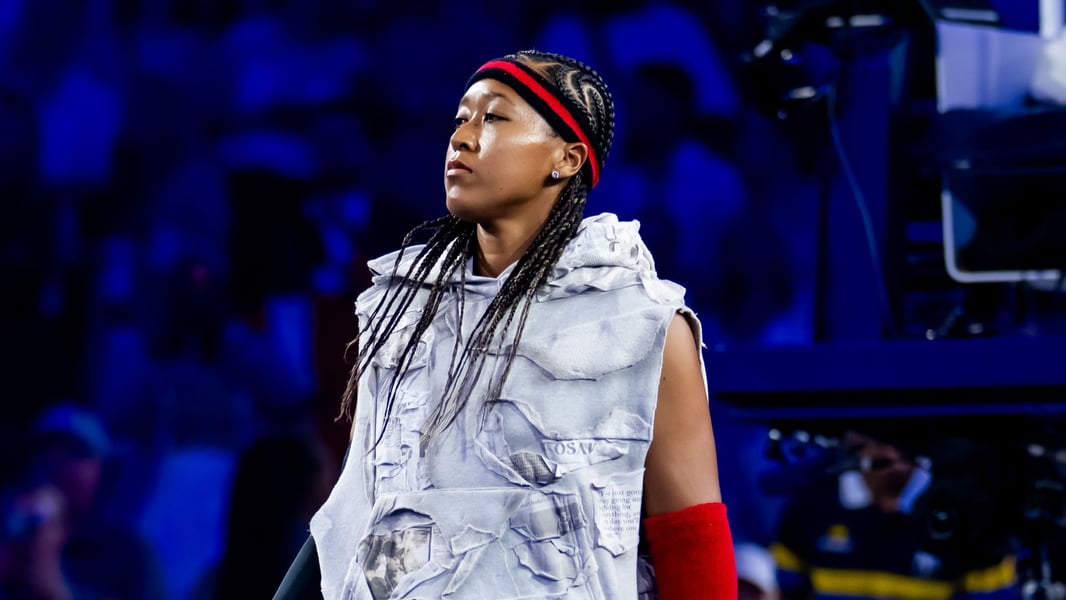

NEW YORK – She walked onto Arthur Ashe Stadium in cornrows, a hooded robe, and a long white skirt covered in newspaper clippings about herself.
The outfit took longer to describe than the first game took to play.
Naomi Osaka’s night-session entrance on Tuesday was a fashion statement before it was anything else, a deliberate Allen Iverson tribute assembled by stylist Law Roach and label Who Decides War: cornrows, newspaper print, hooded robe, the silhouette of a 76ers press conference transported to the hardcourt of Flushing Meadows. Nike had told her the theme was basketball. She decided to take that literally.
Then Anastasia Zakharova walked out and reminded her this was still a tennis match.
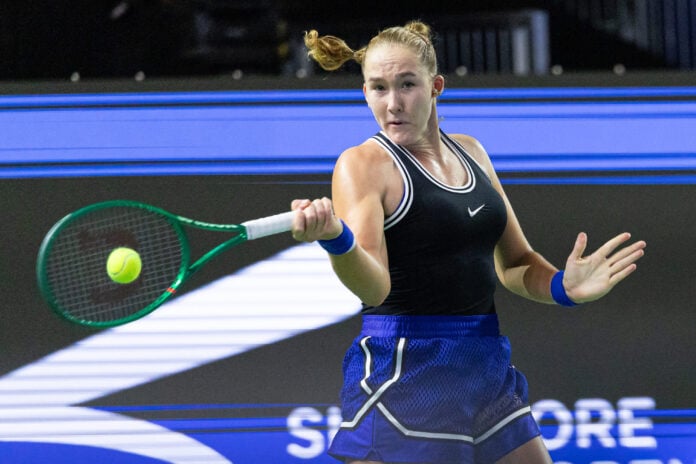
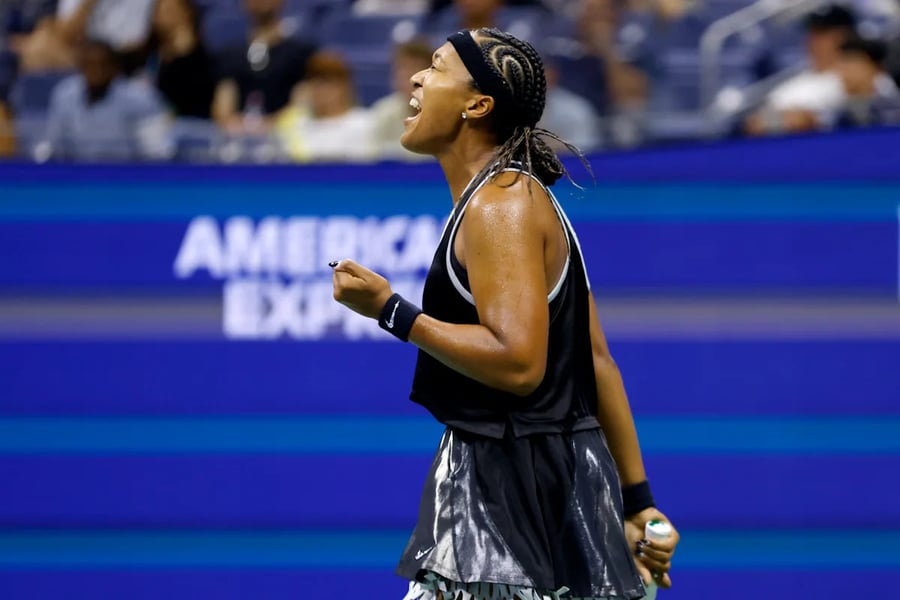
It took two tiebreaks. Osaka won 7-6(6), 7-6(3), a result that reads clean on paper and considerably messier in the playing. Zakharova, an unseeded qualifier from Russia ranked outside the top 100, had nothing to lose and gave herself fully to the task. The first set unspooled to a tiebreak where Osaka had to find extra gear, winning 8-6 at the narrow end after a sequence of mini-breaks in both directions that told you something specific about her composure. The second was calmer in the breaker: 7-3, controlled, efficient.
Two sets, two tiebreaks. Two hours on Arthur Ashe in the night air.
“It’s my tribute to Iverson,” Osaka said after the match, as Sky Sports reported. “I really like him a lot. Nike said basketball, so I said, ‘OK, you want basketball, I’ll give you basketball.’”
Iverson, informed of the tribute, responded via Instagram: “Wow, what a honor!! BIG FAN can’t wait to meet you.”
The exchange is worth noting because of what it says about the wider conversation Osaka occupies. Iverson’s cultural significance to NBA fashion is not casual. He arrived in the league in 1996 as a figure who refused accommodation. The cornrows and tattoos and do-rags that the NBA tried to legislate away with a dress code in 2005 were, by that point, already a decade into changing how athletes presented themselves publicly. Iverson was fined for it, criticised for it, called unprofessional for it. He became, in time, the dominant template for a generation of players who now wear custom fits to the tunnel without a second thought. Fashion as identity in professional sports is an Iverson legacy first.
Osaka has occupied a similar role in tennis as the player most willing to use her platform, her press conferences, and her public silences as cultural spaces. She wore the tribute consciously on Tuesday. The newspaper clippings sewn into her robe were articles about Osaka herself: the stories written about her retirement announcement, her return, her wins, her mental health disclosures. She walked out dressed in her own narrative.
The parallel is not accidental. Osaka was 24 when she stepped away from tennis in 2021 amid the most public mental health disclosure any elite athlete had made in the social media era. She returned in 2024 after the birth of her daughter, Shai, won a title in Brisbane in the opening weeks of that year, and has been building back with inconsistent results since. This summer, as she reached the quarterfinal at the DC Open in Washington, the arc was visible if not yet decisive: more confident, more physically stable, but still looking for the performance that would re-establish her as a genuine Grand Slam contender.
The 2026 US Open women’s draw is more open than it has been in years. Aryna Sabalenka has arrived with fitness questions. Iga Swiatek’s results have been inconsistent through the hard-court swing. Defending champion Coco Gauff is the clear favourite, but the bracket below her has more variance than any edition of this tournament in recent memory. Osaka entered Tuesday as a genuine longshot contender in that space.
Zakharova was the audition for that argument, and Osaka passed it in the most demanding way available: not comfortably, not quickly, but completely.
She will face a different kind of examination in the second round. Tuesday tells us she can hold composure in a close match on the biggest court in New York. It does not tell us whether she can sustain that across five consecutive matches of increasing difficulty, or whether the weight of a deep run at a tournament she won in 2018 carries pressure or momentum.
The newspaper clippings on the robe are a record of where she has been. The next two weeks are about what gets written next.