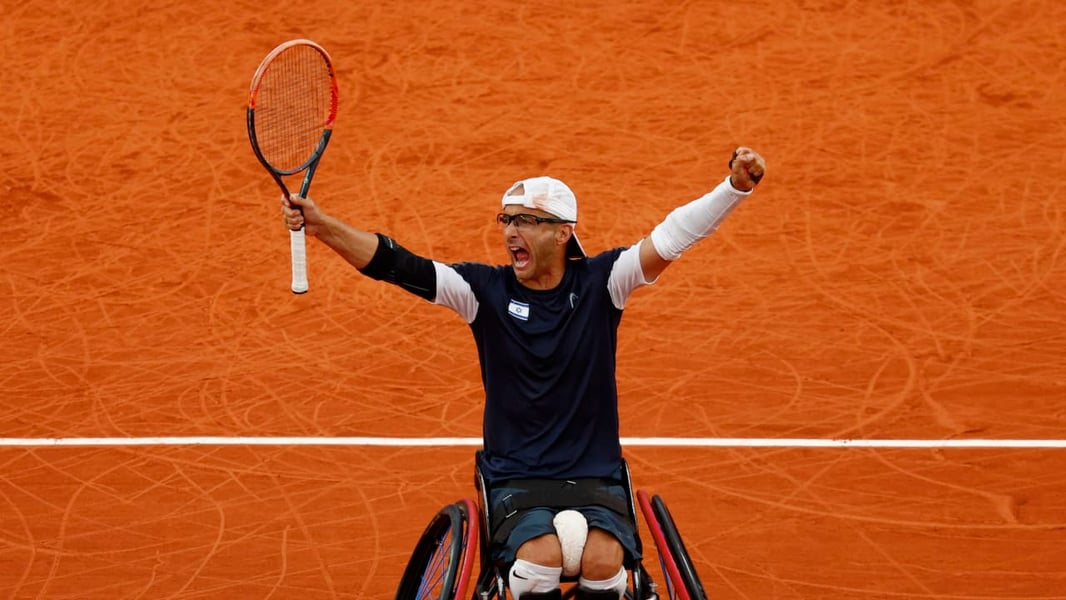

NEW YORK — In the summer of 2015, Guy Sasson went snowboarding in France. He was 35. He did not walk again.
On September 8 at Flushing Meadows, Sasson, now 46, and his doubles partner Niels Vink, 23, will enter the court carrying something that has never existed. Three Grand Slams in 2026. One left.
No wheelchair tennis player has ever completed a calendar-year Grand Slam in any format: singles, doubles, or the quad division that began in 1998. The last doubles team in any discipline of professional tennis to win all four majors in a single year was Ken McGregor and Frank Sedgman, two Australians who did it in 1951, when the gap between them and the field was less a competition than a formality. Seventy-five years ago.
“Our goal is all four in the same year,” Sasson told The Jerusalem Post before leaving for New York. “It has never been done.”
The three titles they have already won were not close. At the Australian Open in January, they beat Andy Lapthorne and Heath Davidson 6-3, 6-1. At Roland Garros in June, they defended their title. At Wimbledon in July, they defeated Sam Schroder and Jin Woodman 6-2, 6-1 at the All England Club for the second consecutive year. Six combined games dropped across three Grand Slam finals, the ITF noted.
Sasson arrived at wheelchair tennis nine years after the accident. After treatment at Tel Hashomer Hospital outside Tel Aviv and years of rehabilitation, he first picked up a competitive racket in 2018. He represented Israel at the Tokyo Paralympics in 2021. Since then, he has accumulated six Grand Slam titles in the quad division, three of them in 2026 alone. To call this a late-career surge is to misread the timeline entirely. This is a second career, built in a discipline he discovered after the first version of his life ended on a French mountain.
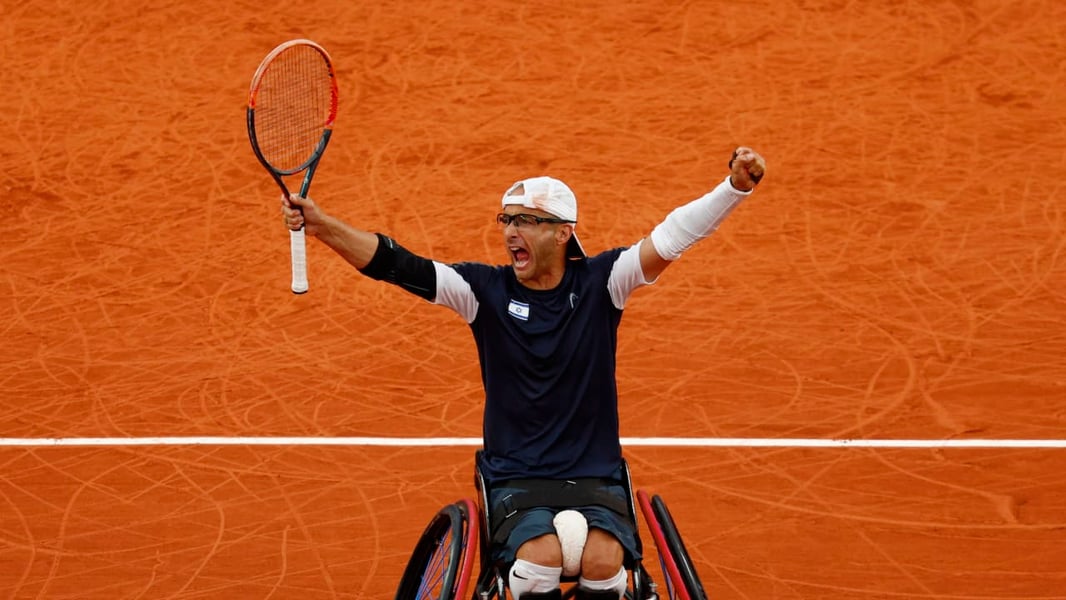
His partner is built for offense. Niels Vink, 23, is Dutch and aggressive, with a game built around dictating from the baseline rather than waiting for opponents to give points away. He reached the singles final at Wimbledon this year before losing to Schroder. In doubles, the partnership with Sasson has produced three consecutive Grand Slam titles in 2026, six in a row overall. The 23-year age gap between them does not register on court.
The field in Queens will be hostile. Schroder, the reigning US Open quads singles champion, returns with a Wimbledon loss to avenge. Woodman, 17, arrives having lost to Sasson and Vink in both Roland Garros and Wimbledon finals this year, experience sharpened and motivation obvious. Ahmet Kaplan of Turkey is a threat Sasson has named explicitly. And Vink himself, who will compete against Sasson in singles when the bracket aligns them, is the most dangerous player in the field regardless of which side of the net he occupies.
The 2026 US Open has already produced a first round shaped more by biography than seeding. Venus Williams exited the main draw at midnight in her latest return. Thea Frodin’s US Open debut, the 17-year-old who doubled for young Serena Williams in King Richard, ended in a 6-3, 6-2 loss to No. 2 Rybakina after eleven aces. The wheelchair draws, beginning September 8, add a chapter whose stakes exceed almost anything the main draw is producing. Main draws produce annual champions. This one, if Sasson and Vink hold, would produce a first.
Fellow Israeli Sergei Lysov, 22, is also in the quads field at Flushing Meadows. His presence is a quiet reminder that Israel’s wheelchair tennis program, modest by European or North American standards, has produced two of the best players in the discipline simultaneously.
The last time a doubles team completed a calendar Grand Slam in any discipline of professional tennis, Eisenhower had not yet been elected president. Whether that record finally falls in a discipline that has existed only since 1998, won by a 46-year-old man who took up the sport nine years after a snowboarding accident in France, is what September 8 will begin to answer.
Three times in 2026, when Sasson and Vink walked to the baseline in a Grand Slam final, the answer came back yes.