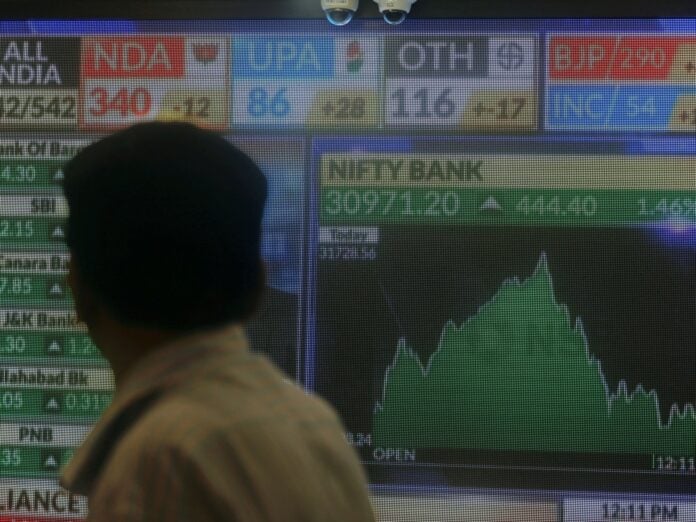

MUMBAI — The banking sector split from the broader market on Thursday, September 3, advancing steadily as a liquidity wave tied to the Reserve Bank of India’s foreign-currency swap program reshaped the near-term outlook for India’s largest lenders.
The Nifty Bank index added 0.36 percent to close at 57,380, touching an intraday peak of 57,753.60, even as the Sensex dropped 417 points and the Nifty 50 shed 41 points on the same session. Private banks drove the rally: RBL Bank jumped 4.99 percent, IDFC First Bank gained 2.23 percent, Bandhan Bank climbed 2.17 percent, IndusInd Bank rose 1.69 percent, Axis Bank added 1.04 percent to Rs 1,267, ICICI Bank edged 0.92 percent higher, and HDFC Bank gained 0.83 percent to Rs 706.65.
The catalyst, analysts at Motilal Oswal Financial Services said, was explicit: banks have accumulated $136.4 billion in total forex inflows under the RBI’s twin swap facilities, with FCNR(B) deposits accounting for $127.2 billion of that figure. That wall of foreign capital is working through the banking system as rupee liquidity, creating conditions that typically precede a pickup in credit disbursement, the earnings lever the sector has been waiting for through a year of compressed margins.
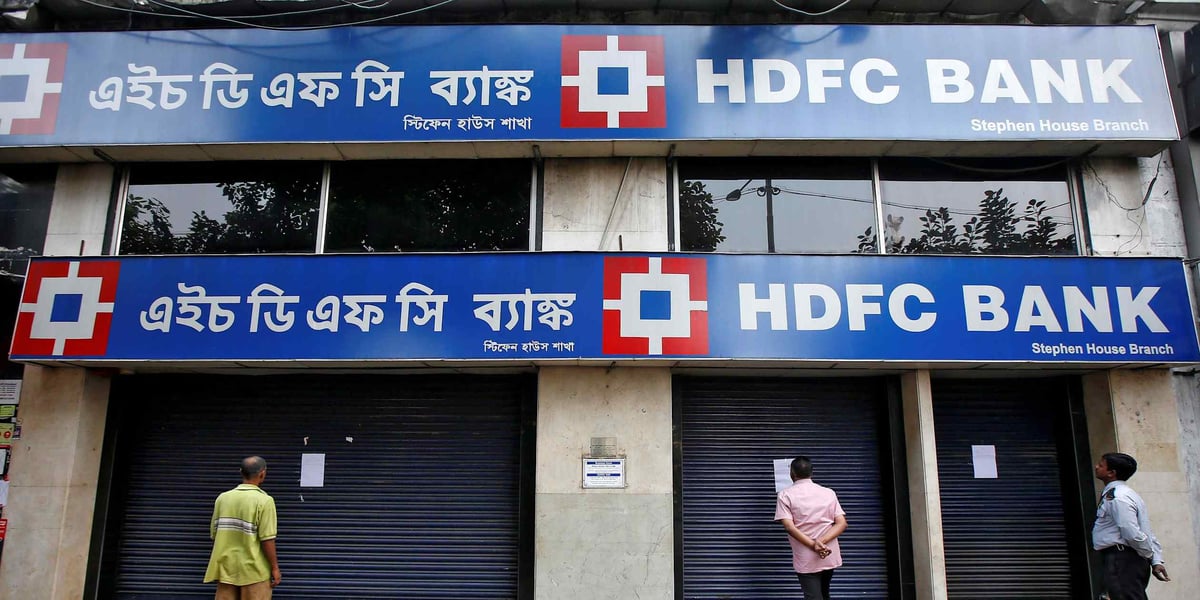
What the numbers could not resolve is whether HDFC Bank, the index’s largest constituent at a 9.85 percent weight, has absorbed enough of its structural erosion to benefit. The stock is down 29.12 percent in 2026, the steepest decline of any Nifty 50 constituent. That slide has shifted gravitational pull toward ICICI Bank, which at a 9.45 percent weight and a 6.02 percent gain this year is among only seven Nifty stocks to have delivered positive returns in 2026. ICICI Bank is now within reach of displacing HDFC Bank as the index’s top heavyweight, a reconfiguration that would have seemed improbable twelve months ago.
The RBI’s decision to end its FCNR(B) swap facility early introduced a counterpoint to Thursday’s rally. Major banks cut FCNR deposit rates effective September 1, with HDFC Bank, SBI, PNB, and ICICI Bank all revising their rates downward as the Reserve Bank of India wound down the facility, signalling that the inflow window is closing.
Axis Bank’s 1.04 percent advance told a cleaner story. The private lender leaned into retail deposit accumulation over the last two quarters, positioning itself to capture FCNR-driven liquidity before the facility closes. At Rs 1,267, the stock has recovered most of the ground lost during August. Several domestic brokerages have flagged Axis as the most direct beneficiary among private-sector names if system liquidity stays elevated into the October-December quarter.
IndusInd Bank’s 1.69 percent gain completed a partial recovery after the stock spent much of August under pressure from microfinance exposure concerns. The bank has been diversifying its loan book away from microfinance, a segment that saw elevated stress in the first half of the year, and Thursday’s trading reflected the view that system-level liquidity can partially offset segment-specific weakness. The thesis has limits: IndusInd’s microfinance portfolio still represents a meaningful share of outstanding loans, and any deterioration in rural repayment capacity could reassert pressure even in a liquidity-positive environment.
For depositors, the FCNR rate cuts passed without triggering visible outflows. FCNR deposits carry a currency-conversion component at maturity that makes premature withdrawal costly, and that stickiness reinforced the view that the $127.2 billion already captured will remain in the system through the facilities’ maturity dates, maintaining the liquidity backdrop that drove Thursday’s outperformance.
Easing crude oil prices, with Brent near $95 a barrel, removed a secondary pressure on banks’ sovereign exposure and supported the rupee near 84.2 against the dollar. The combination of stable currency and abundant rupee liquidity created a floor under banking stocks even as the Sensex’s IT and FMCG drag pulled the headline index lower. The broader dynamic reflects a pattern building in Indian equities throughout August: stocks with local revenue, like Coal India, have consistently outperformed sectors priced to global conditions.
Bank Nifty’s 0.36 percent close masked a session where the index touched 57,753 before sellers pared nearly 400 points from those gains in the final hour. That pullback suggests the rally is running on liquidity optimism rather than confirmed earnings improvement. The Q2 results season, beginning in mid-October, will determine whether FCNR-driven inflows are showing up in actual loan book growth, or whether banks are parking the liquidity rather than deploying it.
Until those numbers arrive, Bank Nifty’s outperformance of a declining broader market signals possibility. Whether that becomes momentum depends on what the October balance sheets say.