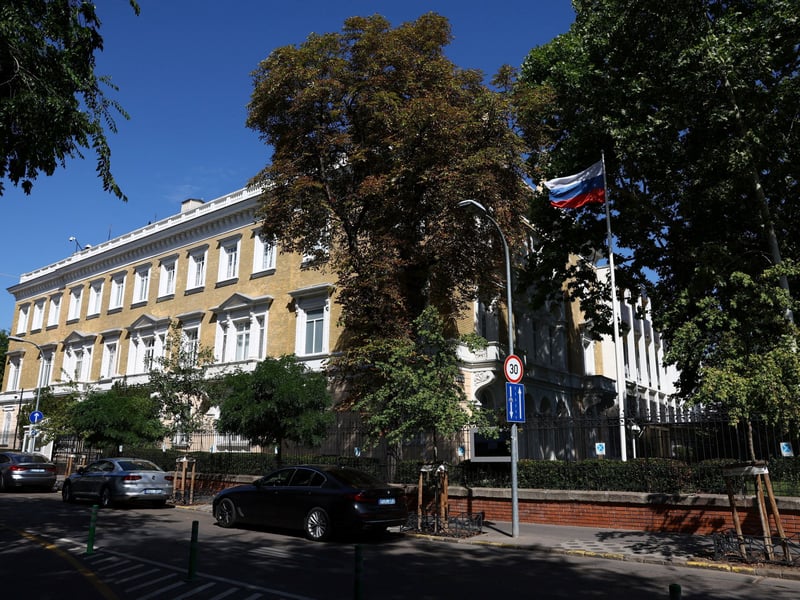

BUDAPEST — The expulsion order came without an extended warning or diplomatic back-channel conversations. Hungary’s foreign minister summoned Russian ambassadorial staff on Monday and ordered ten of them to leave the country, ending an eight-year accommodation between Budapest and Moscow that had made Hungary the Kremlin’s single most valuable friend inside the European Union.
The foreign minister who delivered the order was Anita Orbán — no relation to the former prime minister whose name defined Hungary’s Russia policy for much of the past decade. She invoked the Vienna Convention, the treaty governing diplomatic conduct, and cited “unacceptable activities” as the basis for the declaration. She did not specify what those activities were.
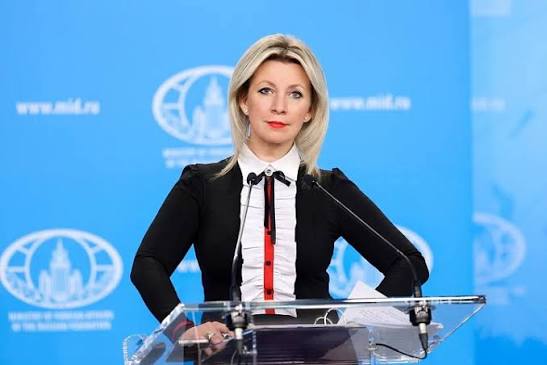
Russia’s response came quickly and in the tone of a government unaccustomed to being treated this way by Budapest. Maria Zakharova, the Russian Foreign Ministry’s spokeswoman, warned that Moscow’s response would be “harsh and painful.” She did not provide details of what that response would entail.
The expulsion is the first of its kind since 2018, when a smaller diplomatic rupture briefly strained Hungary-Russia relations before Viktor Orbán moved to smooth it over. That episode was resolved quietly. This one comes at a different political moment, under a different government and with a fundamentally different set of calculations about Hungary’s long-term interests.
Péter Magyar’s Tisza Party came to power following Hungary’s May 2026 election, ending nearly 15 years of Orbán-era governance. Magyar had campaigned explicitly on repairing Hungary’s relationship with NATO — an alliance that Orbán spent years challenging from within — and with the broader European Union, whose member states had become increasingly frustrated with Budapest’s role as Moscow’s most reliable diplomatic shield.
The expulsion of the ten Russian diplomats represents the most concrete signal yet that Magyar intends to follow through on that realignment.
What Hungary gives up through the decision is not easy to measure. For years, Budapest’s position as Russia’s last dependable EU ally gave it significant structural leverage — the ability to delay or dilute EU sanctions packages, serve as an informal channel when official communication between Moscow and Brussels had broken down, and defend below-market Russian energy pricing that other European capitals had paid political costs for rejecting.
Russia also relied on Hungary as a rhetorical example: proof that EU solidarity on Ukraine was fractured and that there were European voices willing to question the Western consensus.
That example is now unavailable.

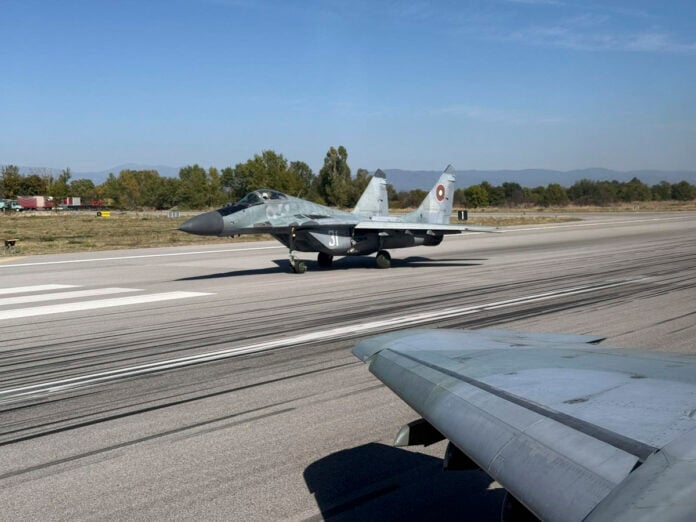
Russia’s footprint in European diplomatic circles has contracted sharply over the past two years. Across the bloc, European governments have expelled or reduced Russian diplomatic presences citing espionage concerns and Vienna Convention violations. Hungary was notable precisely because it had not. That distinction — Budapest as the one EU capital where Russian diplomatic operations faced no meaningful friction — is what Monday’s announcement removes. Even Moscow’s periodic shows of force, including a Russian warship operating near the Baltic coast, had not moved Budapest to act until now.
Moscow will almost certainly respond with a reciprocal expulsion of comparable scale; the Russian Foreign Ministry’s standard protocol dictates mirrored responses to diplomatic downgrades. What comes after that depends on questions that are not yet answerable. Whether Hungary proceeds with further steps, whether Magyar’s government moves to review the energy arrangements that gave Russia its most durable channel into Budapest’s decision-making, and whether Russia concludes that Hungary is simply a lost cause or a target for sustained pressure — none of those questions have answers yet.
Zakharova’s formulation — “harsh and painful” — is the standard Russian diplomatic register for situations where Moscow was genuinely caught off guard. It signals anger without specifying leverage. Russia’s actual tools for pressuring Hungary are more limited now than they were three years ago. Energy contracts remain, but the market has restructured enough that Hungary is less exposed than before. Military and economic options against an EU member-state are constrained in ways that do not apply to other interlocutors. And Hungary’s tilt back toward NATO reduces Moscow’s leverage over Budapest within European councils — the leverage that derived precisely from Budapest’s willingness to be difficult.
The specific activities that triggered the expulsion have not been disclosed. That silence is not incidental. If the expelled diplomats are intelligence officers — ten is a large number for a single action, suggesting something more serious than routine diplomatic friction — the fallout will unfold along different lines than if the trigger was commercial interference or political pressure operations. Al Jazeera reported that the Hungarian government has declined to elaborate on the nature of the activities beyond the formal Vienna Convention citation. Budapest is not saying more. Moscow is promising retaliation. The ten are packing.
What is certain is that the expulsion closes a chapter in Hungarian foreign policy whose continuity had become, for other EU governments, a defining irritant. For most of Europe, Hungary’s Russia calculus under Orbán was a structural problem: a member state whose vote could be delayed or leveraged on any Russia-related question by Moscow’s ability to play on Budapest’s energy dependency and its governing party’s political alignment with the Kremlin. That structural problem did not disappear on Monday. But its most visible expression — the willingness to publicly shelter Russian diplomatic operations that every other EU capital had reduced or expelled — has now ended.
What Magyar’s government has gained in exchange is harder to quantify than what it has signalled. Credibility inside European councils, restored trust in Budapest’s reliability as an ally, faster normalisation of relations with NATO structures from which the Orbán government had alienated Hungary — these are real but diffuse benefits. The costs come in energy negotiations, in whatever retaliatory step Russia takes, and in the domestic political arena, where Orbán’s Fidesz party will almost certainly use this episode to argue that Magyar is surrendering Hungary’s sovereignty to Brussels and Washington. That argument will be made loudly. Whether it lands will depend on whether the retaliation Russia promises turns out to be something Hungarians can feel.