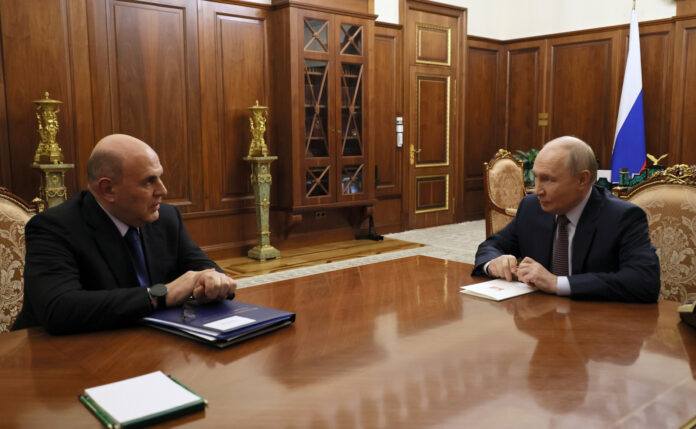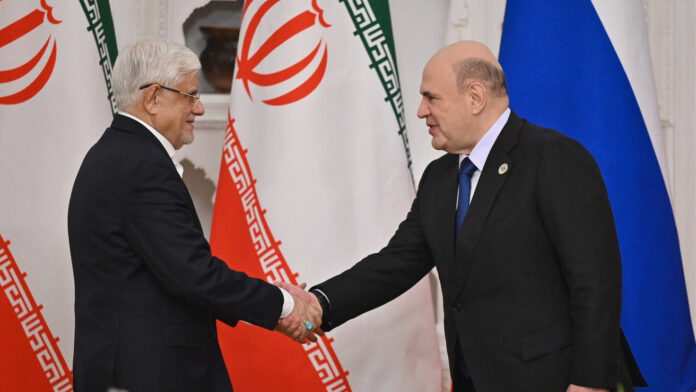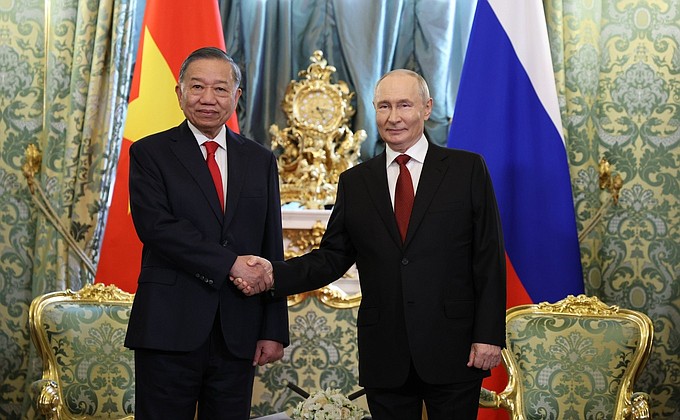

MOSCOW — The meeting at the Kremlin lasted longer than protocol required. When Vietnamese President To Lam and Russian President Vladimir Putin emerged Tuesday, the two sides had signed more than a dozen cooperation documents covering nuclear energy, defence, finance, transport and mineral resources — agreements that both governments presented as evidence of a relationship extending beyond individual projects.
At the center of the discussions was Ninh Thuan 1, a major nuclear energy project in southern Vietnam. Russia’s state nuclear corporation Rosatom will build a 2,400-megawatt nuclear power plant using two VVER-1200 reactors, with commissioning targeted for 2031.
For Hanoi, the project marks the end of years of uncertainty surrounding a nuclear program that was shelved in 2016 amid fiscal pressures before being reconsidered as electricity demand continued to outpace supply. For Moscow, it represents a significant civilian infrastructure agreement in Southeast Asia at a time when Western sanctions have reduced Russia’s economic and commercial reach in other regions.
To Lam traveled to Moscow directly from Hanoi, making the Russian capital his first bilateral destination after taking office. Vietnamese officials declined to characterize the sequence as symbolic, but the decision nonetheless drew international attention.
The two countries signed agreements covering justice cooperation, investment facilitation, scientific exchange, education and ethnic-minority affairs. Such framework agreements rarely make international headlines, but they provide the institutional foundation through which governments manage and deepen long-term relations.
The nuclear and energy agreements carried a different weight. They identified specific institutions, established timelines and committed Rosatom to a defined project on Vietnamese territory, giving the broader partnership a concrete economic and technological dimension.
Bilateral trade reached $3.24 billion during the first seven months of 2026, an increase of 12 percent from the same period a year earlier. Russia has become one of Vietnam’s principal suppliers of fertilizer, fuel and wheat — commodities that are difficult for the country’s manufacturing and export-driven economy to replace quickly.
Moscow is also developing the Northern Sea Route as a potential freight corridor connecting Russian and Vietnamese ports. The two governments had begun examining the logistics possibilities during bilateral talks in Vladivostok, adding a strategic transport dimension to their growing economic relationship.
Vietnamese officials acknowledged that trade remains imbalanced, with Vietnamese exports to Russia continuing to lag behind imports. They described the investment frameworks signed Tuesday as partly aimed at addressing that imbalance and creating greater opportunities for two-way commercial activity.
One of the major questions surrounding Ninh Thuan 1, however, remains unresolved: how the project will be financed.
Russian state-backed nuclear projects overseas have historically relied on concessional loans from Moscow, a financing model used for major projects in countries including India, Bangladesh and Egypt. The model now faces additional complications because of Russia’s exclusion from the SWIFT interbank network and the practical difficulties associated with transferring large capital flows through financial channels affected by sanctions.
Vietnamese officials said the financial structure for Ninh Thuan 1 would be formalized through subsequent negotiations. That leaves an important part of the project’s commercial framework to be determined as the two sides move from political agreement toward implementation.
The visit also unfolded against a wider strategic contest in Southeast Asia. Washington has spent the past two years encouraging governments across the region to reduce their dependence on Russian defence supply chains, particularly in areas involving fighter aircraft and armored vehicles.
Vietnam, which sources the large majority of its military equipment from Russia, has resisted that pressure. Its diplomats characterize the policy as an expression of non-alignment, while Western governments have sometimes interpreted Hanoi’s continued reliance on Russian defence systems differently.
That tension has become more significant as competition between Russia and the West has intensified.
To Lam’s decision to make Moscow his first major foreign destination as president therefore carried considerable diplomatic weight, even though Vietnamese officials stopped short of presenting it as a symbolic choice.
The sequence of the visit and the breadth of agreements signed with Putin nevertheless provided a clear indication of the importance Hanoi continues to attach to its relationship with Moscow.
The message was conveyed less through political declarations than through nuclear reactors, energy cooperation, trade frameworks, transport corridors and defence ties — areas where the durability of a partnership can ultimately be measured through institutions, investment and long-term commitments rather than diplomatic rhetoric.
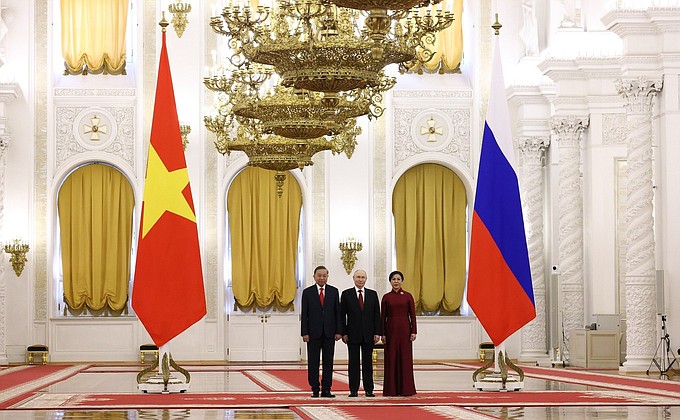
Putin, in his public remarks after the signing, described relations with Vietnam as a “comprehensive strategic partnership” — language that in Russian diplomatic usage sits one rung below an alliance but well above ordinary bilateral commerce. He cited the growth in trade and called the nuclear cooperation a “long-term contribution to Vietnam’s energy sovereignty.” To Lam spoke of Vietnam’s commitment to “multi-directional” foreign policy, a formulation Hanoi has used for two decades to avoid choosing between major powers.
The practical consequence of Ninh Thuan 1 proceeding is that Vietnam will be bound to Rosatom for fuel supply, maintenance, and waste management for the operational life of the plant — roughly sixty years under standard terms. That dependency is not incidental to Moscow’s interest. It is the architecture of the relationship, expressed in concrete and uranium rather than communiqués.
In Hanoi’s political calculus, there are several things this visit does not settle. The financing terms remain open. The timeline assumes that Western pressure on Rosatom’s international business does not tighten further. And the question of how Vietnam manages its relationship with Washington — which has become its largest export market — while deepening its energy dependency on Moscow remains without a clean answer. The Moscow Times reported that Hanoi had telegraphed expectations of a “breakthrough” in oil, gas, and nuclear cooperation before the meeting began. Vietnamese diplomacy has navigated contradictions like this before. Whether the scale of this one falls within the range of the manageable is something Hanoi has not said aloud, and Moscow, for now, has no reason to ask.