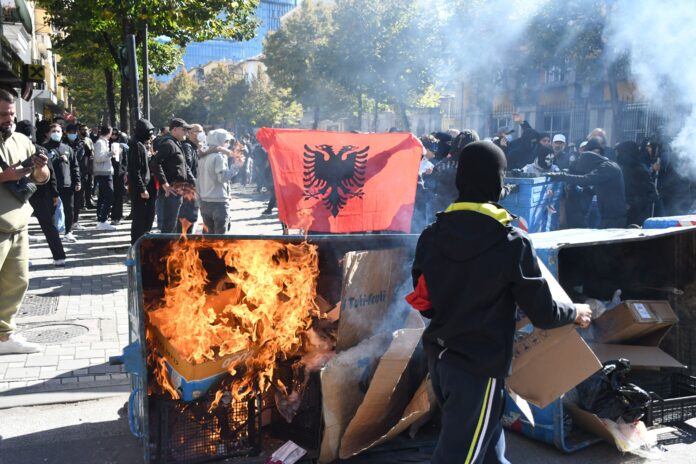
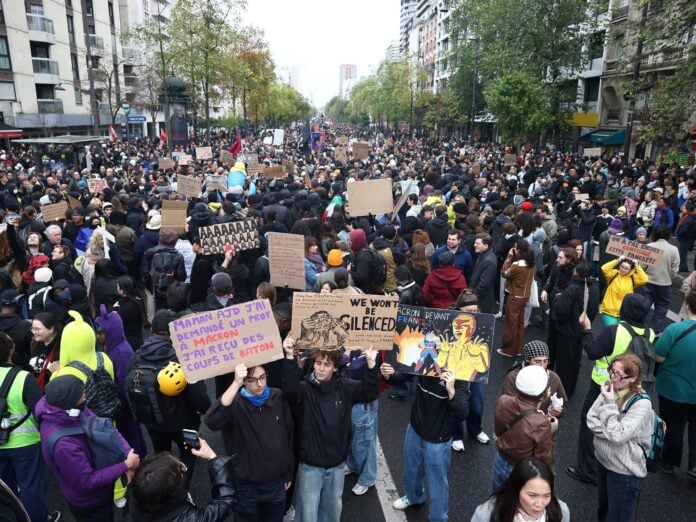
BELGRADE — For nearly two years, they blocked bridges, occupied lecture halls, and stood silently in city squares, dressed in black and demanding accountability for the sixteen people who were killed when a concrete awning collapsed at Novi Sad’s railway station on November 1, 2024. They have yet to get it.
Instead, on Tuesday, they got something else: Aleksandar Vucic signed a decree dissolving parliament.
Vucic described the move as democracy in action. The students who launched the movement — and the millions who later joined them in the streets — see it differently. To them, the man they spent two years trying to force from power has used their pressure as a pretext to call elections on his own terms, at a moment of his choosing, and potentially return to a position with no constitutional expiration date.
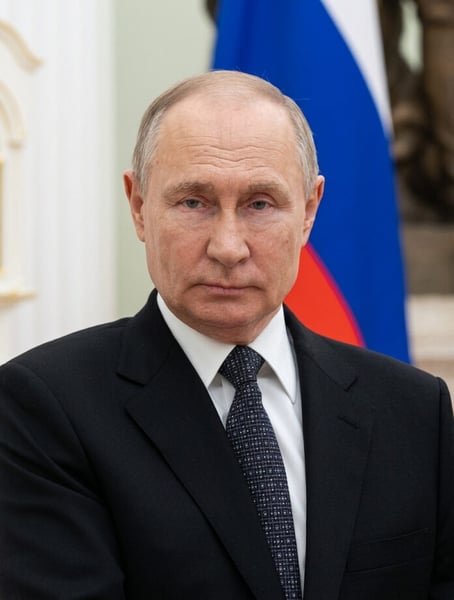
Vucic has held executive power in Serbia as either prime minister or president for twelve consecutive years. On Tuesday, he signed the decree dissolving parliament and scheduled snap parliamentary elections for October 25. His ruling Serbian Progressive Party had nominated him on Saturday to head its parliamentary list as its candidate for prime minister. He intends to resign the presidency to pursue that position.
The constitutional distinction is crucial. Serbia’s president can serve a maximum of two five-year terms. The prime minister, by contrast, faces no equivalent term limit. By leaving the presidency and seeking a parliamentary mandate instead, Vucic would avoid the term restriction that would eventually prevent him from remaining in the country’s highest elected office. He has already served two presidential terms. A third is constitutionally unavailable.
“Were the elections necessary for us if there were no such tensions, if there were no such political conflicts, certainly they would not be necessary,” Vucic said in a Tuesday evening address, framing the dissolution as a reluctant response to national discord. Any delay, he argued, “would threaten the survival of democracy.”
The fragmented opposition parties that have spent the past two years attempting, and largely failing, to channel the protest energy into a unified electoral alternative now have 46 days, under Serbian constitutional rules, to build that coalition before October 25.

What began as a demand for accountability calcified, over months of marches, blockades, and student occupations, into something broader: a referendum on Vucic himself, his grip on state media, and the capture of independent institutions that critics describe as the defining feature of his twelve years at the center of Serbian power.
He survived it. More than that, he converted it.
The European Union has watched the cycle with diplomatic wariness it has not yet translated into policy consequence. Serbia has been an EU accession candidate since 2012. Its formal accession negotiations have advanced at a pace that Brussels officials describe, in private, as geopolitically convenient rather than merit-driven. Serbia remained useful to the EU as a balancing actor in the Balkans, a country that has refused to join Western sanctions on Russia while maintaining nominal candidacy status.
The bloc has not been without internal friction on the point. Last June, EU leaders accelerated Montenegro’s accession timeline toward 2028, framing the push explicitly as a geostrategic answer to Russian and Chinese influence in the region. Serbia, by contrast, faces no comparable urgency from Brussels. Its democratic regression, documented in EU progress reports and OSCE election-monitoring findings, has not been met with a meaningful suspension of the accession process.
The October 25 elections will test whether that calculus changes. Vucic has calculated that it will not. He has survived multiple elections that EU observers criticized for unequal media access, abuse of state resources, and pressure on public-sector employees. Al Jazeera reported the Serbian Progressive Party has won each of those contests.
What the opposition needs to demonstrate between now and October 25 is that it has learned to do what it has repeatedly failed to do: consolidate. The protests produced enormous public mobilization but diffuse electoral representation. Students organized by university, by faculty, and by city, not by party. The political opposition fractured across a spectrum ranging from left-liberal civic movements to nationalist formations uncomfortable with Brussels. Vucic has spent twelve years ensuring that no single leader with a national profile emerged to unify them.
The regional pattern provides little comfort for optimists. Kosovo held three elections in eighteen months without resolving the deadlock that caused them, each vote sharpening the underlying tensions rather than clearing them. The question is whether Serbia’s October 25 vote ends differently, or whether elections, as an instrument of accountability, again serve the incumbent better than his challengers.
For the students still occupying lecture halls in Belgrade and Novi Sad, that question may already have an answer they can feel without waiting to count votes. They watched a government-linked contractor build a railway canopy that fell. They watched prosecution proceed slowly. They watched Vucic call a snap election instead of offering to resign. Whatever October 25 returns, they have already seen what democratic accountability looks like when it is allowed to proceed on the incumbent’s schedule.