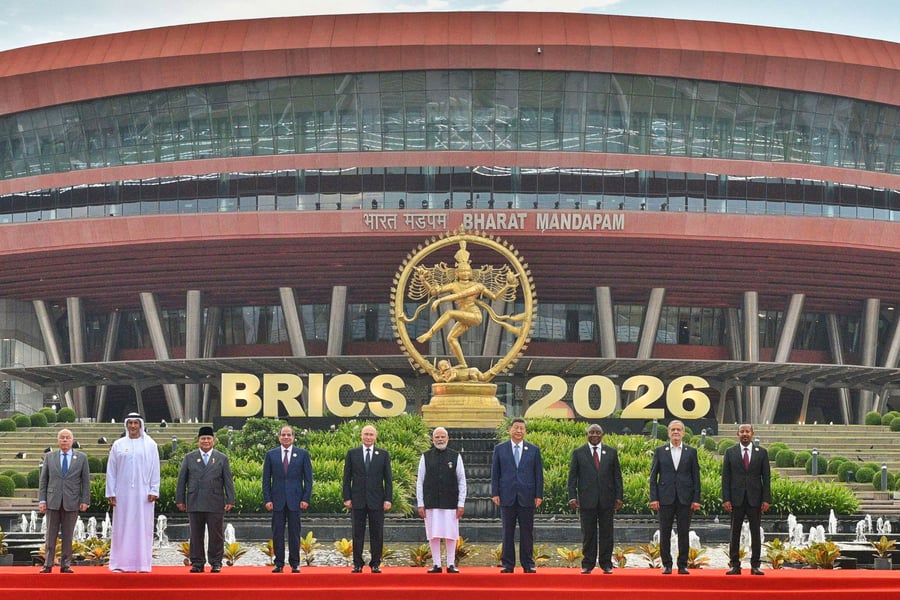

NEW DELHI — The document was adopted without dissent, but the silence around its Gaza clauses was louder than the diplomatic language that filled them. Sixteen nations, including two entangled in a regional war with each other, agreed Friday at the 18th BRICS Summit in New Delhi that no power holds the right to force Palestinians from Gaza, and that a Palestinian state with East Jerusalem as its capital remains the only legitimate endpoint.
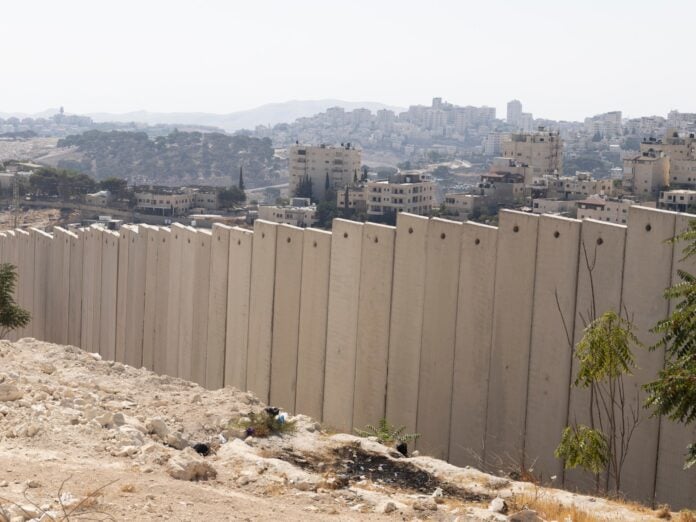
The New Delhi Declaration, the capstone text of the two-day summit, voiced firm opposition to forced displacement and any attempt to alter the geography or demography of occupied Palestinian territory. It identified Gaza and the occupied West Bank as integral parts of a future Palestinian state, with East Jerusalem as its capital. That language places the entire BRICS bloc in direct opposition to both Israel and the United States, which have resisted defining East Jerusalem’s status in any final-status framework.
What made the language notable was not its substance, which has been reflected in previous BRICS declarations supporting Palestinian statehood, but its unanimity. The United Arab Emirates and Iran, both BRICS members, signed the declaration. The two countries have spent the past year trading drone strikes and engaging in proxy confrontations across the Middle East. Their agreement on a declaration positioning the bloc against the principal architects of what UN investigators have called the genocide in Gaza signals something about what BRICS is becoming: a space where bilateral hostilities stop at the door.
Indian Prime Minister Narendra Modi, who hosted the summit and chaired its final session, described the Gaza language as reflecting the bloc’s shared commitment to international humanitarian law. India’s own position is more complicated. New Delhi has historically maintained calibrated neutrality on the Israel-Palestine question, and Modi’s government has drawn criticism for not condemning the Gaza genocide more forcefully. The declaration lets India claim multilateral solidarity without having to own a bilateral position.
The summit’s declaration also included a warning against attacks on civilian infrastructure and nuclear facilities, language directed at no country by name but which pointed unmistakably toward U.S.-backed strikes on Iranian nuclear sites that accelerated the current regional crisis. Iran’s delegation signed without reservation.
China’s President Xi Jinping used the summit to make his first visit to India in seven years, meeting separately with Modi on the sidelines to discuss the border dispute along the Line of Actual Control in Ladakh. Both governments described the talks as forward-looking, suggesting some thaw in a relationship frozen since the Galwan Valley clashes of 2020. Xi’s presence gave the declaration added weight: China is BRICS’s most powerful economy and its most consistent advocate for reshaping global governance in ways that diminish Western institutional dominance.
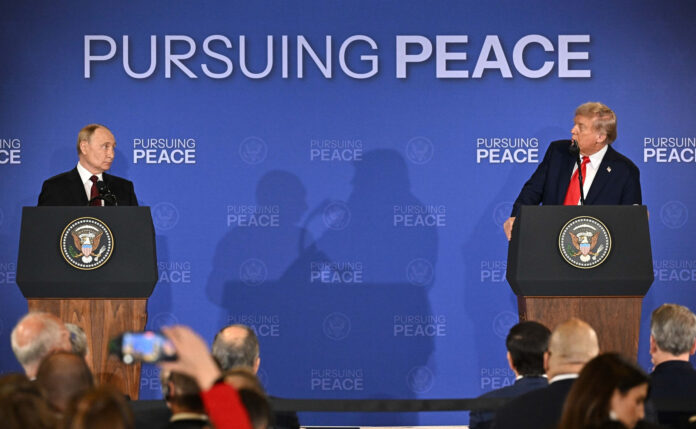
Xi’s arrival in New Delhi comes less than two weeks before he is scheduled to meet U.S. President Donald Trump on the sidelines of the UN General Assembly in New York on September 24. The timing is not incidental. The summit gives Xi a platform to demonstrate, before that bilateral, that the United States is not the only actor shaping the international response to Gaza. Trump, who has shown little interest in a two-state solution, will arrive at the September 24 meeting knowing that a bloc representing more than 3.5 billion people has formally endorsed Palestinian statehood with East Jerusalem as its capital.
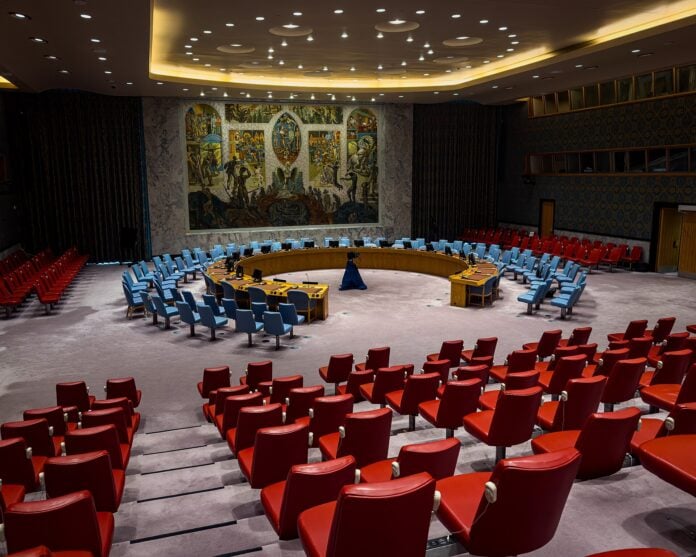
The declaration’s Gaza section sits alongside passages on de-dollarization, reform of the UN Security Council, and multilateral financial infrastructure, the bloc’s long-running structural agenda. But the Palestinian language is the paragraph that will travel furthest. The Security Council has been deadlocked on Gaza for months, with the United States vetoing resolutions calling for a ceasefire or condemning specific military actions. The New Delhi Declaration, signed by nations representing more than half the world’s population, is a direct statement that the Security Council’s paralysis does not reflect the world’s consensus.
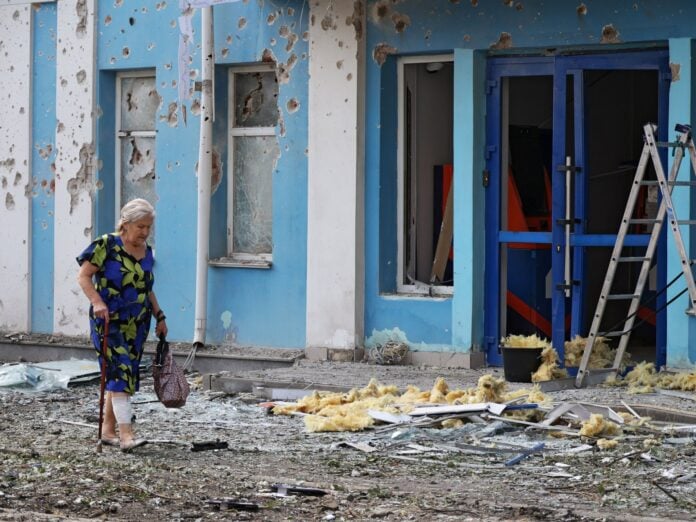
What it cannot do is change conditions on the ground. The October 2025 ceasefire has held in name but fractured in practice, with continued military operations reported in Rafah and Khan Younis. The declaration expresses deep concern over what it describes as the continuation of violence “despite” the ceasefire agreement, a formulation that signals awareness without offering any enforcement mechanism. BRICS has no military arm and no binding authority in international law.
According to Al Jazeera, Brazil and South Africa, both of which have been the most vocal BRICS members on Gaza since October 2023, pushed for stronger language in the original draft. The final text was a compromise, strong enough to make the bloc’s position unambiguous, careful enough not to sever the diplomatic relationships individual members still maintain with Israel and the United States.
The bloc’s next summit will be hosted by Brazil in 2027. By that point, BRICS will have been expanded for two full years, with Egypt, Ethiopia, Indonesia, and several other nations as full members. The coalition that endorsed Friday’s Gaza language is already larger, and more diverse, than the one that last agreed on Palestinian statehood in 2023. Whether that expansion makes future declarations stronger, or blunts them through the need for broader consensus, is the open question New Delhi left unanswered.