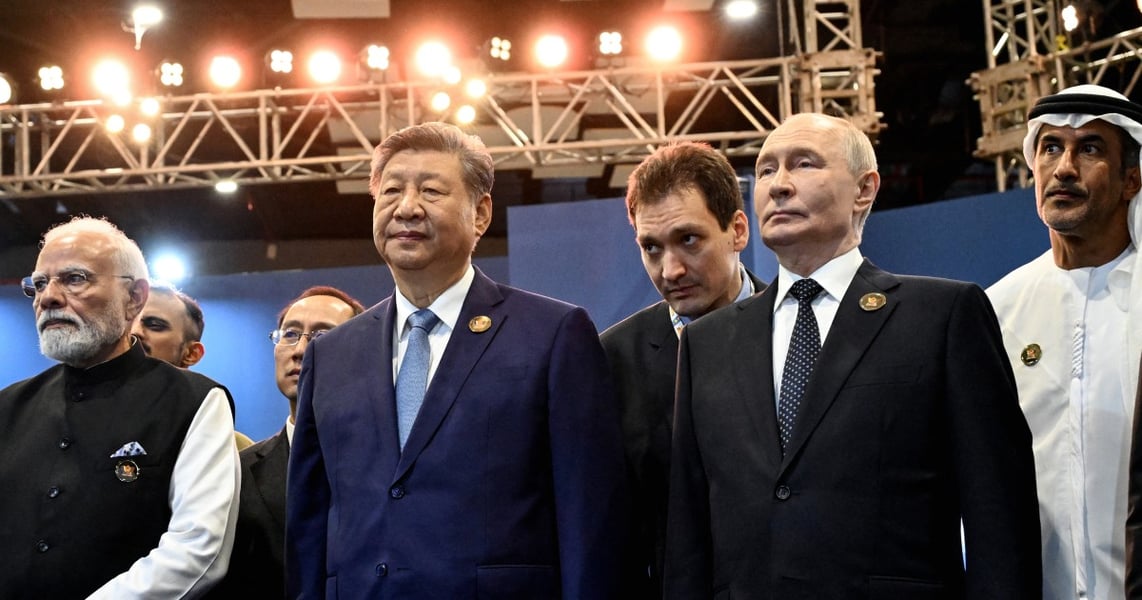

NEW DELHI — The two delegations had spent months arguing over whether to even mention the war. When Narendra Modi announced Saturday that the New Delhi Declaration had been adopted without a single objection, the Iranian and Emirati ministers sitting a few seats apart in Bharat Mandapam did not applaud at the same moment. But they both applauded.
That the 18th BRICS Summit produced a joint declaration at all, let alone one that unanimously calls for “maximum restraint” in a conflict that has fractured alliances across the Middle East, tells most of the story about what India accomplished in New Delhi. The harder question, which the declaration itself cannot answer, is whether a document that names nobody and binds nobody can do anything the six months of ongoing war have not.
The New Delhi Declaration, adopted on the opening day of the two-day summit, expressed “deep concern over the continued escalation of tensions in the Middle East” and urged parties to “exercise maximum restraint and avoid actions that could further aggravate the situation.” It also raised what diplomats described as unusually direct language about “deliberate attacks on civilian infrastructure and nuclear facilities,” language that carries obvious resonance as American and Israeli strikes have repeatedly targeted Iranian energy and nuclear sites.
The achievement was harder than the language suggests. BRICS operates on consensus, meaning Iran, a full member of the expanded BRICS, and the United Arab Emirates, which joined the bloc in 2024, both held effective veto power over any joint statement. Their positions on the West Asia conflict were, for most of the last six months, irreconcilable. What produced Saturday’s consensus, multiple rounds of back-channel negotiations that India’s foreign ministry managed through August, including Jaishankar’s direct engagement with Moscow, is a story that has not been fully told and may not be for some time.
What is clear is that Modi used the summit to do something his government has been building toward for more than a year: position India as the indispensable convener of a world order that neither defers to Washington nor takes sides in the conflicts Washington is helping to prosecute. The declaration condemned “all aggression” in language that, while deliberately ambiguous, points in only one direction given the current geography of military operations.
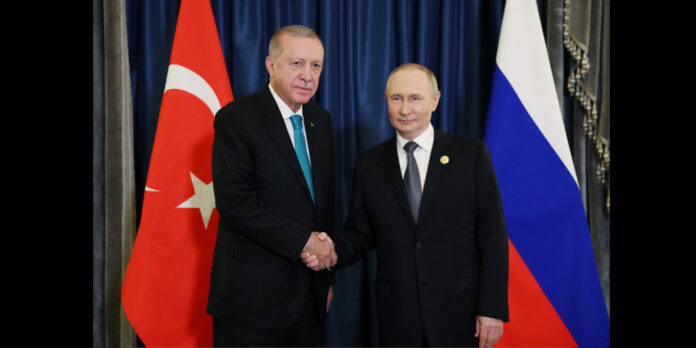
Xi Jinping used the occasion to push a complementary argument, calling for India-China unity to shape the multipolar world and offering Beijing’s services as a mediator between the United States and Iran. The offer has been made before. Whether it will be accepted depends on parties, chiefly Washington, who were not in the room. But the theatrical dimension of the Xi-Modi alignment in New Delhi, two powers that have spent years in territorial dispute now presenting a coordinated front on global governance, was not lost on the delegations watching.
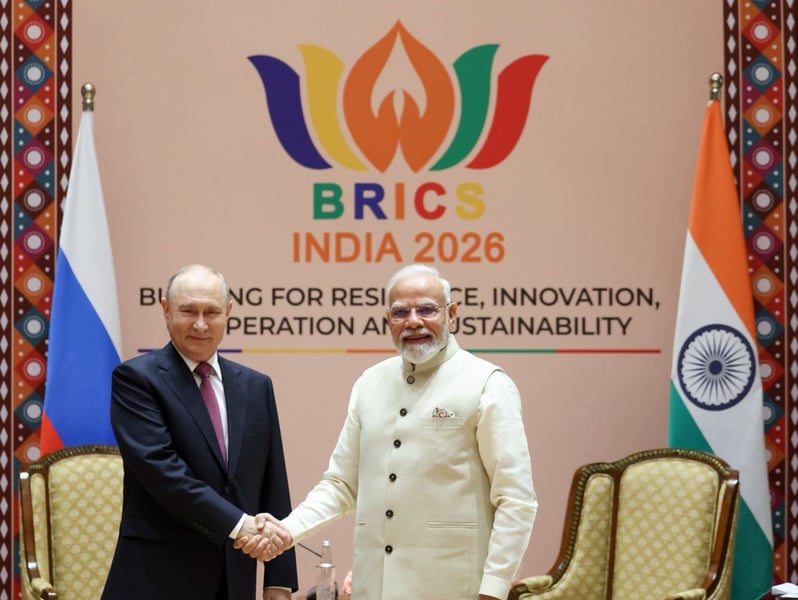
Modi went further than the war. In his closing remarks on the declaration, he called for reform of the United Nations Security Council, reform he said “can no longer wait,” and pushed for changes in the voting power, leadership positions and policy priorities of global financial institutions to reflect what he described as current economic realities. Both are long-standing demands of the Global South, raised at every multilateral forum for decades and never converted into anything concrete. What was different Saturday was the specificity of the pressure and the size of the room from which it came.
The Modi-Putin bilateral, held Friday on the eve of the summit, produced language familiar from prior engagements: dialogue and diplomacy as the path forward in resolving conflicts. That framing is both genuinely held by New Delhi and strategically useful, allowing India to maintain its posture of non-alignment while deepening ties with a Russia that Washington has spent three years trying to isolate.
Iranian President Masoud Pezeshkian’s decision to attend the summit had itself been treated as a significant indicator of Tehran’s willingness to engage multilaterally even as its war with the United States entered its seventh month. His presence, and the consensus declaration his delegation ultimately signed, suggests that Iran’s calculation about BRICS as a counterweight to American pressure remains intact despite the military pressure it is under.
What the New Delhi Declaration does not do is harder to ignore. It does not call for a ceasefire. It does not name the United States, Israel, or Iran. It does not propose a mechanism, a timeline, or a monitoring process for the restraint it urges. It is, in the language of multilateral diplomacy, a statement of concern rather than a statement of consequence.
The question India’s diplomacy cannot yet answer is whether the gap between a unanimous declaration and an actual change in the trajectory of the Middle East is one that BRICS, at its current size and ambition, has the instruments to close. The second day of the summit continues Sunday.