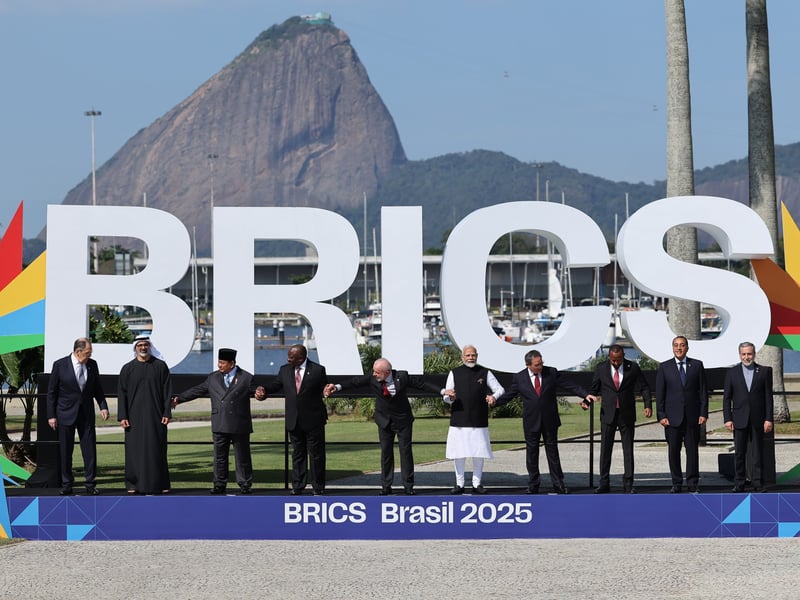

NEW DELHI — Iranian President Masoud Pezeshkian will travel to India this week to attend the BRICS leaders’ summit in New Delhi, a gathering that carries unusual diplomatic weight given Tehran’s position as a sanctioned state engaged in an active conflict with forces aligned with the United States and Israel.
Iranian Foreign Ministry spokesman Esmaeil Baghaei confirmed the trip on Tuesday, telling Iranian television that Pezeshkian would visit India “on Saturday or Friday” for the summit, which opens September 12. The two-day session in the Indian capital will bring together leaders from across the BRICS membership in circumstances more volatile than any previous edition of the gathering.
The announcement followed a meeting between Indian Prime Minister Narendra Modi and Pezeshkian at the Shanghai Cooperation Organisation summit in Bishkek on August 31, where Modi said he looked forward to welcoming the Iranian president to New Delhi for BRICS, as TASS reported. That encounter was among the first high-level direct engagements between India and Iran’s government since Pezeshkian took office, and it established that New Delhi intends to maintain its established posture of cultivating ties with Tehran regardless of the strain that posture generates in Washington.
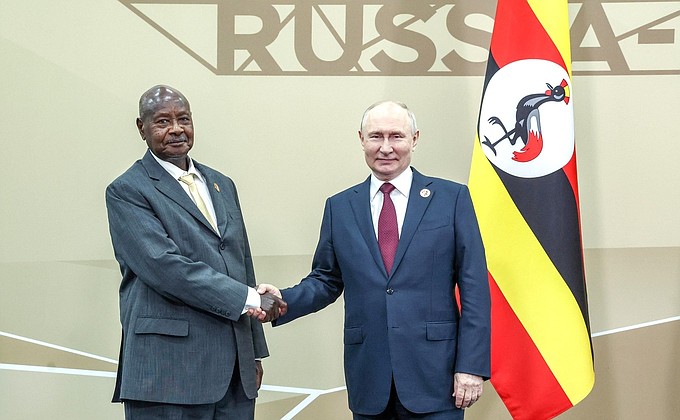
Russian President Vladimir Putin will also attend the summit. The Kremlin has confirmed that Putin plans sideline talks with Chinese President Xi Jinping and Modi, with topics expected to span Ukraine, the Iran conflict, and the economic infrastructure that both Beijing and Moscow have been working to construct beyond the reach of Western financial systems.
BRICS now counts Russia, China, India, Brazil, South Africa, Iran, Saudi Arabia, the UAE, Egypt, and Ethiopia as full members, following the bloc’s expansion in 2024. India holds the chairmanship this year under the theme “Building for Resilience, Innovation, Cooperation and Sustainability.” The September 12-13 summit in New Delhi is among the most diplomatically complex in the bloc’s history, because several of its members are on opposing sides of the conflict that has reshaped the Middle East’s security architecture since fighting began in late February.
For Iran, the BRICS forum provides something the current global diplomatic environment cannot offer elsewhere: a setting in which Tehran is a full member at the same table as states that account for roughly 40 percent of the world’s population and a growing share of global GDP, with US sanctions having limited architectural reach. Pezeshkian’s attendance alongside Modi, Putin, and Xi, in the middle of an active conflict, is a signal Tehran calculates as worth transmitting.
The week’s military backdrop has complicated that signal further. Tehran’s air defenses claimed Tuesday to have shot down a US MQ-1 drone operating above the Strait of Hormuz, an incident US Central Command had not confirmed at publication time. The day prior, the Islamic Revolutionary Guard Corps announced it had seized an American unmanned underwater vehicle from the strait, presenting the recovery as evidence of Iranian surveillance capability in waters the US has consistently patrolled. Each incident adds to a pattern of exchange that has outlasted two ceasefire frameworks since February.
Analysis published Tuesday by Al Jazeera argued that the New Delhi summit represents “the only place another Iran ceasefire can be built,” given the track record of existing channels. The reasoning is not that BRICS carries a conflict-resolution mandate, but that the convergence of principals in one room creates an informal pressure that bilateral formats have not produced. Two ceasefire frameworks, one in mid-June and another in early August, collapsed when both sides resumed exchanges after short pauses. No equivalent gathering of comparable scope is currently scheduled.
India has particular reason to manage the summit’s diplomatic geometry carefully. New Delhi has maintained energy purchases from Iran throughout the conflict, a posture that draws periodic friction from Washington and will shape the bilateral conversation Modi holds with Pezeshkian on the sidelines. Indian officials have framed those purchases as economic necessity at a time of elevated global energy prices, while calibrating public statements to avoid language that positions New Delhi as aligned with Tehran against US interests.
The summit will not resolve the Iran conflict; that is beyond the format’s mandate and beyond the leverage any single BRICS member currently commands. What it may produce is a set of conversations, some in formal bilateral meetings and some in corridors, that provide the infrastructure for a sustained back-channel between parties that cannot formally acknowledge one to exist. Whether that matters depends on decisions being made not in New Delhi but in Tehran and Washington, two capitals whose room for maneuver has narrowed with each military exchange and each failed ceasefire.
What the gathering cannot do is leave the Iran question unaddressed. Every principal converging on New Delhi this weekend has an economic or strategic stake in the waterways at the center of the conflict. The open question is whether that shared exposure is sufficient to generate a political initiative that holds, or whether the summit ends with communiques that acknowledge the crisis without changing its trajectory.