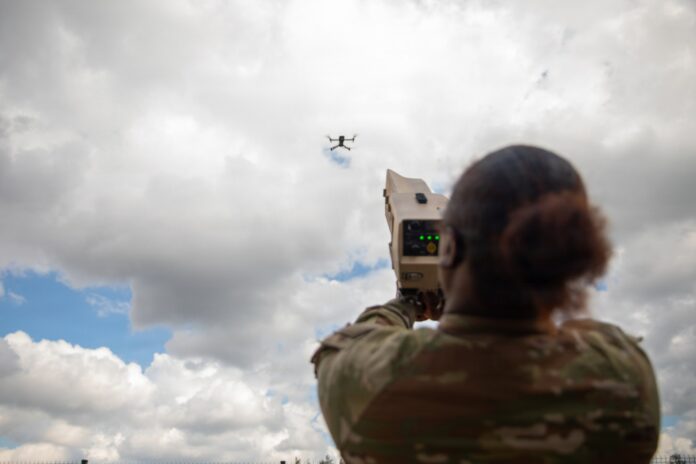

DUBAI — One of the world’s most consequential waterways became the site of another reported US-Iranian military exchange on Tuesday, when Tehran’s air defenses claimed to have brought down an American MQ-1 drone operating above the Strait of Hormuz, according to state-aligned Fars news agency.
The drone was detected above a strategic zone of the strait before being downed, the outlet reported. US Central Command had not confirmed or responded to the account at the time of publication, and no independent verification of the incident was immediately available.
The Strait of Hormuz is the narrow corridor through which roughly 20 percent of the world’s seaborne oil supply passes each day, connecting the Persian Gulf with the Gulf of Oman and the open Arabian Sea. Military activity in and above the strait carries potential consequences far beyond the immediate incident; disruptions to shipping there ripple into global energy markets within hours, a pattern already visible in Tuesday’s commodity pricing as geopolitical risk from renewed Iranian military activity pushed precious metal prices higher.
Tuesday’s reported shootdown comes against the backdrop of a conflict that has defied repeated efforts at containment. The United States and Israel launched strikes against targets inside Iran beginning February 28, drawing Iranian retaliatory strikes in response. A memorandum signed in mid-June aimed at establishing a cessation of hostilities collapsed when both sides exchanged fire again in the weeks that followed.
Since then, Washington has leaned into a dual strategy: continued military positioning in the region alongside an escalating campaign of economic pressure targeting Tehran’s oil revenues and banking access. American officials have framed the sanctions track as a mechanism to impose financial strain sufficient to compel a durable end to the fighting, a premise the Iranian government has consistently rejected.

What remained unclear at publication time was whether Tuesday’s reported incident reflected a deliberate escalation or a tactical response to what Tehran perceived as unauthorized intrusion into sensitive airspace. The Fars account did not specify the precise position of the drone within the strait’s navigational boundaries, nor did it identify the engagement system used to bring it down.
That information gap is itself characteristic of how this conflict is being reported: both sides issue claims; full operational details emerge slowly, if at all. The drone incident on Tuesday, as of the time of this report, remains attributed solely to one source. Al Jazeera’s live coverage of the Iran war documented the incident as part of a day of multiple exchanges in and above the waterway, and the absence of any US response leaves the full picture unsettled.